
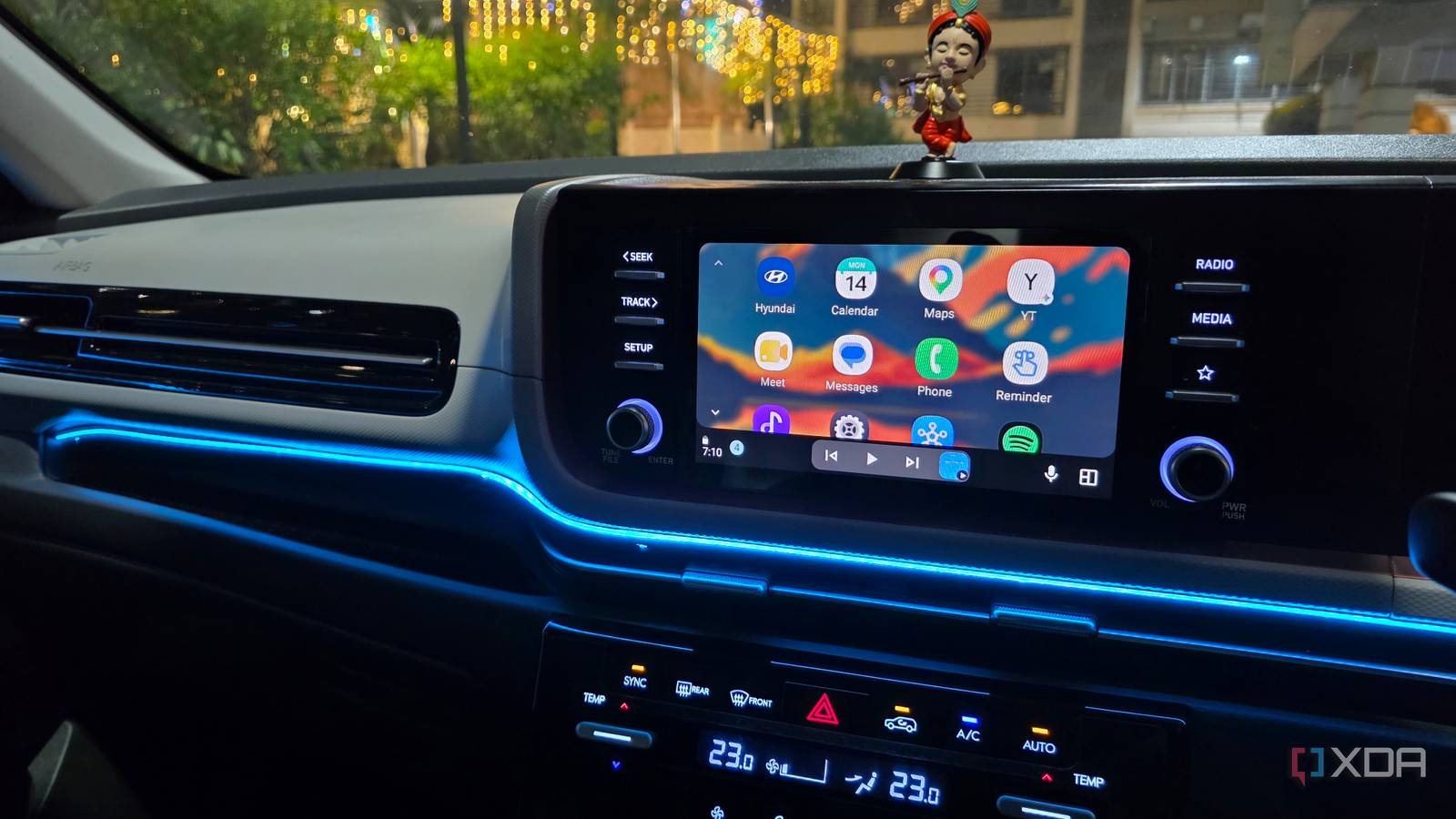
Published Nov 15, 2026, 1:00 PM EST Parth, a seasoned tech writer, wields the keyboard (or pen) with finesse to unravel the intricacies of both Windows and Mac operating systems. He has covered evergreen content on mobile devices and computers for multiple publications over the last six years. You can find his work on AndroidPolice, GuidingTech and TechWiser. Whether it’s demystifying system updates, deciphering error codes, or exploring hidden features, Parth’s prose guides readers through the binary maze. When not immersed in tech jargon, you’ll find him sipping chai, pondering the next software review, and occasionally indulging in a friendly debate about mechanical keyboards. I have spent plenty of time switching between Android Auto and Apple CarPlay. However, short city commutes don’t always tell the complete story. I wanted to see how these two popular infotainment platforms perform when pushed beyond the usual grocery runs and office commutes. So, I decided to put them through a proper real-world test during a 1000-mile round trip. I tested both platforms in situations that actually matter behind the wheel. I expected a close competition, but after spending hours with both systems, the winner became obvious to me. My 1,000-mile test Let’s set the rules first I wanted to make this comparison as fair and practical as possible, so I established a few ground rules before hitting the road. For this test, I used my Samsung Galaxy S25 Ultra with Android Auto and an iPhone 17 with Apple CarPlay, both running their latest available software versions. I also used the same car and infotainment system (8-inch unit) throughout the journey to keep things consistent. The trip covered approximately 1000 miles, with 500 miles each way. I started with Apple CarPlay for the entire outbound journey and switched to Android Auto for the 500-mile return trip. Both platforms ran wirelessly, since that’s how I normally prefer to use them. My focus wasn’t on benchmarks or comparing every tiny feature. I wanted to see how both platforms handled everyday driving tasks over long distances, including navigation, music playback, voice commands, incoming calls, and notifications. CarPlay feels fluid and beautiful Google needs to catch up here Apple has done a fantastic job with CarPlay’s visual overhaul. The new Liquid Glass looks gorgeous on my car’s infotainment screen, with translucent elements, refined animations, and a polished interface that feels like a natural extension of my iPhone 17. Everything looks cohesive, from the app icons and widgets (more on that in a minute) to the dashboard and music controls. I also found the interface fluid and responsive throughout my journey. Switching back to Android Auto made the visual differences even more obvious. Google’s interface is functional and gets the job done, but it looks dated next to Apple’s modern design language. I am curious to see what Google has in store for Android Auto’s next major redesign because, at least visually, CarPlay is ahead. Productivity booster on a long road Another area where CarPlay impressed me was its widget support. Instead of constantly jumping between different apps, I could glance at useful information directly from the dashboard. During my 500-mile journey, I found this handy for keeping track of upcoming appointments, reminders, and important updates without interrupting navigation. What makes the experience even better is support for third-party widgets. I could add widgets from apps like Outlook and Microsoft To Do and customize the layout based on my preferences. It made CarPlay feel more like a personalized dashboard rather than a basic app launcher. Android Auto’s dashboard is practical, but I missed this level of flexibility when I switched platforms for the return journey. Widgets may seem like a small addition, but over hundreds of miles, having relevant information available makes a big difference. Gemini and Siri faced their toughest test Android Auto pulls ahead This is where Android Auto completely demolished Apple CarPlay for me. Siri is basic at best, and its limitations are obvious when I was trying to run complex commands through it. It handles simple tasks like making calls, sending messages, and starting navigation, but anything beyond that feels like a struggle. Gemini is miles ahead. It understands my natural language and works seamlessly with the apps I use every day. For example, I can ask Gemini to start navigation to a destination and send my ETA to my dad through Google Messages. I can even describe a movie scene and ask it to find that particular song on YouTube Music. I don’t need to memorize specific commands or carefully phrase my requests. Gemini just gets me, and that makes a massive difference when I am behind the wheel. Music and entertainment revealed major differences Another win for Android Auto Music is an essential part of my road trips, and this is another area where Android Auto pulled ahead. I have a massive offline music collection that I manage through Poweramp, and it worked beautifully throughout my return journey. I could browse folders, switch playlists, and enjoy my favorite tracks without worrying about mobile data or patchy network coverage. Poweramp also offers excellent equalizer controls, which I have fine-tuned for my car’s speakers. While CarPlay handled music streaming perfectly well, I missed the flexibility of my Poweramp setup. My dashboard had a clear winner After 1000 miles behind the wheel, Android Auto emerged as the clear winner for me. Apple CarPlay has plenty going for it. The Liquid Glass interface looks stunning, animations feel polished, and widgets are useful. However, looks aren’t enough to win a long-distance road trip. Android Auto fits my driving habits better. Gemini’s powerful voice assistance, seamless integration with my favorite apps, and the flexibility of Poweramp made a difference throughout my return journey. CarPlay may have won the beauty contest, but Android Auto won where it mattered most.
I did a 1000-mile round trip testing Android Auto against Apple CarPlay: one platform won the road
Full Article
Original Source
Read the full article at Xda-developers →KhanList aggregates and links to publicly available news content. We do not host full articles from third-party sources. Always verify important information with original sources.