
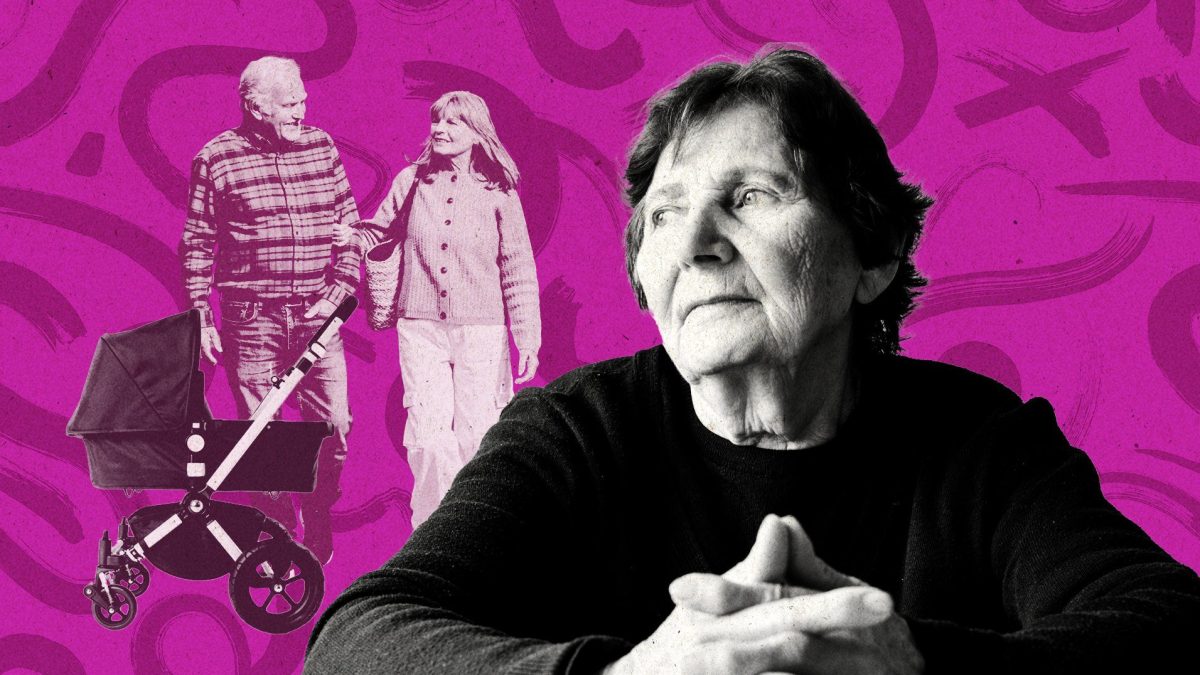
When Helen’s first grandchild was born, she was delighted with the pram she had found for her daughter. It was second-hand but in excellent condition, and the 64-year-old retired administrator from Cheshire had spent time cleaning it until it looked almost new. Then the baby’s other grandparents arrived with their present. “It was one of those beautiful top-of-the-range travel systems,” she says. “I don’t know exactly what it cost, but I knew it was a lot. Suddenly I looked at mine and thought, ‘God, that looks a bit pathetic.’” Her daughter hadn’t complained. Far from it. “She was lovely about mine. Nobody made me feel bad. I made myself feel bad.” It was Helen’s first glimpse of something she hadn’t really anticipated: what happens when two sets of grandparents have very different amounts of money. Shorts We tend to talk about grandparents as though they occupy roughly equivalent positions in a family. But grandparents can arrive at later life in extraordinarily different financial circumstances. One couple may own their home outright, have generous pensions and substantial savings. The other may still be paying rent or a mortgage and working well into their sixties or seventies. And when grandchildren arrive, those differences become unexpectedly visible. For Helen, now 72, it didn’t stop with the pram. As her granddaughter grew older, the differences became harder to ignore. “The other grandparents would turn up with clothes. Not just at Christmas or birthdays. Lovely dresses, trainers, coats. They’d see something and buy it.” Helen couldn’t do that. When her granddaughter stayed, they sometimes went around the charity shops together. “Actually, she loves it. We give ourselves £10 and see what we can find. We’ve had some brilliant afternoons doing that. But I suppose there’s still this little voice in my head saying, ‘Is this enough?’” It is a question that several grandparents I spoke to recognised. Not whether their grandchildren loved them, most were confident that they did, but whether having less money subtly changed the relationship they were able to have with them. ‘Occasionally the comparisons sting’ For 67-year-old Christine, a part-time receptionist from near Warrington, the thing she envies most isn’t what the other grandparents can buy. It’s their time. Christine still works three days a week because she needs the income. Her two grandchildren, aged eight and 11, also have grandparents who are comfortably retired. “They can just say, ‘We’ll have them for half-term.’ I can’t do that. I’ve got to look at my shifts and see whether I can swap things around.” The other grandparents have taken the children to London, to the theatre and on holiday. Christine takes them for walks, makes cakes with them and looks for inexpensive things to do locally. “I know that sounds lovely, and it is lovely. I don’t want to make out that we’re sitting here miserable because we can’t afford Disneyland. We’re not.” But occasionally the comparisons sting. “They’ll come back and tell me everything they’ve done. ‘We went to this show and then this restaurant and Grandma bought me this.’ And I’m pleased for them. Of course I am. But sometimes I think, what am I supposed to do? Take you to feed the ducks?” She laughs, but then becomes quieter. “The worst bit is feeling jealous because they’re lovely people. They’re good grandparents. They’ve done absolutely nothing wrong. So, then I feel guilty for feeling jealous as well.” Money doesn’t simply buy things for grandchildren. It can buy experiences, space and, perhaps most importantly, freedom. ‘Rubbish tea’ vs their own rooms Janice, 74, from South Gloucestershire, knows that feeling particularly well. Her son’s in-laws have a large house where her two teenage grandchildren have bedrooms of their own. “They’ve got their stuff there. Clothes, toiletries, chargers, everything. It’s almost another home.” Janice lives alone in a small one-bedroom flat. When both grandchildren stay, sleeping arrangements involve a folding bed and a camping mat on the living-room floor. “When they were little, they thought it was fantastic. It was camping at Grandma’s. We’d get duvets out and have midnight feasts.” Now they are 14 and 16, she senses that it is different. “They don’t really want to sleep on the floor anymore, do they? And I don’t blame them. I notice they stay at the other grandparents’ more often.” Nothing has ever been said. That almost makes it harder. “If one of them said, ‘Grandma, your flat’s horrible,’ I’d probably tell them not to be so rude and we’d get over it. It’s the fact that nobody says anything. I just notice that I’m not asked as much.” She worries sometimes about what the difference looks like through teenage eyes. “At the other house they’ve got a lovely garden, their own rooms, a big television, and they go out for meals. Here, we’re all on top of one another.” Yet Janice also knows that some of her grandchildren’s favourite rituals with her cost almost nothing. “My granddaughter still asks if we can have what she calls our ‘rubbish tea’ — bits out of the fridge, toast, crisps, whatever we’ve got — and watch a film in bed. So perhaps I’m worrying about it more than they are.” “So they’ll say, ‘We’ll come and get them,’ and they do. I can’t compete with that.” Temptation to over-compensate There can also be a temptation to over-compensate. Frank, 66, and Linda, 68, from near Worcester, admit they spent more than they could comfortably afford when their grandchildren were younger because they didn’t want them to notice the difference. “I’d put Christmas presents on the credit card. Completely ridiculous. Nobody asked me to,” says Linda. “My daughter certainly didn’t. But I’d see what the other grandparents were giving them and think I had to keep up.” Eventually she stopped. “I realised we were spending January and February paying for Christmas, and for what? The children couldn’t remember half of what they’d been given.” Instead, she began creating things that belonged specifically to her relationship with them. Friday-night sleepovers. Pancakes for breakfast. A particular park they always visited. As the children grew older, they developed a tradition of going to a charity shop, choosing the worst DVD they could find and watching it. “They’re adults now and they still talk about those nights. Nobody has ever said, ‘Do you remember that expensive thing Grandma bought me when I was nine?’” That doesn’t mean money doesn’t matter. It plainly does. It can make grandparenting easier, more comfortable and more expansive. Pretending otherwise risks turning financial inequality into another thing people feel they aren’t allowed to acknowledge. But perhaps the danger lies in confusing what money can provide with what grandchildren ultimately value. Christine still occasionally winces when her grandchildren return bubbling with stories about an expensive trip with their other grandparents. She has stopped trying to match it. “I can’t give them that life. That’s just a fact. But I’ve realised I can give them my life.” For her grandson, that means helping in the garden, walking to the shop for sweets and being allowed to stay up later than at home. “He said to me recently, ‘I like coming here because we don’t have to do anything.’” Christine laughs. “I thought, Well, there you are. I’ve finally found something I can afford.” Dr Denise Taylor is a chartered psychologist and author who writes about later life and exploring meaning beyond full-time work. Her latest book, ‘ThriveSpan: Walking Gently Into What Matters Now’, is out now.
I can’t keep up with the other set of grandparents – they shower the kids with gifts
Full Article
Original Source
Read the full article at Inews →KhanList aggregates and links to publicly available news content. We do not host full articles from third-party sources. Always verify important information with original sources.