
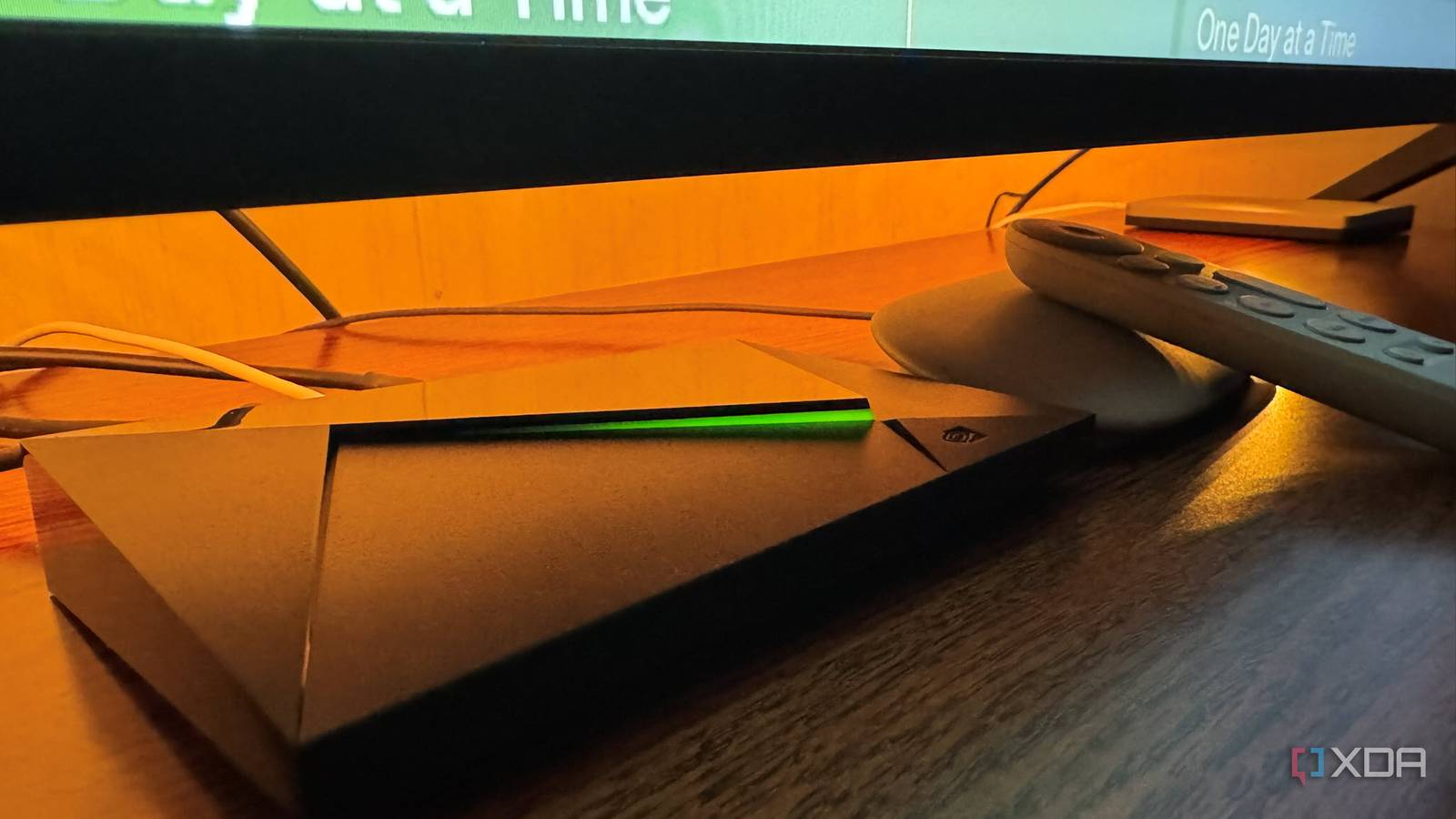
Published Nov 28, 2026, 3:01 PM EST Based in rural Minnesota, Brian Burgess worked in IT for 10 years before finding his passion for writing about consumer technology. Brian earned his degree in computer and network technology in 2000. He held various IT positions, including help desk support, router installations for IBM, database administration, and other associate network administration roles. He's been a personal technology journalist for 18 years and has written thousands of articles about Microsoft products and services, Android, iOS, streaming, and more. He has written for notable tech sites including XDA, InformationWeek, How-To Geek, Byte, groovyPost, and others. When he is away from the keyboard, you will hear him playing guitar, working outdoors, and watching Star Trek. When Nvidia released its Android TV box in 2019, the company "future-proofed" it by including a powerful Tegra X1+ SoC, two USB 3.0 ports, and plenty of room for updates. Seven years later, it still outperforms most other modern streaming boxes, including the Google TV Streamer, launched as the successor to the Chromecast with Google TV a couple of years ago. There are areas where the Google TV Streamer beats the Shield TV Pro in terms of supported file types, but not all of them. For instance, it can play AV1 video files, which is one of the biggest ones to point out. The Shield TV Pro barely missed out on AV1 when it launched in 2019. But there are legacy codecs the Shield TV Pro can play that the Streamer can't. Buying a seven-year-old used streaming box It does a lot more than streaming The Nvidia Shield TV Pro is more than a simple streaming box like the Google TV Streamer, and that is why I bought one used for $100 before the price increase. To be fair, the Streamer's price was also raised. But beyond acting as a streaming box, the Shield TV Pro includes a self-hosted Plex media server, USB ports for expansion, supports cloud gaming through GeForce NOW, AI upscaling, and more. It's no ordinary Android TV box and holds up against the competition in 2026. In addition, it still supports file formats the Streamer can't play or play well. For example, the Streamer lacks hardware decoding for VC-1, which is an HD codec derived from Microsoft back in the day. It may show up in some older Blu-ray or HD DVD rips. Also, interlaced 1080i MPEG-2 content like DVD rips or live TV tuner recordings will play on the Streamer, but won't look good. Google even says the device doesn't deinterlace content. So, while legacy, it supports older file types for media libraries with older rips and recordings. The Shield TV Pro handles files better than the Streamer Hardware and software determine media file transcoding and decoding It might not be that the Streamer doesn't play certain files; it comes down to how well the Shield TV Pro handles demanding file types. The Shield TV Pro's 256-core GPU handles decoding that its combination of a powerful Tegra X1+ SoC and 3GB of RAM doesn't. I've played standard and UHD Blu-ray rips on both, in the file formats each device supports. The Shield TV Pro usually plays the movies flawlessly, while the streamer gets bogged down and buffers. I've seen this, whether streaming from Jellyfin or Plex, with the Shield TV Pro as the server and client, or client-only. I connect each to my network via their Gigabit Ethernet ports, as Wi-Fi is a bottleneck. I've also connected external media drives directly via the Shield TV Pro's USB 3.0 ports or to the Streamer using a power-through USB-C hub to test media playback more directly. In all the testing with different configurations, the Shield TV Pro only chokes when I throw file containers with 4K AV1 codecs at it. However, some standard AV1 Blu-ray rips played, but not always very well. I could see high system resource usage on the server. Still, the Streamer does play the codec. But there was buffering with large, demanding 4K rips. Overall, I've found the Streamer to still be buggy, but it handles UHD 4K AV1 files better than the Shield TV Pro. The Shield TV Pro includes better sound file handling Lossless audio pass-through support for Blu-ray rips Unlike the Streamer, the Shield TV Pro passes Dolby TrueHD, DTS-HD Master Audio, and DTS:X untouched through to your connected AV receiver. That gives home theater enthusiasts and audiophiles a better sound experience. The receiver decodes the audio, applies precise processing, and handles audio signal routing for complex speaker layouts. Users with a good-to-high-quality receiver and speaker system will appreciate lossless audio pass-through. The Streamer uses PCM, which decodes analog audio on the device, and results vary. Some users say they can notice a difference when playing audio through the Streamer, while others don't. But a lot depends on the AV receiver's settings and speaker layout. Where the Google TV Streamer excels at playing files AV1 and HDR10+ are key advantages The Google TV Streamer was released in 2024 and plays the newer AV1 codec for 4K Blu-ray rips. It can decode the files with its included hardware. Many other modern streaming devices support AV1, but not all. The Shield TV Pro doesn't support AV1 due to timing. The modern codec was finalized in 2018, following the Tegra X1+ design being locked in. Another big one is HDR10+, which adds dynamic metadata that tells the screen how to map each scene. It usually results in a brighter and more detailed picture. The Streamer was built with HDR10+ in mind, while the Shield TV Pro's timing and age limit it to static HDR10. Still, it's no slouch at delivering a crisp picture as it also handles Dolby Vision. A used Shield TV Pro at a good price can include years of value Even with certain limitations, if you can find a used Shield TV Pro at a good price, it's worth the investment. With a built-in media server, fast performance, USB 3.0 expansion, gaming support, and more, it beats the Google TV Streamer hands down. Sure, it would be nice if the Shield TV Pro could support the AV1 codec. It's one of the best ways to maintain quality Blu-ray rips and save space on your server or NAS. Still, even if I didn't get mine used, I would buy a new Shield TV Pro over any competing Android box right now. Nvidia Shield TV Pro
I bought a used Nvidia Shield TV Pro in 2026, and it still plays files my Google TV Streamer can't
Full Article
Original Source
Read the full article at Xda-developers →KhanList aggregates and links to publicly available news content. We do not host full articles from third-party sources. Always verify important information with original sources.