
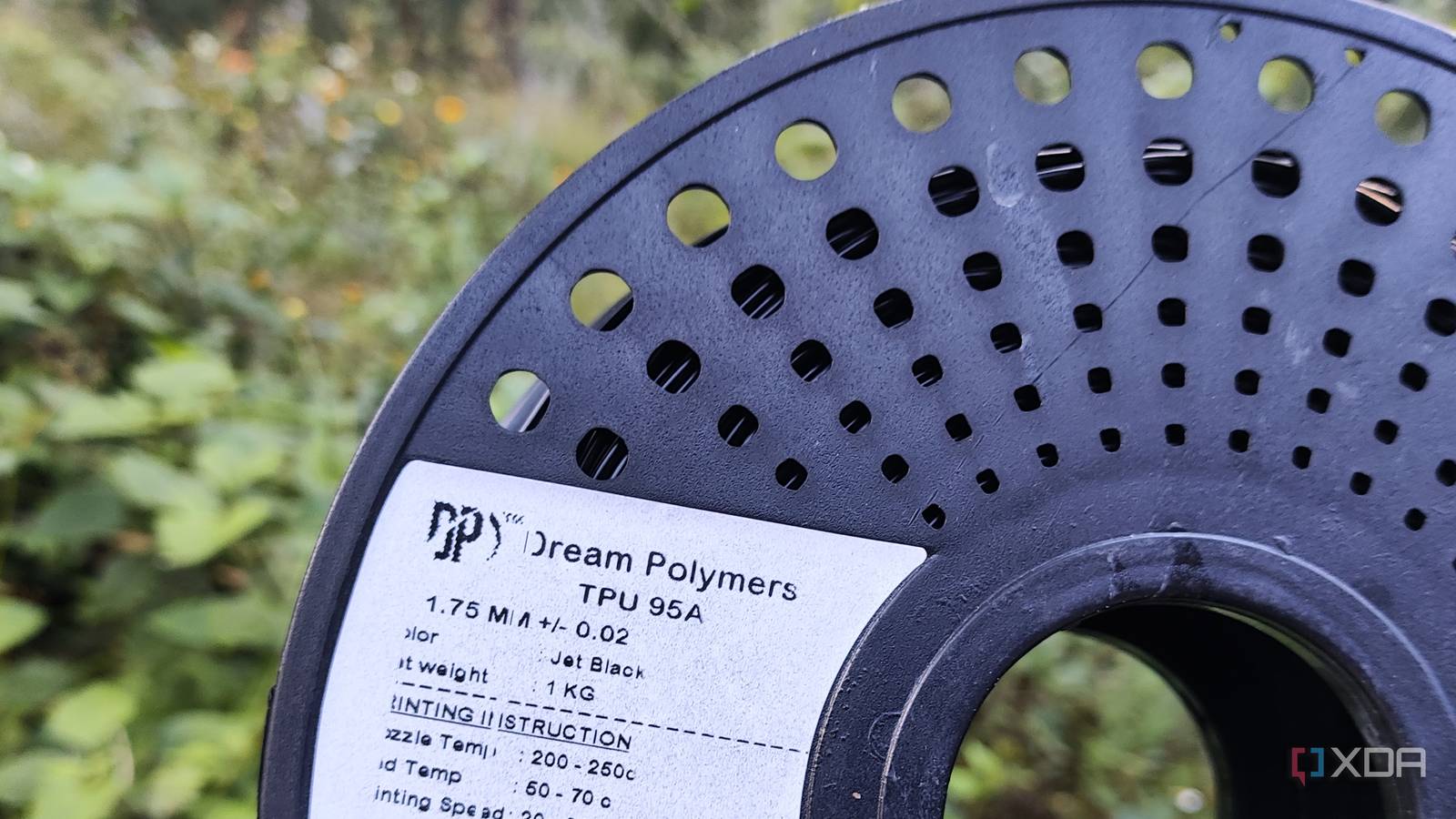
Published Nov 9, 2026, 11:00 AM EST Ayush Pande is a PC hardware and gaming writer. When he's not working on a new article, you can find him with his head stuck inside a PC or tinkering with a server operating system. Besides computing, his interests include spending hours in long RPGs, yelling at his friends in co-op games, and practicing guitar. Despite staying with good ol’ PLA during my time as a beginner 3D printing enthusiast, I’ve forayed into a bunch of other filaments over the years. PETG, for example, is something I used to dread printing things with as a fledgling, but it now serves as my primary filament for functional items. Meanwhile, I still use PLA for aesthetically-pleasing models, visual prototypes, and cosplay props, with ABS helping me out with the occasional prints where I need slightly higher heat resistance than PETG. Then there’s TPU, which lets me turn simple STL files into highly elastic and flexible models. And although it requires a completely different printing profile and calibration process than the other filaments in my arsenal, it’s pretty useful for everyday home repairs. TPU handles prints where PETG and PLA can’t quite cut it My other filaments can’t create elastic and flexible models Although PETG is my preferred filament for mechanical gears, brackets, structural frames, and load-bearing components, there are situations where its rigid nature isn’t all that useful. Take the gaskets I’ve had to replace in my garden hose, washing machine, and water heater inlets, for example. PETG is undoubtedly useful for creating the rigid shell or mechanical brackets where I can slot the gaskets in question, but TPU’s elastomer nature and superior layer-to-layer bonding makes it significantly better for creating these liquid-tight seals. Since TPU has a rubbery nature, it’s also pretty handy for creating replacement bike grips and joystick caps. Speaking of grips, I often create a layer of TPU around the feet of my PETG desk accessories, so they don’t slide off my desk at the slightest push. When it comes to furniture, my TPU roll came in handy for designing a bumper for my squeaky closet door. Likewise, I’ve used it extensively to design impact-absorbing edge guards for sharp tables, desks, and (most importantly) bed corners, and it was by far the best use case for this filament. Since I can create custom corner guards with the precise dimensions for the cheap furniture I’ve accumulated over the years, I don’t need to put up with misaligned, off-the-shelf solutions. And considering all the outdated kitchen and bathroom appliances in my house, I can always design custom TPU parts instead of scouring the market for discontinued repair components. I also use TPU for certain home lab prints And don’t get me started on all the wacky stuff I can print with this filament Besides its utility for niche home accessories, TPU was surprisingly useful for my home lab. For example, when I was designing entire cable management setups using PETG, tossing a TPU grommet into the mix let me route the pesky wires from my mic, webcam, monitors, KVM switch, and typical I/O accessories. Although I prefer more rigid filaments for my cable channels, TPU is better for wire organizers where I want some extra elasticity to ensure the 3D printed clip bends with the cables. TPU-based dampening washers were another neat addition to my home lab racks, and the same holds true for the tiny slip-on sleeves for the hex keys I rely on when customizing my 3D printer. In fact, I’ve designed some TPU feet for my 3D printers, NAS, and PC cases to reduce their vibrations and noise. It’s also pretty handy for DIY replacement smartwatch straps and cable ties, and that’s before I even discuss the wackier set of models I can create with TPU. Although the phone case I 3D printed earlier this month didn’t turn out perfectly, I love being able to customize every aspect of my TPU-based shock-absorbing case. Articulated models also look a lot cooler in TPU than PLA, and I’m already planning to create some 3D printed sneakers with this flexible filament, because, why not? Nevertheless, TPU has a couple of caveats that I learned the hard way Post-processing is also rather challenging for TPU models As much as I’ve grown fond of TPU during my 3D printing (mis)adventures, I have to admit that it has some annoying quirks. Sure, it’s not as toxic as ABS, nor does it require an enclosure for open-air 3D printers. However, TPU is rather hygroscopic, so I need to dry the filament before I hook it up to my 3D printer, or I’d run the risk of excessive stringing and bubbling on the models. Getting rid of stringing once I’ve printed the model is also a bit harder on TPU than PETG and ABS. Heck, I remember accidentally melting the rubber feet on a failed print when I tried heating it to remove excessive stringing. I’ve also heard horror stories about TPU causing issues with AMS, which is why I feed it directly to my Centauri Carbon printer. On the stiffness front, I’ve had better luck with TPU filaments with 95A hardness, as softer materials required a lot more tweaks in the slicer before they could deliver decent results. Finally, I’ve reduced the flow rate on my TPU profile to 5 cubic mm/second, and depending on the models, I’d often turn the outer wall generation speed down a notch. TPU is quite an underrated 3D printing filament These minor caveats aside, TPU is still an essential part of my 3D printing arsenal. Sure, it may not be as versatile as my beloved PETG rolls. But if I need to replace a gasket for my kitchen appliances, create a flexible grip for everyday products, or get rid of squeaky cabinet door sounds, I know my TPU filament spools have got my back.
I avoided TPU for years, and now it fixes half the things that break around my house
Full Article
Original Source
Read the full article at Xda-developers →KhanList aggregates and links to publicly available news content. We do not host full articles from third-party sources. Always verify important information with original sources.