
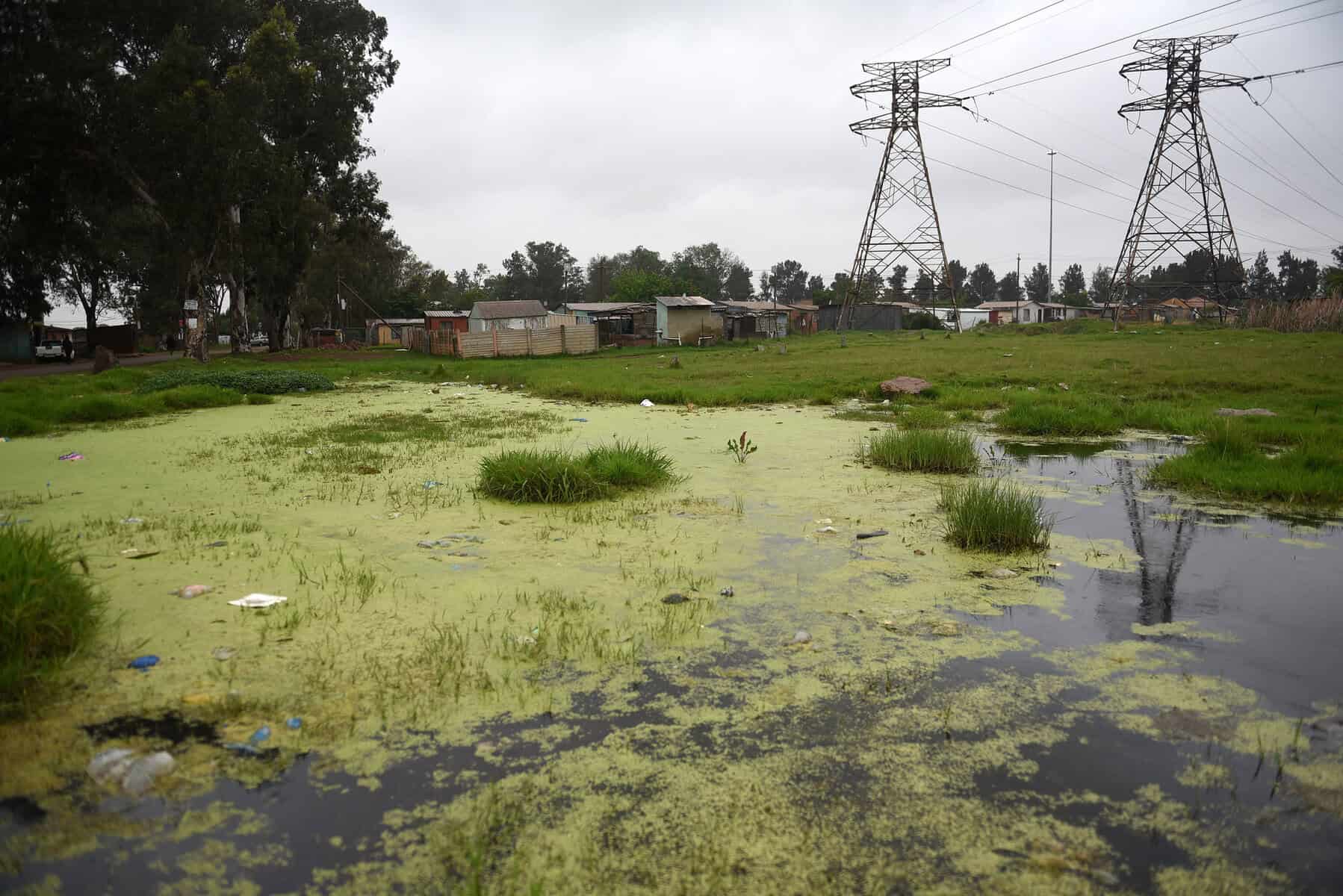
A medical report links one resident's bronchitis to prolonged exposure to sewage odours around her home. For 63-year-old Masetumo Marago, her home in Gauteng’s Boipatong township has become a place of sickness, foul smells and an unending battle with raw sewage. She shares the home with her 93-year-old father and 25-year-old daughter. Sewage crisis takes toll on resident’s health The mother of three has lived in Boipatong for about 50 years and said the sewage nightmare began about two years ago, turning her home into a place where she fears for her health. “I am literally dying in my home… and nobody cares. For me to step out of my house, I have to put on four face masks and a handkerchief,” she said. Marago said she had been diagnosed with bronchitis after experiencing breathing difficulties, chest tightness and irritation of her nasal passages due to her prolonged exposure to sewage odours. A medical report dated 11 September, issued by a private medical facility in Vanderbijlpark, states that she had been a patient at the practice since 2023 and had no previous history of lung disease. According to the report, Marago told the doctor she was constantly exposed to sewage odours around her home. She presented on 2 September with chest tightness, difficulty breathing and nasal irritation, with a chest X-ray subsequently showing evidence of bronchitis. The doctor recorded a possible “direct causality” between the condition and Marago’s reported continuous exposure to sewage smells at her residence and recommended treatment and active monitoring. “She presented with symptoms of tight chest, difficulty breathing and nasal passage irritation every time she steps outside her home. “It was brought to my attention that she is constantly in contact with sewage odour from a sewerage problem in her immediate vicinity. “A chest X-ray was requested and this showed evidence of bronchitis, an inflammation of the large airways of the lungs that is due to breathing in harmful irritants. A direct causality can therefore be linked for bronchitis secondary to continuous exposure sewage odour at her place of residence,” the report, which The Citizen has seen, says. Boipatong resident Lydia Marago has been suffering from bronchitis for the past four months because of sewage in her yard. Picture: Nigel Sibanda/The Citizen Residents seek answers over sewer blockage Marago says the problem began with a manhole at the nearby Makapane Primary School. She said a contractor was appointed to clear a blocked sewer at the school, but the work allegedly resulted in a blockage of the line serving nearby homes. According to Marago, sewage subsequently spilled into about 10 residential properties, including hers, along Batloung Street. “All our efforts to be rescued from the crisis have been in vain. Recently, I went to the municipality, desperate for help, but all I got was an admission that this was a serious problem but nothing has been done. All I am subjected to are temporary fixes just to shut me up,” Marago said. Her case underscores the human cost of a much wider sanitation crisis in Emfuleni municipality, where residents have repeatedly complained about sewer failures and what they describe as temporary interventions that fail to address underlying infrastructure problems. Marago and other affected residents have since approached human rights activist Modise Molefe, president of the Reliable Environmental Protection and Care Agency, for assistance. Molefe said residents had repeatedly sought assistance from Emfuleni, but the interventions had failed to provide a permanent solution. “I am completely tired of running in circles with a municipal and Section 63 intervention system that ignores its people, while 10 families live with raw sewage,” he said. Calls grow for permanent engineering solutions Human rights activist Reverend Modise Molefe. Picture: Nigel Sibanda/The Citizen Molefe said an immediate blockage affecting Marago’s property was cleared, but sewage continued backing up. He said Marago eventually installed a pipe to divert overflowing wastewater away from her property and into the public road. According to Molefe, the crisis was not confined to Batloung Street. He said three homes on nearby Qwaqwa Street had experienced persistent sewer problems for months, with sewage flowing onto public roads. Molefe said that the recurring failures point to a broader infrastructure problem requiring more than the repeated clearing of individual blockages. He has called for a comprehensive engineering assessment of the sewer network serving the affected parts of Boipatong, including an assessment of its condition, capacity and the causes of recurring sewer backups. Molefe also wants authorities to determine whether the network is carrying loads beyond its intended capacity and why sewage continues to back up into homes and public spaces. He alleges that another resident in the area suffered severe diarrhoea, which he attributes to exposure to sewage contamination. This allegation has not been independently verified. Emfuleni records thousands of sewer complaints The Boipatong complaints come against the backdrop of years of documented water and sanitation challenges in Emfuleni. The municipality’s 2024-25 annual report recorded 9 170 sewer-related complaints during the financial year, down from 18 999 the previous year. Of the 9 170 complaints recorded in 2024-25, the municipality classified 6 169, or 67%, as successfully resolved. This left about 3 001 complaints that were not classified as successfully resolved under that measure. The municipality also reported cleaning approximately 500km of sewerage pipelines and replacing 5.5km of old or damaged sewerage pipes in critical areas during the financial year. The figures indicate significant maintenance activity, while also illustrating the scale of the sewerage burden. National government has been intervening in Emfuleni since 2021 under Section 63 of the Water Services Act, with Rand Water appointed as the implementing agent. The intervention has been estimated at about R7.6 billion over seven years. Wider wastewater crisis raises concern A pool of sewage at a house on Qwaqwa Street in Boipatong, Emfuleni, this week. Raw sewage floods streets, yards and schools in Boipatong. Pictures: Nigel Sibanda/The Citizen Molefe said he welcomed the deployment of vacuum trucks to deal with sewer blockages, but argued that emergency interventions should be followed by permanent engineering solutions. He wants authorities to inspect the affected areas, assess the capacity and condition of the sewerage network and provide residents with a timetable for permanent repairs. Molefe has also raised several other cases he says demonstrate the human consequences of Emfuleni’s sewer problems. One involves a reported sewage spill on Barolong Street involving a 70-year-old woman and her great-granddaughter, who were hospitalised at Naledi Inkani Hospital following the incident. Molefe has also raised the case of Dimakatso Mofokeng, whom he alleges died following prolonged exposure to conditions linked to municipal sewage failures. The municipality had not responded to questions by the time of publishing. SA’s ongoing wastewater systems crisis Almost half of SA’s wastewater treatment systems are in a critical state, with data showing a sharp deterioration in municipal wastewater management and growing risks to the country’s rivers and public health. 848 wastewater treatment systems were audited in the 2025 Green Drop assessment, covering the 2023-24 municipal financial year – 396 systems (47%) were classified as in a critical state, up from 334 systems (39%) in the 2022 Green Drop Report. The number of good or excellent-performing systems fell to 66 (8%), from 118 (14%) in 2022. Only 14 wastewater systems achieved Green Drop certification in 2025, down from 22 systems in the previous assessment. The deterioration was linked to poor maintenance of ageing infrastructure, failure to follow standard operating procedures and shortages of skilled personnel. Weak municipal leadership, inadequate maintenance budgets and poor revenue collection were identified as additional factors. Vandalism, corruption and attacks on water and energy infrastructure were identified as further factors worsening the condition of municipal water and wastewater systems. Provincial performance was uneven, with the Northern Cape identified as the worst-performing, recording the highest concentration of critical-risk systems. The Free State was also flagged as a concern.
‘I am literally dying’: Boipatong resident battles raw sewage
Full Article
Original Source
Read the full article at Citizen →KhanList aggregates and links to publicly available news content. We do not host full articles from third-party sources. Always verify important information with original sources.