
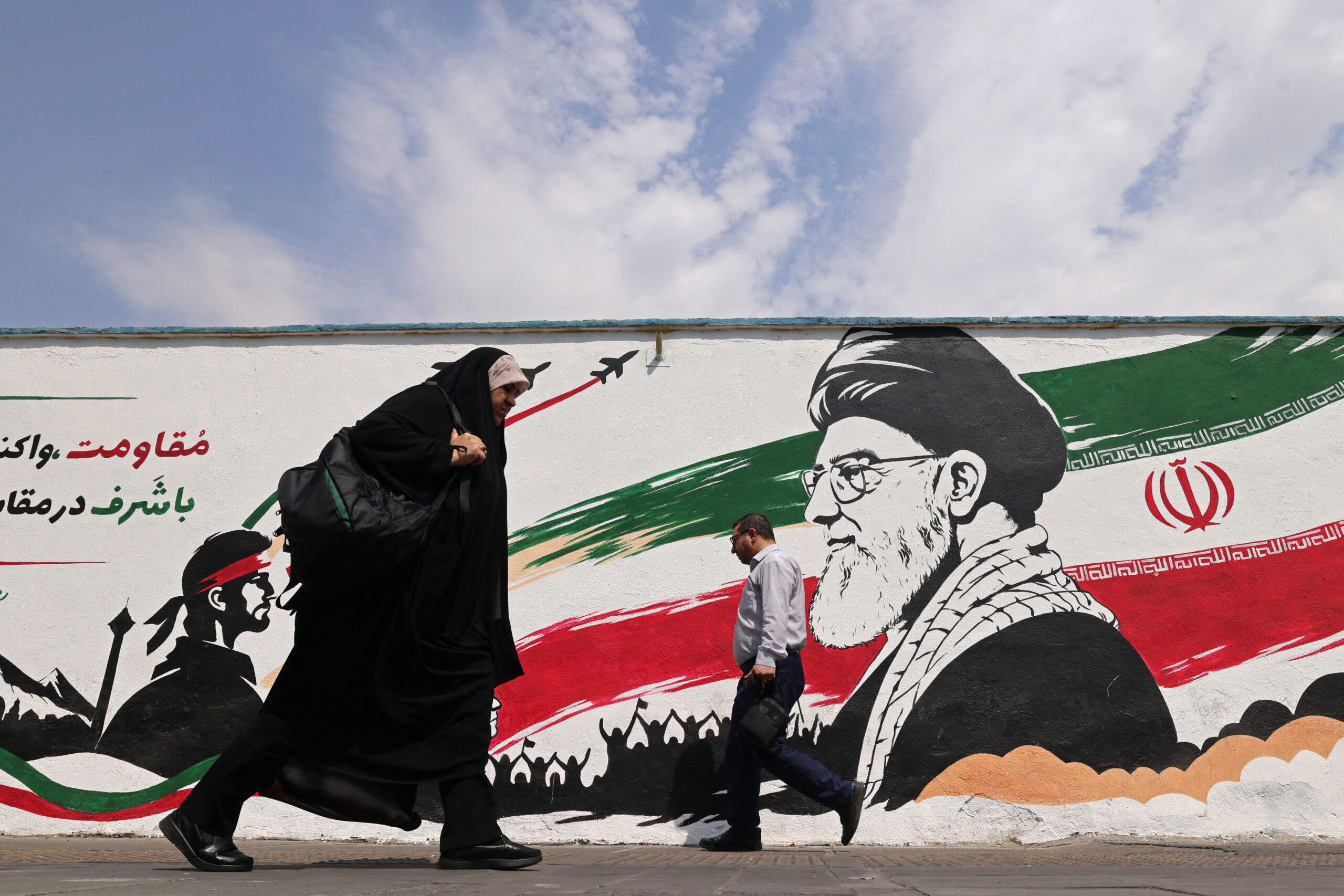
The Iran War Experts say Tehran will dig in, not back down, amid “economic D-Day.” Photo by ATTA KENARE / AFP via Getty Images Amid public discontent and warnings from Pentagon leaders that the Iran War undermines military readiness, President Donald Trump has settled on a new strategy: lower the temperature on military hostilities and focus instead on strangling Iran’s economy. Middle East experts told The American Conservative that this approach won’t fundamentally change Tehran’s own military strategy, at least not in ways congenial to American interests. Moreover, in practice it is leading to skirmishes centered around the Strait of Hormuz, where the U.S. aims to blockade Iranian ports while securing free transit for allied countries. Meanwhile, ordinary Iranians face dire threats to their livelihoods, as revealed by first-hand testimonies shared with TAC. Trump’s strategy of economic warfare involves isolating Iran from its trading partners, but the ultimate aim remains unclear: Does the administration seek to force economic collapse, geopolitical capitulation, or diplomatic compromise? Whatever the goal, the White House will find that increasing the pain doesn’t automatically lower Tehran’s resolve, said Rosemary Kelanic, the director of the Middle East Program at Defense Priorities. “Iran will keep fighting despite the economic pain,” Kelanic said. “This is an existential conflict for them, and besides, capitulation isn’t a serious option when Trump’s demands are so erratic. No deal is ever final with him, so Iran fears that making concessions would just encourage Trump to ask for more.” The possibility that Iran’s leaders could dig in rather than back down doesn’t seem to have dawned on Treasury Secretary Scott Bessent. He initially had said new sanctions would “crush the failing Iranian economy,” but on Monday he struck a less aggressive tone. “The economy doesn’t have to collapse,” Bessent told reporters. “We just have to have the regime come to their senses.” Meanwhile, Trump—who refers to the strategy as “economic D-Day”—declared that Iran was already in its death throes. “Iran is officially a Failed Nation. IT IS DEAD!” Trump wrote Monday on Truth Social. “They have no Navy, they have no Air Force, they have no currency, they are not paying their soldiers or police, Inflation is at 300%, and their leadership is in total disarray and incapable of properly representing the country.” Kelanic cast doubt on how much damage economic D-Day can really do, giving it “less than a snowball’s chance in hell” of working. “The players whose economic ties with Iran matter most—China, Russia, and Pakistan, which shares a long border with Iran—have refused to cooperate in isolating Tehran,” she observed. Moreover, the strategy is not actually new, though it marks a change of pace in the current war. The U.S. first slapped sanctions on the Islamic Republic in 1979, the year it came to power, and has continuously maintained economic restrictions of some kind against Iran in the decades since. As you might have noticed, the Islamic Republic is still standing. To be sure, Iranians face growing lines at gas stations and rising food prices, as Iran’s president has acknowledged. Far less certain, however, is whether their escalating misery serves a coherent U.S. objective, such as toppling the regime, or at least pushing it to end the war on terms favorable to Washington. And even if more and tighter sanctions did create an intolerable situation for the Iranian government, recent history suggests Tehran would escalate militarily or crack down internally rather than cry uncle. “We’ve seen repeatedly that economic pressure can severely hurt ordinary people without producing the political outcome Washington expects,” Sina Toossi, an Iran expert at the Center for International Policy, told TAC. “Tehran is more likely to look for ways to withstand the pressure and impose costs of its own, including through its leverage over Hormuz and regional energy flows.” Indeed, this past weekend—the first since Bessent laid out the economic D-Day strategy—brought an exchange of strikes between the U.S. and Iran, ending a month-long pause in direct hostilities. According to the Pentagon, Iranian troops had been preparing to launch mines into the Strait of Hormuz when American forces attacked. Iran responded by firing missiles and drones at bases in Jordan and the UAE. In the preceding days, Axios reports, Iran had been reconstituting military capabilities and had even shot a missile toward an American fighter jet. The tit-for-tat cycle hasn’t ended just yet. At the time of writing, on Tuesday, the U.S. is striking targets in southern Iran following attacks by Tehran on commodity vessels in the Strait of Hormuz. Pro-war Republicans have tried to explain how a “dead” and “defeated” nation continues to pose a threat requiring U.S. military vigilance. Speaking to reporters in the Oval Office, Trump again emphasized Iran’s economic difficulties but added, “That doesn’t mean we won’t smack them.” Mike Pompeo—who served as secretary of state and CIA director in Trump’s first term—said “Tehran is lashing out because America’s pressure campaign is working.” Maybe so, but Iran’s “lashing out” would seem a rather unfortunate side effect of that campaign, risking a return to major hostilities. The Department of Defense, for its part, doesn’t seem confident that the shooting war will soon be put in the rear-view mirror. A Pentagon source told Axios that one long-term plan is to “mow the lawn” around the sea passage, meaning periodically bomb Iran to constrain its ability to block commercial shipping. Iran experts were alarmed by the implications. “The administration is apparently giving up on solving the issue militarily, economically, or diplomatically,” Trita Parsi of the Quincy Institute wrote on X. “Instead, permanent warfare is needed to manage the problem.” Subscribe Today Get daily emails in your inbox Caught in the middle of the U.S.–Iran war are the Iranian people, who can expect a continuation of crippling sanctions and intermittent bombing. That combination has already created catastrophic circumstances for vulnerable Iranians, judging by testimonies an Iranian civil society organization shared with TAC. “War is truly devastating, and it is ordinary people who end up paying the price,” said a resident of the city Ahvas in western Iran. The person described how impoverished children in the area collected discarded materials to support their families—until scrap warehouses were shuttered during the war, eliminating a vital source of income. Another testimony evinced personal acquaintance with a problem described by expert critics of economic D-Day: “The main burden falls on ordinary people, not politicians.”
Hurting Everyday Iranians Doesn’t Help American Interests
Full Article
Original Source
Read the full article at Theamericanconservative →KhanList aggregates and links to publicly available news content. We do not host full articles from third-party sources. Always verify important information with original sources.