
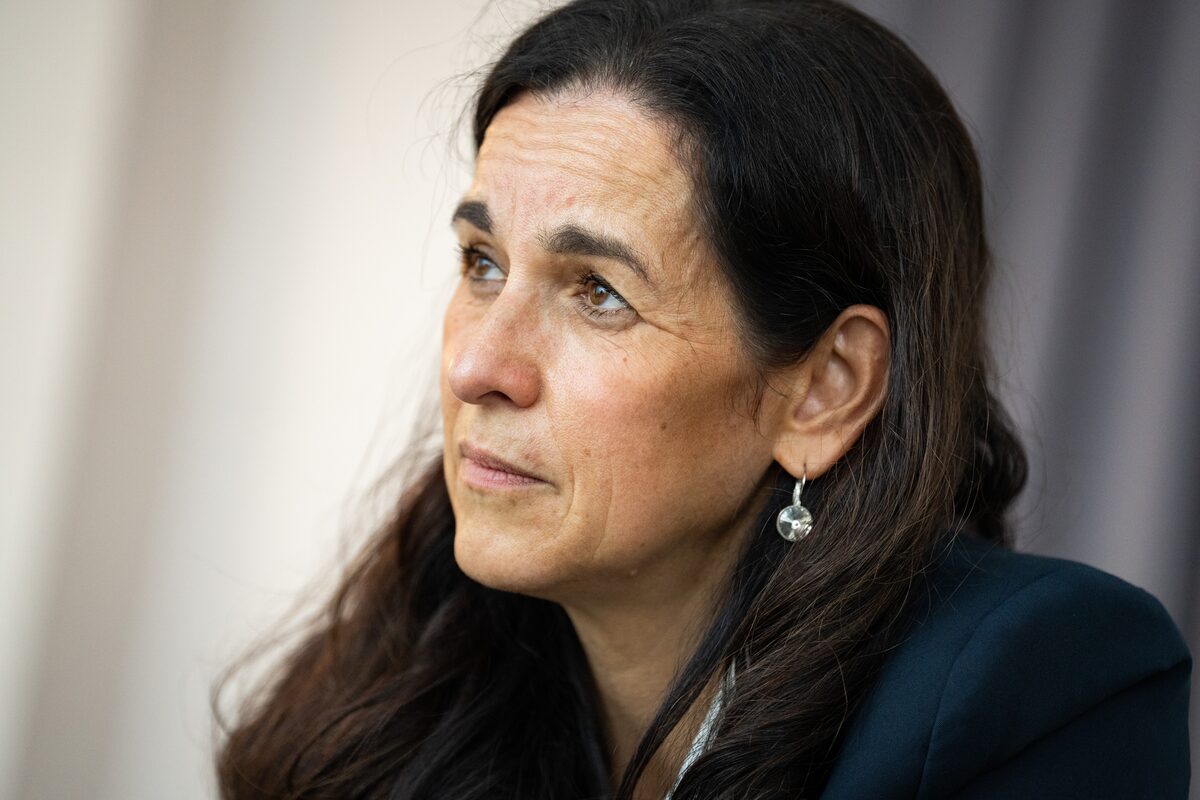
Open this photo in gallery:Anita Orbán, Hungary's Deputy Prime Minister and Foreign Affairs Minister, was in Toronto for a conference on efforts to repatriate kidnapped Ukrainian children, detained civilians and POWs from Russia and the occupied territories.Arlyn McAdorey/The Globe and MailHungarian Deputy Prime Minister Anita Orbán says making Canada an “associate member” of the European Union would be a great opportunity to increase trade and political co-operation and bolster their already strong ideological ties. “We need to understand what it means. But for me, how I see it … this could be an umbrella framework bringing the EU and Canada closer together politically, because these two are already pretty close in terms of values, in terms of how they look at free trade, multilateralism, digital, critical raw materials, energy, security,” said Ms. Orbán, who is also the country’s Foreign Affairs Minister, in an interview in Toronto. She was elected in April in a vote that overthrew Viktor Orbán (no relation), who had been in power for 16 years and was a close ally of Russian President Vladimir Putin. Earlier this month, European Commission President Ursula von der Leyen called on Canada to become the EU’s first “associate member” − a status that does not officially exist and has yet to be defined − during her State of the Union address to the European Parliament. Prime Minister Mark Carney has increasingly been courting European leaders as Canada’s relationship with the United States continues to sour. However, Mr. Carney has said that Ottawa is not seeking EU membership, concerned that it would compromise Canadian sovereignty and cause a permanent rupture in the country’s relationship with the U.S. Steve Suarez: To resist American domination, Canada must fix its failing tax systemMs. Orbán was in Toronto attending a conference that Canada is co-hosting with Ukraine and Norway on efforts to repatriate kidnapped Ukrainian children, detained civilians and prisoners of war from Russia and the occupied territories. She said she was also here to celebrate the coming 70th anniversary of the Hungarian Revolution on Oct. 23, which resulted in tens of thousands of Hungarians moving to Canada. “This is the very first time I am meeting and seeing a partner of mine officially in a non-EU country,” she said, referring to Foreign Affairs Minister Anita Anand. “It also shows how much we value the Canada-Hungary relationship, how much we value multilateralism, the rules-based order, the values-based realism which Canada is bringing to the multinational stage.” In terms of forging deeper ties with Canada, energy could be one area, Ms. Orbán said, but more broadly she wants to see economic co-operation that benefits both countries. She said there is a solid Canadian business community in Hungary, for instance, and there’s room for it to grow. Hungary is one of 10 EU countries that have not ratified the Canada-European Union Comprehensive Economic and Trade Agreement (CETA). Ms. Orbán said her office has reinitiated the process that had been halted by the previous government; it is currently under interinstitutional review, which, once completed, will go to a parliamentary vote. Open this photo in gallery:Ms. Orbán, left, meets her Canadian counterpart, Foreign Affairs Minister Anita Anand, at the Pathways to Peace conference on Monday in Toronto.Sammy Kogan/The Canadian PressMs. Orbán said she also wants to talk with Ms. Anand about preserving multilateral institutions and adjusting them to the new realities. “Middle-power countries, middle-sized countries, we need and work very much with multilateral organizations,” she said. “That’s one of the ways that we represent our interests, but of course we are not blind to the changing world, to the changing needs, and I really would like to propose that we work together and think together about how we can keep the rules-based order, international world order, multilateralism.”Hungary has been undergoing a massive transformation since the electoral defeat of Mr. Orbán. The country is dependent on Russia for oil, gas and nuclear fuel and must strike a fine balance between maintaining a relationship with Moscow and deepening its ties with EU members and supporting Ukraine. “We have also become clear when it comes to the Ukrainian conflict, as compared to the previous government, and we absolutely do recognize who is the aggressor,” Ms. Orbán said. “And we condemn the Russian activities going against Ukraine and we stand by, of course, the sovereignty and territorial integrity of Ukraine. And this may seem not new to you, but this is a very big step in the Hungarian context.“So we are defending our national interests. We inherited an economy which is in really bad shape. We inherited existing energy supply contracts, but we are also trying to defend our sovereignty and national interest. Keeping the wider alliance, interest in mind, but we need to be also mindful of our own realities, which come from the dependency.”In depth: How two Ukrainian children, taken to Russia, fought their way back homeAcross Europe in recent weeks, leaders have warned that Russia could be preparing a strike on a NATO country. The Danish Defence Intelligence Service warned in a threat assessment last week that Moscow will likely escalate its hybrid war against the West and NATO “with greater consequences for the countries targeted than in the past.” It also said there is “a low but growing risk” that Russia would attack one or several NATO countries on its border. Ms. Orbán called the increase in hybrid war and sabotage activity by Russia “really alarming.” Earlier this month, Germany said Russia was responsible for an attempted drone attack at Leipzig/Halle Airport. A couple of weeks later, a drone was shot down in Lithuania. And around the same time, a Russian frigate fired two flares at a Danish military helicopter in international waters, just missing it. Ms. Orbán pointed out that last week EU countries agreed to a deal worth €6.6-billion ($10.6-billion) in military aid for Ukraine. The European Peace Facility, an off-budget fund for defence initiatives, had been blocked by Mr. Orbán’s government, tying up crucial funds for Ukraine.“The message is that all these [Russian] attacks will make European unity stronger,” she said. “We cannot be blind to it, it’s happening. We see it, again, it’s increased in terms of its frequency, in terms of its scale, and widened. And the only way to counter it is to stand united and try to deter it.”With reports from Reuters
Hungary’s Deputy PM endorses deepening Canada’s economic, political ties with EU
Full Article
Original Source
Read the full article at Theglobeandmail →KhanList aggregates and links to publicly available news content. We do not host full articles from third-party sources. Always verify important information with original sources.