
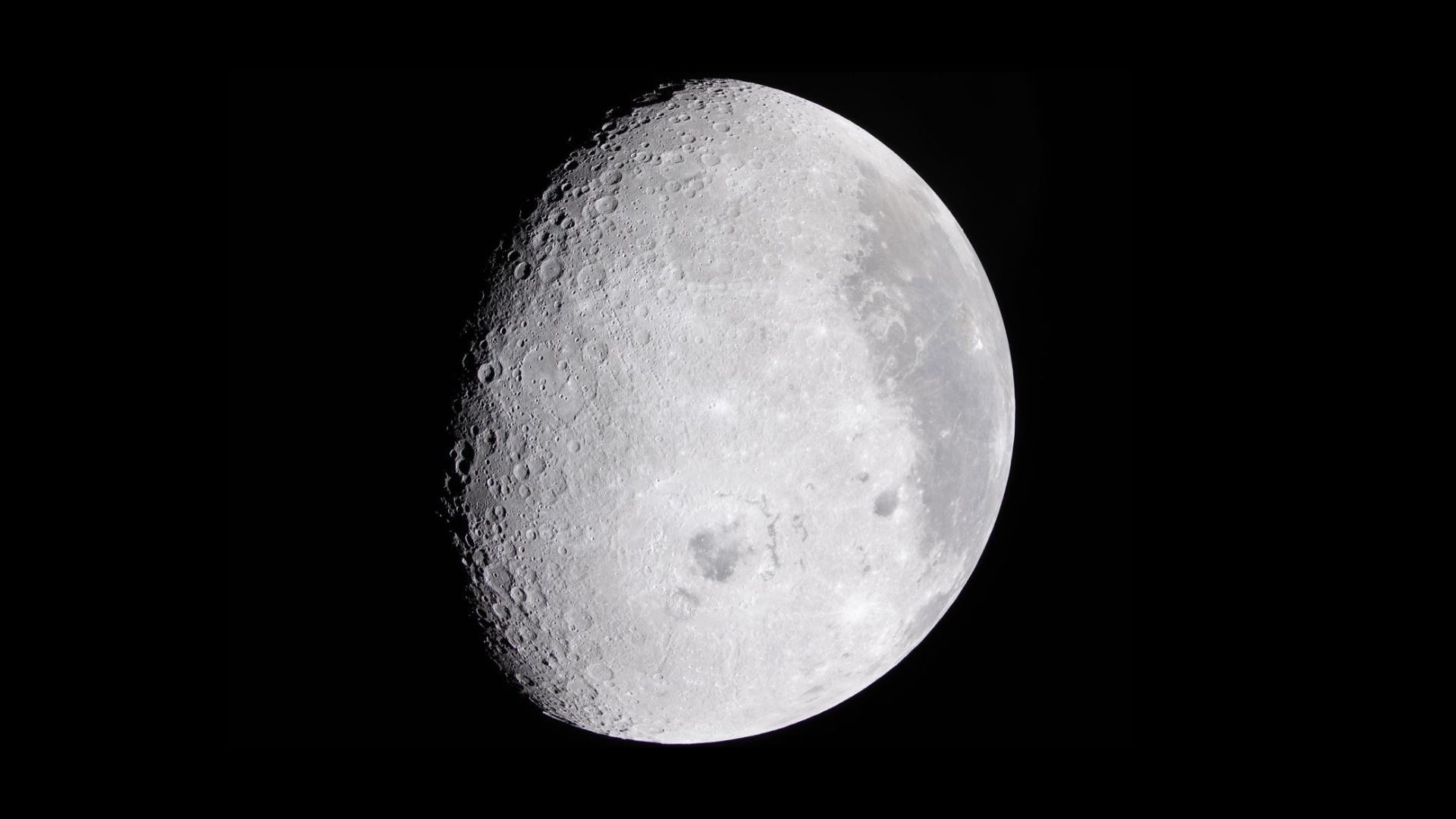
HPE is deploying its Spaceborne Computer to the MoonThe system will be hosted on the Astrolab Flex Lunar Innovation Platform (FLIP) lunar roverHewlett Packard Enterprise is the enterprise-focused component of the old Hewlett-Packard, and operates out of TexasHPE has emerged as a key partner in the deployment of the Astrolab FLIP lunar rover, with its Spaceborne Computer program joining other projects within NASA’s Commercial Lunar Payload Services program.The fourth generation Spaceborne Computer will be deployed on the FLIP lunar rover to the lunar south pole, as part of a year-long mission, and arrive on the Moon via the Voyager Technologies Griffin-1 lander.The mission will launch from NASA’s Kennedy Space Center in Florida on a SpaceX Falcon Heavy rocket, and once on the Moon, the Spaceborne Computer 4 will be challenged with AI and high power computing (HPC) tasks, assisting with the rover’s mission and potentially becoming the fastest supercomputer on the Moon.Orbital computeAs a provider of orbital compute systems for the ISS, HPE has built a series of increasingly powerful supercomputers.The Spaceborne Computer 4 is the latest generation of its high-performance computing (HPC) systems, with the series kicking off with Spaceborne Computer 1, which joined the ISS in 2017. After various iterations to prove reliable operation in microgravity, edge computing, and AI processing of scientific data, the fourth generation system will rely on a low-powered CPU and 1TB of mirrored storage across a pair of Kiovia SSDs.The exact specification of the Spaceborne Computer 4 is under wraps, apparently due to concerns over hardware failure. What we do know is that the Spaceborne Computer 3, which launched on January 30, 2024 for deployment on the ISS, had unprecedented computer and memory power for an orbital mission, along with 130TB of storage.As the Spaceborne Computer 4 has less storage, measures just 5 x 10 inches, and is around 1 inch in depth, its slighter capacity makes slightly more sense due to the weight restrictions for cislunar travel.Sign up to the TechRadar Pro newsletter to get all the top news, opinion, features and guidance your business needs to succeed!The FLIP sideHewlett Packard Enterprise – formed in 2015 with the break-up of the original Hewlett-Packard Company into separate entities – is a key part of the lunar mission, with the Spaceborne Computer 4 set for deployment as part of Astrolab’s Flex Lunar Innovation Platform (FLIP), a lunar rover.While specific details of the HPE Spaceborne Computer 4’s specific role in the mission are unknown, we do know that it will be providing local edge compute. With a time delay for data processing back on earth, having the Spaceborne Computer 4 on hand will make it easier to process telemetry data and other information gathered by the FLIP.“It’s important to ship back insight to Earth rather than all the raw data whenever possible. So having the edge compute capability to process the raw data locally, save on bandwidth back to Earth,” Astrolab CEO Jaret Matthews told The Register. Follow TechRadar on Google News and add us as a preferred source to get our expert news, reviews, and opinion in your feeds.
HPE is sending its most powerful AI compute platforms to the Moon aboard an all-new lunar rover
Full Article
Original Source
Read the full article at Techradar →KhanList aggregates and links to publicly available news content. We do not host full articles from third-party sources. Always verify important information with original sources.