
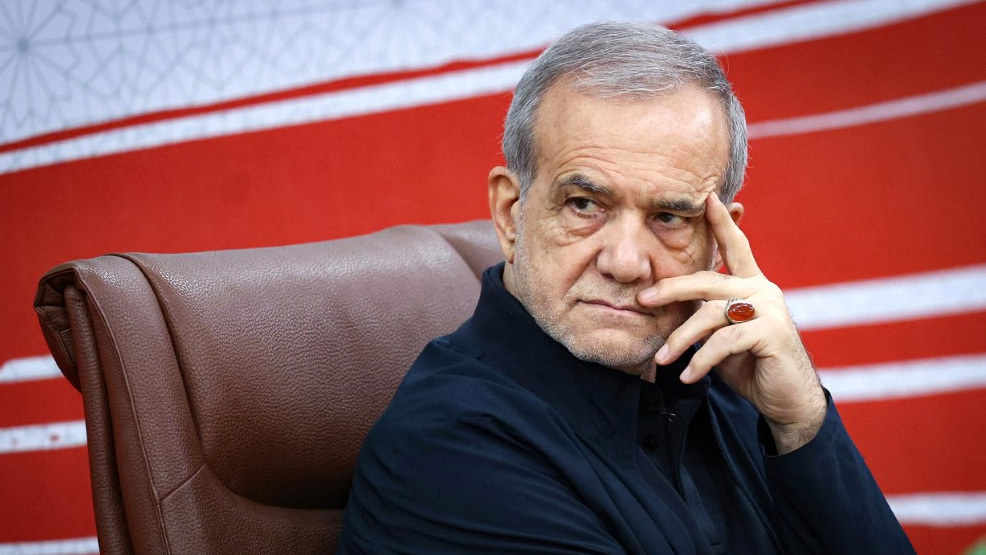
After days of intense buildup, the Trump administration has unveiled what it calls “economic D-Day” against Iran. US Treasury Secretary Bessent vowed the toughest sanctions campaign in history, following President Donald Trump’s threat to “crush” Iran with economic warfare “on an unprecedented scale” unless Tehran surrendered to Washington’s demands. Yet the sanctions regime Bessent described on Monday came with surprisingly few specifics. Even before the announcement, thousands of Iranian and non-Iranian individuals and entities were already facing US sanctions. The apparent novelty lies less in sanctioning Iran itself than in threatening countries, companies and financial networks that continue doing business with Tehran. Bessent even borrowed a page from former US president George W Bush’s playbook: “You are either with us or against us.” According to Iranian customs data, the country trades with 178 states, but China and the UAE matter most. New MEE newsletter: Jerusalem Dispatch Sign up to get the latest insights and analysis on Israel-Palestine, alongside Turkey Unpacked and other MEE newsletters China is Iran’s biggest buyer of oil. The US-China Economic and Security Review Commission says Beijing purchases “upward of 90 percent” of Iranian crude exports. The UAE, meanwhile, has long been a crucial conduit connecting Iran to global commerce, and helping it circumvent sanctions. According to data from the World Trade Organization, in 2024, Iran obtained 30.6 percent of its imports, worth roughly $21bn, from the UAE. That figure alone does not capture the wider role of front companies, banking channels and Dubai-based exchange houses in facilitating Iranian trade. Bigger test The UAE has now announced a halt to Iran-related trade and transactions, a move Bessent said “was not a coincidence”. But how much bilateral commerce was still functioning is unclear. Since the war began, the UAE has suffered more Iranian missile and drone attacks than any other regional state, with nearly 3,000 directed at it. The announcement might therefore merely formalise a rupture the war had already largely brought about. China is the bigger test. Asked whether Beijing would be targeted, Bessent replied that “no one is above the reach of US sanctions”. China immediately pushed back, with foreign ministry spokesperson Lin Jian warning that the measures would intensify tensions, and vowing that Beijing would take “all necessary measures” to protect its interests. Is this a genuinely new sanctions architecture backed by much harsher enforcement, or partly psychological warfare, intended to convince Tehran that economic collapse is inevitable unless it capitulates? Washington has tested this before. In May, after the US sanctioned five Chinese refineries buying Iranian oil, Beijing reportedly instructed them to ignore the sanctions and offered protection. That raises the central question: is Washington really prepared for a wider economic confrontation with China over Iran? There is a broader problem. A campaign of this scale requires extensive international cooperation, yet Trump has simultaneously opened trade and political conflicts with allies and rivals alike, from Canada and Europe to China. The international environment is far removed from the Obama years, when even China and Russia supported UN Security Council sanctions against Iran. Meanwhile, sanctions are operating alongside a maritime blockade that has already caused a steep fall in Iranian oil exports. So what exactly is Bessent adding? Is this a genuinely new sanctions architecture backed by much harsher enforcement, or partly psychological warfare, intended to convince Tehran that economic collapse is inevitable unless it capitulates? There might also be a market-psychology dimension. The Trump administration has every incentive to blunt the domestic economic consequences of the war. This August, the national average price for a gallon of regular gasoline is shaping up to be the highest on record. Trump and his administration have repeatedly claimed that oil is pouring through Hormuz, but vessel trackers can’t find it. Whatever the longer-term effects, Bessent’s announcement worked immediately: stocks rose, Brent fell sharply, and the bond market calmed. Plausible trajectories The pivotal question is how Tehran responds. From Iran’s perspective, the present situation cannot continue indefinitely. The debate over what to do next is already visible inside the leadership. President Masoud Pezeshkian and Parliament Speaker Mohammad Bagher Ghalibaf, who heads Iran’s negotiating team, have emphasised both the economic dangers of prolonging the conflict and the need for a settlement. On 21 August, Ghalibaf made an unusually blunt admission: “No matter how much military power we have, if people are hungry, we will not endure.” Pezeshkian argued the same day that Iran should end the war now, while it still considers itself in a position of strength. On the other side, Mohsen Rezaei, recently appointed secretary of the Supreme National Security Council, Iran’s highest security body, appears to favour greater counter-pressure. Rezaei and the supreme leader have opposed the Pezeshkian-Ghalibaf approach since the Islamabad negotiations. Against this backdrop, three trajectories appear plausible, in what I see as descending order of likelihood. First, Tehran may try to hold out until the 3 November US congressional elections, calculating that a Democratic sweep of both chambers could give Congress the political and financial leverage to force Trump to wind down or end the war. That possibility cannot be dismissed. Race to the White House, a data-driven election forecasting model that incorporates polling, electoral history, fundraising and other factors, and runs thousands of simulations after each update, currently gives Democrats a 76 percent chance of winning the House and a 53 percent chance of taking the Senate. More striking is the trend: just before the war, Republicans led Democrats 77 percent to 23 percent in the Senate forecast. Now Democrats lead 53 percent to 47 percent, a 60-point swing. Until November, Tehran may therefore avoid major escalation, keep Hormuz effectively closed, and continue periodic attacks on tankers to maintain pressure on oil markets and, by extension, the Trump administration. Renewed mediation Second, a negotiated settlement could emerge before the elections through mediation channels that are becoming active again, particularly Pakistan and Oman. Iran would probably have to genuinely reopen Hormuz, abandon its demand that a settlement also end the Lebanon war, ensure that Houthi attacks cease, and reaffirm that it will not build a nuclear weapon. Pakistan’s renewed mediation gives this scenario some substance. Shortly after Bessent’s announcement, hopes of negotiations helped push Brent below $88. Mohsin Naqvi, Pakistan’s interior minister, said on Monday that he and army chief Asim Munir had a “very positive and productive meeting” with the Iranian president, during which “significant progress was made”. Naqvi added: “We remain hopeful that this momentum will help pave the way for further progress and lasting peace in the region.” Are Iran and the US fighting a war neither side can win? Read More » Third, Tehran could conclude that waiting has become more dangerous than escalation, and initiate another round of fighting. Rezaei’s remarks last weekend provide a striking indication of what such a strategy could entail. He warned that although Iran had so far targeted only military bases, if Washington intensified its economic war, American oil and other commercial companies operating in the region could also become targets. This was one of Tehran’s clearest recent threats to explicitly identify US oil companies as potential targets. American corporate activity and investment across the region, particularly in Saudi Arabia, Qatar and the UAE, have expanded substantially in recent years. The objective of renewed escalation would not necessarily be military victory. Rather, Tehran could seek to create a sufficiently severe shock to regional energy flows to drive oil prices sharply higher, raise US gasoline prices and inflation, and force Washington to reconsider the economic and political costs of continuing the war. Bessent’s offensive may therefore have an unintended consequence. By steadily narrowing Tehran’s options, it could eventually make escalation appear less a choice than a necessity. The views expressed in this article belong to the author and do not necessarily reflect the editorial policy of Middle East Eye.
How will Iran respond to Trump's 'economic D-Day'?
Full Article
Original Source
Read the full article at Middleeasteye →KhanList aggregates and links to publicly available news content. We do not host full articles from third-party sources. Always verify important information with original sources.