
Published Sep 17, 2026, 11:00 AM EDT Ethan is an aviation professional with a degree in Aviation Management with Flight from the Florida Institute of Technology. He previously wrote aviation and tourism features for Florida Tech’s student newspaper, The Crimson, where he developed a clear, reader‑focused reporting style. Aviation journalism has remained a consistent priority throughout his career. He currently holds a Restricted ATP and Commercial Multi‑Engine Pilot certificate and works in aviation supply chain and aircraft component repair. Alongside his industry role, he is pursuing his Certified Flight Instructor rating and actively building flight experience. A lifelong aviation enthusiast, Ethan spent countless hours at Raleigh–Durham International Airport’s observation deck studying air traffic and practicing amateur photography and videography. Low-Cost Carriers (LCCs) such as Allegiant Air and Breeze Airways have had success in recent years, acquiring market share at Cincinnati Northern Kentucky International Airport(CVG). Such market share was available after the gap left by the gradual de-hubbing of CVG by Delta Air Lines, which was made official in 2017. At its peak in the mid-2000s, Delta alone operated over 600 daily flights from the airport to domestic and international destinations alike. However, after Delta scaled back operations at CVG, a vacuum of demand emerged, which slowly allowed LCCs to increase their operations there. United Airlineshas no plans to be a replacement hub tenant in the Cincinnati/Northern Kentucky area. In fact, discussions about their return to significant market share at Cleveland Hopkins International Airport(CLE) would likely be considered prior to CVG. United's recent announcement of a specific service resumption from CVG to San Francisco International Airport(SFO) is a microcosm of a potential broader strategy, not indicative of any one market that the Chicago-based airline plans to develop. Cincinnati To San Francisco Resumed Credit: Bradley Caslin | Shutterstock Beyond United's recent historic route announcement, the airline is also quietly adding additional, more conventional domestic routes to its schedule. CVG-SFO was a route United operated from 2017 to 2020, according to Rolling Out. This route formerly was operated by a mix of Airbus and Boeing aircraft. However, the recent resumption has been designated solely with the Boeing 737-800. Delta, of course, operated this route during their hub years, in fact, extending until 2020 when CVG was only a focus city. Frontier Airlines also experimented with this market until 2019, and Breeze offers continuous service three times weekly onboard their fleet of Airbus A220 aircraft. According to Cincinnati Business Courier, Breeze's nonstop transcontinental route between Cincinnati and San Francisco has historically been one of the carrier’s top-performing routes by capacity utilization. Chris Wetterich reported that this route has a dataset supporting its load factor. "According to data compiled by the Bureau of Transportation Statistics (BTS), the route launched with a seat load factor of 85% during its inaugural operational season. This outperformed Breeze's overall CVG network average of 73% and sat slightly above the U.S. domestic airline industry average." United holds a clear advantage: hub-and-spoke connectivity. While connecting passenger data is yet to be determined for the route, it is worth noting that United can offer passengers 1-stop services from its Pacific hub, which is the core of its west coast and transpacific network. Passengers can continue to other North American destinations such as Calgary International Airport(YYC) or Puerto Vallarta (PVR), as well as long-haul destinations like Okinawa and Manila. Does this advantage present United with a brand-new formula to feed its hubs? United Has A New Formula Credit: Markus Mainka | Shutterstock The CVG-SFO resumption is only one of several new and resuming domestic routes by United that potentially challenge LCCs such as Breeze: The aforementioned routes would not traditionally be perceived as key trunk routes for United. However, each of these city pairs represents a direct or potential challenge to an LCC, specifically Breeze and Southwest Airlines (although transitioning out of the LCC model). These routes are structured by one of United's hubs connected to a medium-sized city; the populations of this sample size are below, per the United States Census Bureau: Albany, NY — 101,698 Hartford, CT — 121,981 Columbus, OH — 938,396 Pittsburgh, PA — 307,632 Kansas City, MO — 521,220 By offering its premium United product on traditional LCC-style routes, United can capitalize on existing market demand, such as Breeze's proven 85% load factor to SFO. United can also tap into their loyal customer base, members of MileagePlus. With the rise in premium leisure travel, United's full-service offering can target Cincinnati customers looking for a premium cabin with the added benefits of the MileagePlus program. While Breeze has posted success on the route to SFO, time will tell whether United will see similar success. According to Reuters, United is already vigilant about cutting unprofitable routes. In the wake of rising fuel prices due to the Iran Conflict, operating empty or low-demand flights wasted money during the price shock. United Is Already Setup For Success As reported by AirlineGeeks, the reinstatement of CVG-SFO is financially de-risked for United through a minimum revenue guarantee provided by the JobsOhio Air Service Restoration program. JobsOhio has not disclosed specific financial figures, however. Ujjwal Sukhwani, on behalf of Omni Flights, reported an estimated $36.4 million regional economic impact. "The $36.4 million projected economic impact stems from increased business travel efficiency, reduced transit times for corporate operations, and direct access to United's San Francisco hub, which offers extensive connections to Asia-Pacific markets" While this is not a federally subsidized route, such as an Essential Air Service contract, the economic support from JobsOhio is a more direct injection from the local Ohio economy. Per Rebusiness Online, the greater Cincinnati–Northern Kentucky area has a diversified economy driven by advanced manufacturing, aerospace, life sciences, logistics, healthcare, and major consumer‑goods corporations like Procter & Gamble and Kroger. The region’s strategic location and the presence of Amazon Air and its cargo hub at CVG support strong industrial and logistics growth, while healthcare and construction continue to add jobs and stabilize the labor market. Current load factors for all origin and destination (O&D) passengers between Cincinnati and San Francisco are positive. 98,900 round trip passengers traveled between the two cities from April 2025 until April 2026. 23 percent of those travelers used Breeze's nonstop service, while the remaining 77 percent flew indirectly. It is worth noting that an additional 9,200 roundtrip passengers traveled between Oakland San Francisco Bay Airport(OAK) and CVG, while 23,000 more connected between Norman Y. Mineta San Jose International Airport(SJC) and Cincinnati. SFO represents a larger market than San Francisco alone. A Key Feature of United's Expansion Credit: Simple Flying United is leveraging their fleet on east-west routes that fit the formula: hub to midsize North American city. United’s network planners have been explicit about this shift, assigning Boeing 737 MAX-9s, Airbus A321neo, and select A319s to routes like Denver International Airport(DEN)–Columbus, Chicago O'Hare International Airport(ORD)– Sacramento International Airport(SMF), and Washington Dulles International Airport(IAD)– San Antonio International Airport (SAT), all of which sit in the 900–1,600‑mile band where narrow body economics outperform wide bodies. The decision aligns with CEO Scott Kirby’s documented push for “structural profitability” with mid‑continent flying, supported by fleet data showing that United’s new narrow bodies deliver double‑digit CASM improvements compared to the outgoing Boeing 757 fleet. Route Aircraft Distance Destination Population DEN–CMH Boeing 737 MAX 9 ~1,200 938,396 ORD-SMF Airbus A321neo ~1,800 536,449 IAD-SAT Airbus A319 ~1,400 1,548,422 This redeployment changes the competitive dynamics: passengers gain more frequency and newer cabins; United gains margin stability on routes that were previously inconsistent; and rival carriers face pressure to match both schedule density and product quality. The aircraft themselves also shift into a more predictable utilization pattern, which ultimately reshapes how United allocates wide bodies on true long‑haul growth rather than domestic filler flying, such as hub-to-hub travel onboard their 787-10 Dreamliner. Will This Formula Inspire Other Carriers? Credit: Just dance | Simple Flying The deeper implication is that United’s east‑west narrow body strategy isn’t just a network adjustment; it’s a new formula for how mid‑continent demand will evolve, and whether midsize cities can sustain the kind of frequency‑driven connectivity that used to be reserved for coastal hubs. What determines how this resolves is simple: whether United’s “hub‑to‑midsize city” formula becomes a repeatable profit engine or remains a moment‑in‑time optimization enabled by a favorable fleet mix. The clearest test will come from United’s A321neo delivery curve, which accelerates through 2027, and from how those aircraft are ultimately deployed. Conversely, if A321neos begin shifting back toward transcontinental or Hawaii flying, it will signal that the midsize‑city thesis didn’t produce the margin uplift United expected. Another key detail to watch is whether other Legacy carriers begin to mirror this strategy. Delta has taken a somewhat opposite approach, discontinuing three routes that fit the new United strategy: Delta has exited the JFK market from Houston (IAH), Memphis, and St. Louis. CBS News reported that American cut several routes to midsize cities from Los Angeles: Columbus, Pittsburgh, Cleveland, and Washington, DC. United may be the only carrier actively leveraging its hubs to compete directly on long-and-thin domestic routes otherwise served solely by LCCs.
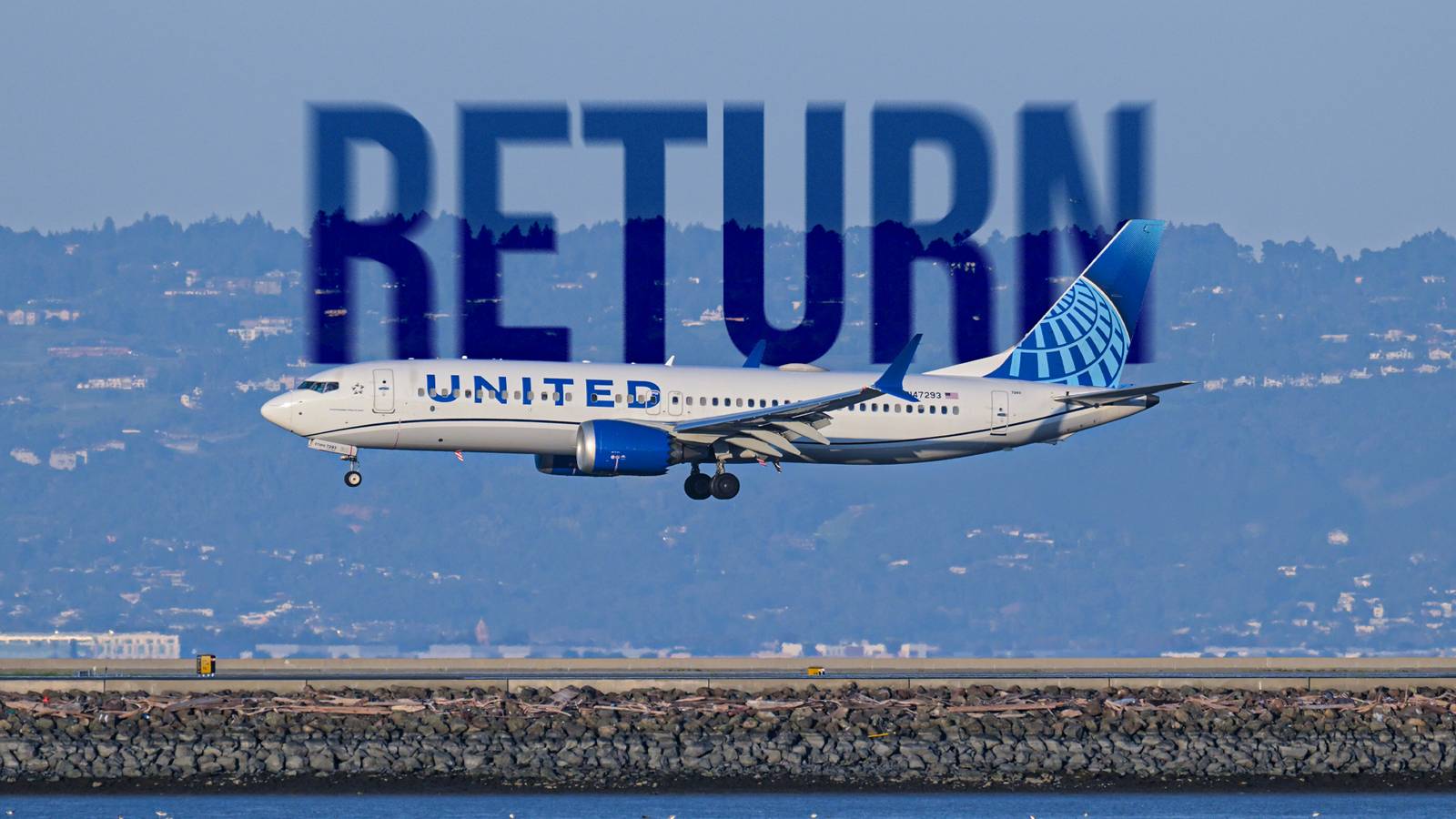
How United Airlines' Quiet Return To Cincinnati Reveals Its New Playbook For Reclaiming ULCC Routes
Full Article
Original Source
Read the full article at Simpleflying →KhanList aggregates and links to publicly available news content. We do not host full articles from third-party sources. Always verify important information with original sources.