
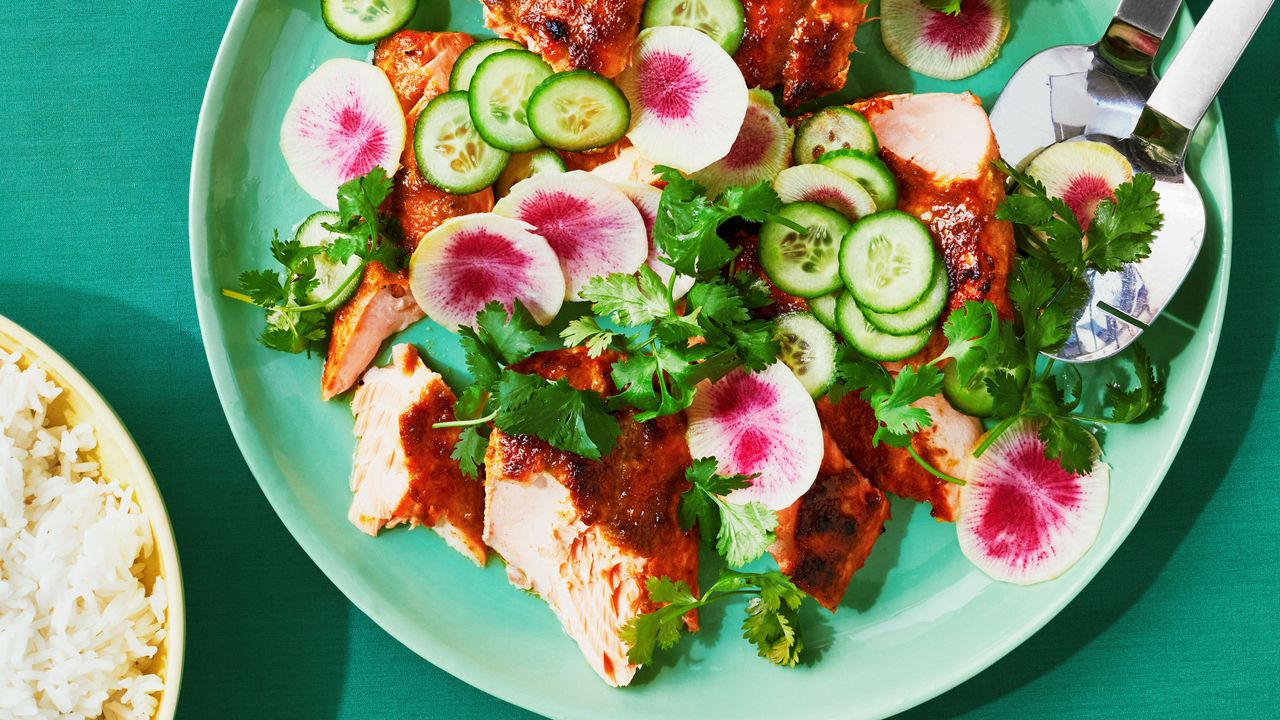
When you cook a Bon Appétit recipe, we want you to feel like we are in the kitchen with you. Like a slightly bossy but highly competent friend who came over to help you cook dinner. The language we use has been evolving for decades, in the pursuit of making sure our recipes are achievable for readers of all skill levels. In this guide, we’re pulling back the curtain on why we use specific recipe terms and style. Every turn of phrase, word choice, and even punctuation mark is something multiple editors sign off on. That way we know the car drives smooth as butter, so you just get to enjoy the ride.For more behind the scenes of the Bon Appétit Test Kitchen, check out how we develop recipes from start to finish. Meet our full team of chefs and journalists here. And to gain full access to our thousands of trustworthy recipes—and our custom app—please consider subscribing.Read it or weepBefore you dare pick up a knife or start peeling carrots, read the recipe through in its entirety. I know this isn’t sexy advice. I wish I could tell you that buying a sharper knife, cranking up the heat, and using more salt could solve all your problems, but hear me out. Most cooking misadventures can be avoided altogether by simply knowing what is in store. You might see there is an overnight rest required for waffles that you thought would be ready in 45 minutes. Or realize you don’t in fact own a springform pan or food processor. If nothing else, understanding the full process may allow you to plan your approach more efficiently or break up a recipe’s steps according to your schedule. The time investment is minimal and the potential benefits are endless.Endpoints matter more than timeThe structure of every instruction in our recipes is essentially the same. Do X, until Y happens, in about Z minutes or hours. As in, beat the egg mixture, until it turns pale, triples in volume, and forms ribbons when allowed to fall off of a whisk, 8–10 minutes. The key thing in that sentence is the Y-factor—the desired outcome. For some people using a more powerful mixer or a higher speed, it might take 5 minutes. For others roughing it by hand, it may take 12. The same goes for sautéing, roasting, or any technique really. In addition to time estimates, we’ll always give cues for what the food should look, taste, smell, and even sound like, so your senses can lead the way.Use a kitchen scaleIf you bake, or want to bake, or think you might want to bake, or live with someone who does, then you need a scale. That is basically everyone. Volume measurements of dry ingredients like flour and sugar can be highly unreliable. At Bon Appétit, our standard weight for 1 cup of flour is 125 grams, and for 1 cup of packed brown or granulated sugar is 200 grams. Measuring with a scale means it’s consistently the same amount. Measuring by volume means you can be over or under the intended amount by as much as 25%. That’ll make or break your end result. When using a precise amount feels essential (like in most baking recipes) we will include weights in the ingredients list, in the hope that you will use those instead of the volume measurements. If you’re still not convinced, read this senior Test Kitchen editor’s full argument, and then check out our team’s product picks (our favorite scale is just 25 bucks).Know your saltMeasuring salt is complicated. If you measure salt by weight, then virtually every style is the same. 10 grams of Diamond Crystal kosher salt will add the same amount of salinity to a dish as 10 grams of fine sea salt. But most home cooks measure salt (if they measure at all) by volume, in pinches, teaspoons, and onwards. We’re aligned with this because a standard scale does not excel in measuring small (i.e., less than 1 gram) quantities.Diamond Crystal kosher salt is the standard salt in the Bon Appétit Test Kitchen, because it is composed of fine-ish flakes, thin and small enough to quickly dissolve, but just coarse enough to grip between finger tips and distribute evenly when seasoning. We give a measured amount of salt in situations where eyeballing leaves too much to chance. That might be a big casserole of stuffing, a batch of chocolate chip cookies, or any situation in which adding too little salt would be a hard deficit to overcome later on.Morton kosher salt is also very common in home kitchens, but has denser grains than Diamond Crystal. For a recipe calling for 1 tsp. Diamond Crystal, you should use roughly half the amount of Morton. Fine salts, like fine sea salt and iodized, are usually even denser than Morton Kosher, so for a recipe that calls for 1 tsp. Diamond Crystal kosher salt, you would only need about ½ tsp. fine salt.Season to tastePreferences for salt levels, spice tolerances, and general amplitude of flavors are highly personal. While we might include measured amounts of salt in certain dishes as a starting point—according to what the Test Kitchen recommends from our various rounds—we also want to empower you to make your own decisions about what tastes right.Learning to season food, growing comfortable with adding salt—and ultimately acid, spice, and sweetness—according to your own preferences, is what home cooking is all about. When we say “season to taste,” we truly mean it: Taste the food and make it your own.In conclusionThere might not be a cheat code to make cooking feel like no effort at all, but knowing how to read a recipe means you won’t have to work as hard to understand what it is asking from you. Just remember that recipes are closer to blueprints than Lego instructions. You don’t need to recreate the exact image on the box (or page!) to create something memorable and delicious. But maybe get that sharper knife just in case.Now go and cook some recipes!Canned green curry paste does most of the work for a dish that tastes like you tried much harder than you did.View RecipeSubscribe to our Substack From the Test Kitchen for more stories and well-seasoned opinions from Chris.
How to Cook a Bon Appétit Recipe
Full Article
Original Source
Read the full article at Bonappetit →KhanList aggregates and links to publicly available news content. We do not host full articles from third-party sources. Always verify important information with original sources.