
One afternoon last year, Donald Trump welcomed “a friend” to the White House – El Salvador’s Nayib Bukele, the world’s most popular authoritarian. “I knew him as a very young man,” the US president said before the cameras. “He’s done a fantastic job. Mr President, it’s an honor to have you.”Since March 2022, when gangs in El Salvador murdered 87 people over a weekend, Bukele has maintained a state of emergency in which key civil liberties are suspended and 2% of the adult population has been jailed – about 100,000 people, at least half of whom are probably not gang members, say local rights groups. The narrative of “the Bukele miracle” – that he swiftly dismantled fearsome gangs and restored order – has made him an icon across Latin America, where a new host of rightwing leaders have sought to replicate his heavy-handed tactics. And in the US, Bukele’s overnight success as a strongman has made him a hero of the American right.“We know that you have a crime problem and a terrorism problem that you need help with,” Bukele said to Trump in their Oval Office meeting in April 2025. “And we actually turned the murder capital of the world into the safest country in the western hemisphere. Sometimes they say that we imprisoned thousands. I like to say that we actually liberated millions.”“Who gave him that line?” Trump asked his assembled advisers. “Do you think I can use that?”Bukele didn’t declare a dictatorship on day one. He built toward it incrementally, each step framed in the language of anti-corruption, public safety or efficiency. Before the coup came the “training exercise”: the population became inured to the sight of troops in the streets, as military and police rehearsed tactics for laying siege to communities across the country, deploying brutal methods of detention and incarceration. Then, suddenly, the “emergency” arrived: due process was gone, replaced by a new legal regime in which a host of domestic opponents could disappear into the gulags as “terrorists”. In the process, Bukele swept past constitutional term limits to unchecked, seemingly limitless power.In the months after their meeting, Trump launched federal crackdowns on Democratic-leaning cities using tactics eerily reminiscent of those Bukele pioneered to build his police state – a central feature of what commentators have called a “rolling coup”. Masked agents in unmarked vans, kidnapping people into an opaque and growing detention network, reminded congressman Jim McGovern of stories from families he had met in El Salvador, he told the Guardian. “We’ve seen this movie before,” he said.Donald Trump meets with Nayib Bukele in the Oval Office of the White House in Washington DC on 14 April 2025. Photograph: Brendan Smialowski/AFP/Getty ImagesWhile Trump’s own authoritarian playbook has often been compared to those of leaders in places such as Turkey and Hungary – where institutions were captured slowly, over decades – the place we should really be looking to understand where the US might be headed is the country of Trump’s favorite foreign ally. And to understand how far along we are in that playbook, Trump’s policies must be viewed sequentially: their underlying coherence only emerges when you zoom out.After four years reporting on the police state El Salvador has become, and on Trump’s ties to Bukele, I believe Trump may be trying to take the United States down the same path. Although his crime and immigration crackdowns on US cities don’t attract the headlines they once did, Trump has refused to rule out declaring a “national emergency” as the midterm elections approach, with all of the ominous implications inherent in the threat. What happened in El Salvador, set alongside Trump’s recent moves, shows why we need to start paying attention now.A population too frightened to dissentBukele’s chameleon-like trajectory shows how a police state can be assembled piece by piece, in plain sight. A rich playboy and college dropout, Bukele had previously run his family’s PR firm before entering politics at age 30. His flair for marketing and hyperslick command of social media would propel him from small-town mayor to the presidency.Bukele broke with his leftist party in 2017 and ran for president as a reformer – a blank screen on which a country fed up with corruption and violence could project its hopes. In 2019, he was elected the youngest leader in Latin America and immediately began to ingratiate himself to Trump.From Bukele’s first days in office, he promoted himself as a crimefighter, announcing a plan to take the fight to the country’s notorious gangs (“terrorists” under Salvadoran law). He deployed cops and soldiers to gang neighborhoods, normalizing their presence, while beginning Doge-style layoffs to purge the old guard, replacing the leaders of institutions with loyalists. Long before the March 2022 gang rampage that would justify it, he was building the foundations of his future police state.The pandemic provided an unforeseen opportunity to scale up the experiment. In March 2020, Bukele asked El Salvador’s congress to authorize a state of emergency, which he then used to implement a draconian quarantine. Security forces encircled entire cities, detaining about 16,000 people in a matter of months and funneling them into “containment centers” that functioned as de facto jails. Three times, the supreme court issued rulings to end the practice, which Bukele publicly defied.Heavily armed police guard the streets in downtown San Salvador, El Salvador, on 27 March 2022. Photograph: Salvador Melendez/APCops and soldiers detained people for trivial violations to meet exacting quotas, using excessive force and beatings, incarcerating people in degrading conditions without access to adequate food, water and medical treatment. But it was just the beginning. Security forces were conducting simultaneous sieges across the country and practicing tactics out of use since the country’s 1979-92 civil war. According to two former Salvadoran security officials familiar with the operation, the Covid-era detentions were a training exercise for a much larger scale of mass repression still ahead. The quarantine was used to conduct “territorial control tests”, as one put it, to gauge how the general population would respond to repression – and its capacity for resistance. It was, in the words of the second source, “a laboratory of instilling fear”.Another harbinger of what was to come was Bukele’s wishlist for a massive arsenal of surveillance technology. When the opposition-controlled legislature refused to sign off on a $109m loan request to buy the gear, in February 2020, he summoned thousands of supporters to surround Congress then stormed inside with armed troops, threatening to disband it.After his party won a legislative supermajority in spring 2021 elections, Bukele quickly purged sources of opposition, firing the attorney general (who had been investigating Bukele’s inner circle for corruption) and the constitutional chamber judges (who had opposed his pandemic crackdown), and replacing them with allies. Critics denounced a “self-coup”. The new supermajority dismissed all judges over 60 years old while the reshuffled court unconstitutionally appointed 168 new judges – and then began amending the constitution and gerrymandering the country.Help in that decisive electoral victory, however, had come from a surprising source: Bukele’s government had cut a secret deal with the leaders of the very gangs he claimed to be fighting. In exchange for money and power, they had agreed to reduce homicides and turn out voters for Bukele’s party in the midterms, according to US prosecutors and journalistic investigations (Bukele has denied this). Between July 2021 and February 2022, the government secretly released several prominent gang leaders.Such pacts tend to produce more bloodshed, since they give gangs an incentive to escalate violence. Indeed, what came next offered the perfect pretext for a crackdown.In March 2022, gangs killed 87 people, mostly civilians. In the middle of the killing spree, lawmakers met to approve the first of over a dozen decrees that would overhaul the country’s security architecture and civil rights laws, making it easier to arrest broad swathes of the population and hold them in legal limbo: anyone accused of “association” with a gang member in effect became a “terrorist”. The new state of emergency was initially authorized for one month. More than four years later, it’s still in effect.A police officer checks the documents of a man during a preventive patrol in search of gang members in Soyapango, El Salvador, on 16 August 2022. Photograph: Salvador Melendez/APBukele’s crackdown has claimed union leaders, students, activists and journalists. A leaked police report shows that about 43,000 gang members are still at large. Zaira Navas, a former police inspector general now with the human rights organization Cristosal, believes gang members make up less than 30% of those captured, she told the Guardian, and that this was part of a deliberate “policy of terror” targeting poor neighborhoods and strongholds of opposition as the “internal enemy.” The cumulative effect: a population too frightened to dissent. Reports of torture in police custody have been extensively documented, including waterboarding, electric-shock and strangulation.Mass trials accelerated sharply this year in El Salvador, and the fate of hundreds of defendants at a time now often rests on one or two anonymous cooperating witnesses who have struck deals with prosecutors. According to Navas, authorities found some of these witnesses by coercing imprisoned gang members. Prosecutors hand them lists of names to memorize, she said, whether or not they know the people on them.Violence has indeed fallen in what’s now the world’s most incarcerated country (although the actual murder rate may be closer to twice what the official figures purport). Accordingly, Bukele remains popular in many quarters. Nonetheless, it is hard to draw the line between genuine approval and self-censorship: a majority of respondents tell pollsters they approve of the state of exception; a majority also says they are being more careful about what they say about it (with 48% believing they could end up in jail for criticizing the president or government).A hero’s welcomeThroughout Trump’s exile from power, Bukele stayed close to Maga, spending more than $1.5m to lobby Maga figures such as Donald Trump Jr., senator Ted Cruz, then senator Marco Rubio, senator Mike Lee, representative Lauren Boebert, and former representative Matt Gaetz, according to Mother Jones. In time, Bukele emerged as a Maga luminary himself – the poster boy for strongman solutions.“President Nayib Bukele saved El Salvador,” Tucker Carlson posted after one of several interviews with Bukele. “He may have the blueprint for saving the world.”Bukele’s blueprint happens to mirror a different one: the sequential architecture for consolidating power outlined in the Heritage Foundation’s Project 2025 report, which would become Trump 2.0’s policy roadmap. We can’t know that the report took inspiration from El Salvador. But the Heritage Foundation lavished praise on Bukele as early as 2019, and Project 2025 was drafted over the first year of his state of emergency. Much of what Project 2025 proposes is what Bukele had by then accomplished: turning tens of thousands of civil service positions into political appointments; increasing the president’s control over the levers of justice; deploying the military domestically; crippling unions; targeting media.In February 2024, Bukele won an election marred by irregularities. Weeks later, he was given a hero’s welcome as a keynote speaker at the Conservative Political Action Conference outside Washington DC, where he echoed Trump’s rhetoric about carnage in Democrat-run cities and called on the next US president to follow his example and do “whatever it takes” to defeat “dark forces” already taking over the country.At the June 2024 inauguration for Bukele’s new term, the surprise came from the White House: the Biden administration, concerned that a wave of migrants from Central America could wreck his campaign, sent a rare high-level delegation to attend – to critics, a crushing echo of Washington’s cold war support for Central American strongmen.Bukele during the Conservative Political Action Conference (CPAC) in National Harbor, Maryland, on 22 February 2024. Photograph: Bloomberg/Getty ImagesBukele rolled out the red carpet – not for Joe Biden’s representatives, who were snubbed, but for Maga VIP’s.Sharing the red carpet were Tucker Carlson and six members of US Congress, including Gaetz, who called Bukele “an inspiration to the western world”, and soon founded the El Salvador caucus in US Congress to “vindicate the choices President Bukele has made” and import his “good ideas”.In the years since, Bukele has continued to rewrite the rules of the game. In February 2025, he cut public funding to political parties, leaving the opposition in disarray. In July 2025, his legislature in effect moved up elections and abolished term limits altogether, meaning he is “virtually guaranteed another term”, writes El País, which would bring his total time in power to 14 years.Upon taking office in 2025, Trump’s second call to a foreign leader as president was to Bukele. Weeks later, Marco Rubio traveled to El Salvador to broker a migration agreement: Bukele offered to accept deportees of any nationality, and even imprison US citizens. Bukele asked for something in return: the MS-13 leaders in US custody. Weeks later, Rubio promised to hand over the gang leaders, some of them protected US informants who had told investigators about the gang’s secret dealings with Bukele’s government.In March 2025, Trump secretly deported the first MS-13 leader, who was expected to testify in US court about Bukele’s secret dealings with the gang. Prosecutors later sought to drop narcoterrorism charges and deport other gang leaders (one warned a judge in a handwritten note that he “will be tortured and desposed of as it happen’d to another who was deported”). Deported along with the first gang leader were more than 200 alleged members of the Venezuelan gang Tren de Aragua, who were incarcerated in Bukele’s new Terrorism Confinement Center (Cecot), and allegedly tortured and sexually abused.Among them was Salvadoran Kilmar Ábrego García, husband to a US citizen and father of three. A court had explicitly ordered he not be deported – and evidence that he was a gang member was thin to nonexistent – but the White House resisted a subsequent supreme court ruling to facilitate his return, threatening a constitutional crisis. Ábrego García’s deportation was “a test of their ability to do this to anyone”, as Ezra Klein put it: “If they can get you on a plane, they can hustle you beyond our laws and leave you in the grips of the kind of gulags they wish they had here.”Kilmar Ábrego García and his wife, Jennifer Vasquez Sura, attends a prayer vigil before he enters a ICE field office on 25 August 2025 in Baltimore, Maryland. Photograph: Andrew Harnik/Getty ImagesIn April 2025, Bukele was greeted as a guest of honor in the Oval Office. “Mr President,” Bukele told Trump before the cameras, “you have 350 million people to liberate. But to liberate 350 million people, you have to imprison some.”That June, Trump began launching federal raids in Democrat-leaning cities led by Immigration and Customs Enforcement. According to the Brennan Center for Justice, ICE and CBP had $118bn left unspent from the 2025 One Big Beautiful Bill Act as of April 2026. Then the Secure America Act added $65bn more, bringing their available funds to $183bn. The $70bn package alone exceeds the budgets of all other federal law enforcement agencies combined. Meanwhile, Trump’s 2026 budget proposed cutting the FBI, ATF and DEA. Journalist Radley Balko argues the money is flowing to the agencies Trump sees as most loyal, and concludes he is “attempting to build his own paramilitary force”. In response to ICE increasing its spending on weapons by 700%, Wisconsin state senator Chris Larson warned that “the President is building an army to attack his own country”.In crackdowns in cities such as Los Angeles, Portland, Chicago, Minneapolis, Memphis, Washington DC and elsewhere, the structure of these federal raids mirrored those carried out by Salvadoran forces: arrests for trivial offenses in order to meet quotas; the deployment, or attempted deployment, of parts of the military on domestic soil; and the cruel and degrading treatment of detainees (propagandized on social media).Onlookers and demonstrators walk through teargas after confronting federal law enforcement agents during a raid in south Minneapolis, Minnesota, on 13 January 2026. Photograph: Bloomberg/Getty ImagesAt one of the largest ICE camps in the country, in Texas, human rights groups collected accounts from detainees describing officers who crushed men’s testicles, stomped on them, and beat them while handcuffed. Three men died there in six weeks; one death ICE attributed first to “medical distress”, then to a suicide attempt, before the medical examiner ruled it a homicide. Thirty-six Texas state house Democrats have cited “numerous credible reports of torture, killing, and inhumane treatment” and demanded an investigation. As historian Andrea Pitzer said in the New York Times, “the point isn’t that they hide it. The point is to instill terror on the society as a whole.” Brutality on the streets and secrecy in the camps work together: “the goal is always to use one group as an example of what can happen to everybody.”And the crackdown has expanded beyond immigrants. Summoning hundreds of top military brass from around the world to an unprecedented gathering at a Virginia military base in late September 2025, Trump suggested he would soon deploy the troops to use US cities as “training grounds” for the “war from within”.Trump signed an order that same month designating “antifa”, a term used to describe a loose constellation of leftwing groups with no central leadership, as a domestic terror threat. Days later, he signed a memorandum, the National Security Presidential Memorandum 7 (NSPM-7), which ordered federal authorities to develop a strategy to disrupt groups purportedly engaged in “domestic terrorism and organized political violence”. The memo asserted that “common threads animating this violent conduct include anti-Americanism, anti-capitalism, and anti-Christianity”.NPSM-7 is “the signature policy document of this administration”, a former senior US official who worked in Central America under Biden told me – and a powerful echo of Bukele’s use of gangs as terrorists. “It’s exactly the same road map, down to the language of war used against his own people.”In effect, Trump’s Antifa orders conjure “an imagined leftwing conspiracy” to “criminalize opposition”, according to the Brennan Center for Justice. “Buying a sandwich for an activist, allowing a protester to crash on your couch, or briefly lending a computer to print pamphlets critical of government policy could all potentially be considered material support” for terrorism. Soon thereafter the FBI organized a 10-agency Joint Mission Center to prosecute the targets of that order.Prosecutions of Antifa as domestic terrorists have already begun. In June and July 2026, nine people were sentenced to between 30 and 100 years in prison over a 4 July 2025 protest at a Texas ICE detention center where one of them shot and wounded a police officer. Six people who never fired a weapon got 50 years each; a man who was never at the protest got 30 for moving a box of zines.As crackdowns spread to Minnesota last winter, federal agents outnumbering the state’s two largest police forces combined faced protesters armed with snowballs. In January, immigration agents shot and killed two US citizens – a poet and mother of three, and an ICU nurse for veterans. Outcry peaked in Minneapolis, but the administration did not appear to have abandoned its plans, according to recent New York Times reporting, only to have delayed them. Behind the scenes, Trump’s team was debating suspending habeas corpus for unauthorized immigrants – a fundamental check on state power – while Vance and Miller continued pushing to invoke the Insurrection Act on US streets.Former House Democratic leader Richard Gephardt and former senator Timothy Wirth argue that the US is in the middle of a “rolling coup,” designed to ensure Trump never loses an election. Many of the individual actions, they acknowledge, “may each appear legal or at least arguably so”. The danger, they argue, is in the pattern. “The first job of any coup is to make the recognition of it seem premature. That is the trap. By the time recognition is no longer premature, the moment to resist has already passed.”A fragile experimentThat does not make El Salvador a postcard from some inevitable American future, of course. The US’s institutions and political opposition are stronger than El Salvador’s. Trump also lacks a credible public security threat like Bukele had in the gangs, said Steven Levitsky, a Harvard professor of government and co-author of the book How Democracies Die.The crises that the Trump administration has tried to invoke to suspend democracy – from the supposed threat of Antifa to the Charlie Kirk killing – “so far, they haven’t worked,” he said.National Guard soldiers are posted near an entrance to the Federal building in Los Angeles during a demonstration in response to a series of ICE raids on 10 June 2025. Photograph: San Francisco Chronicle/Hearst Newspapers/Getty ImagesI called Gephardt, the former Democratic House majority leader, a founder of Keep Our Republic, a bipartisan coalition to protect the US electoral process and the rule of law. In his view, 2020 proved that Trump and his team are unwilling to accept losing an election. While that effort was a “clown car”, he thinks that the president’s cronies are far better prepared today.A new 45-day ICE surge in California has prompted local leaders to warn that these raids will be used to suppress voter turnout. Gephardt also worries that Trump has set the stage to claim that China or Iran has interfered with election integrity, seize voting machines and ballots in targeted state or cities, and invoke secret executive orders that long predate Trump – “a loaded revolver that’s been on the table for 70 years”, in Gephardt’s words – that he believes Stephen Miller is leading the effort to adapt. Those orders, as one government document notes, “are designed “to implement extraordinary presidential authority in response to extraordinary situations”.Two months ago, conservative host Wayne Allyn Root told Trump he had the right to declare a national security emergency for elections. Trump’s reply: “Let me just say stranger things have happened. I’ll leave it at that.”Trump might also call a red-state governor like Texas’s Greg Abbott, as he put pressure on Georgia in 2020, and insist that Democratic House winners were elected through fraud and that Abbott must intervene;; in a close midterm, flipping five or 10 seats could decide control of the House. Gephardt’s group, Keep Our Republic, is prepared to file lawsuits in every state should Trump launch such an effort.The last resort: if Democrats retake the House, Mike Johnson remains speaker until the new House convenes at noon on 3 January. That morning he could fire the nonpartisan clerk of the House and install a loyalist who would refuse to accept the certifications of Democratic winners. While most experts believe this is not legally viable, it is the method that worries Gephardt most, because there’s some uncertainty about whether this could be resolved by a court.Working against democracy, says Gephardt, is an alliance of ideologues and the tech industry. Trump is less the architect than a salesman fronting for people who want authoritarian rule and regard citizens with contempt.What stands in the way? First, the courts. The administration has cowed the House and made gains with the supreme court, but the lower federal and state courts remain independent, and he believes that the combination of the courts and the people are democracy’s only hope.Gephardt puts his faith in ordinary citizens, but if they take to the streets, they may hand the administration a pretext to invoke the Insurrection Act. Authoritarians rule through fear, he warns, and “they’ve got the guns”.“We are in the test of whether or not the institutions and ultimately the people can maintain self-governance,” he said. “We are still working with this experiment, but it’s fragile … And we are on the brink of losing it.” William Wheeler, a freelance journalist, is the author of State of War: MS-13 and El Salvador‘s World of Violence. His reporting in El Salvador was supported by the Fund for Investigative Journalism, the Pulitzer Center on Crisis Reporting, and Freelance Investigative Reporters and Editors (Fire)
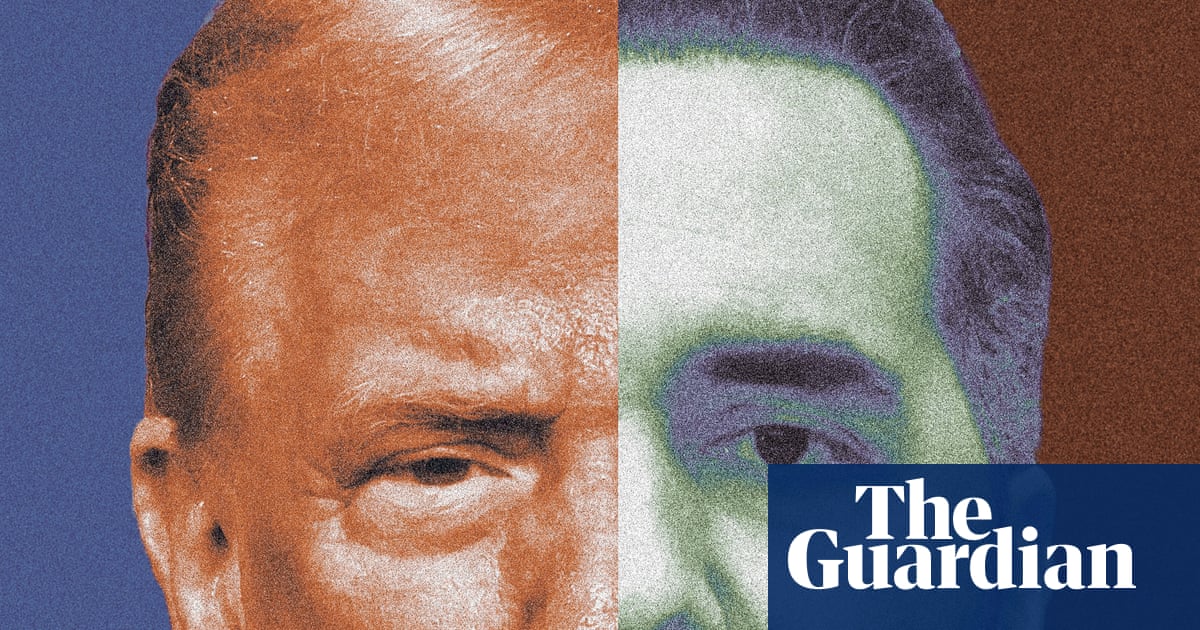
How to build a police state | William Wheeler
Full Article
Original Source
Read the full article at Theguardian →KhanList aggregates and links to publicly available news content. We do not host full articles from third-party sources. Always verify important information with original sources.