
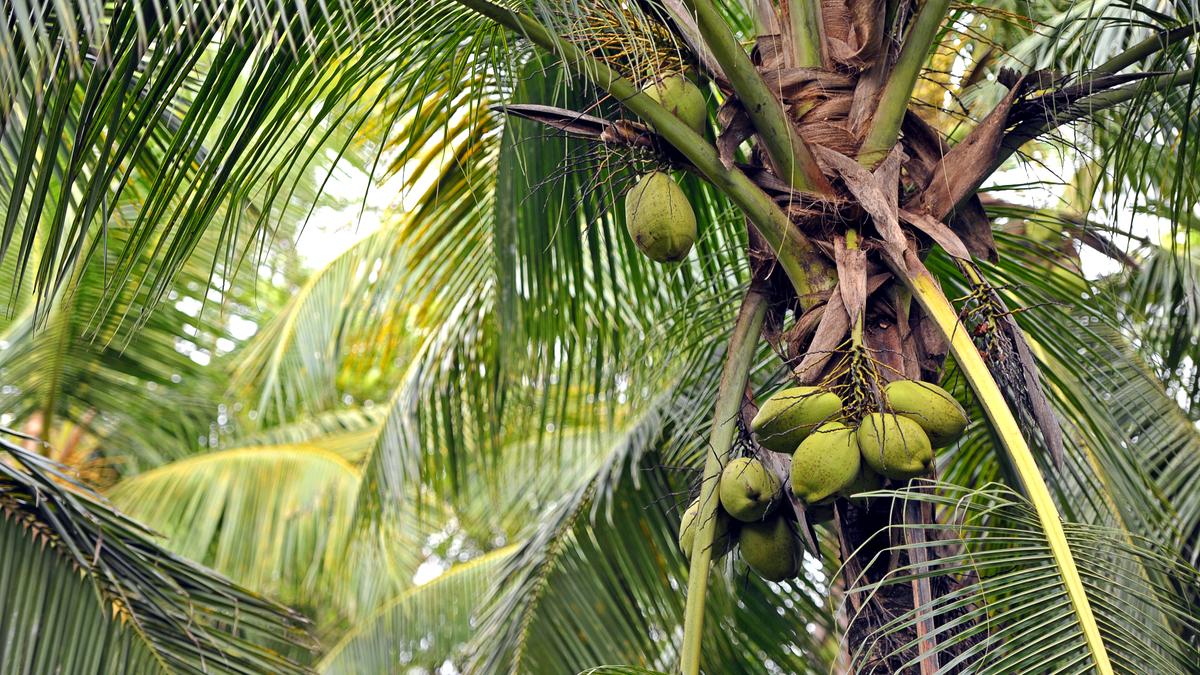
Every part of the coconut tree has been put to use. | Photo Credit: Getty Images/iStockPhoto If there was ever a contest for the most multifaceted member of the plant kingdom, the coconut from the tropical coconut palm tree would probably win hands down. Its flesh is food, its water quenches thirst and cures illnesses, its leaves are woven into thatched roofs and handicrafts, its coir is turned into ropes and mats, its shell is crafted into cups, cooking vessels, and even musical instruments… every part has been put to use by thrifty humans. Its story is so entangled in ours that few people pause to wonder just how this mighty ‘nut’ first came into our lives.Although scientists have found coconut fossils dating back more than 30 million years, there is much debate around where it first grew and when it first crossed paths with humans. Intriguingly, people living in two different parts of the world — along the Pacific and the Indian Ocean — have been growing it independently for centuries. But there is no doubt that the coconut is a veteran globetrotter.Constant drifterWith its thick protective husk and hollow, fluid-filled cavity, it is possible that the coconut simply floated across the ocean, taking root wherever it found suitable conditions. But there is no denying that seafaring humans played an important role too. Ancient Polynesians, Arab merchants, European explorers… the coconut voyaged with humans all over the world, and by the 18th century, its fame had spread far and wide. The coconut holds within it a sea of stories from its long and eventful journey across time, cultures, and continents. | Photo Credit: Freepik Wherever it went, it coded itself into the local culture. Nowhere is this more deliciously evident than in the feast of culinary delights it has inspired, ranging from curries and chutneys to cookies and coolers. Puerto Rico’s national drink, for instance, is Pina Colada made with coconut cream and pineapple juice. Even Honeydukes, the wizarding sweet shop in J.K. Rowling’s Harry Potter books, has a Pink Coconut Ice sweet for sale!VarietiesMore than 1,500 species of palm trees are found around the world, but only one — Cocos nucifera — yields coconuts. While the origin of Cocos remains uncertain, nucifera is Latin for ‘nut-bearing’. Though there is just one species of the coconut tree, centuries of cultivation have yielded several varieties suited to different environmental conditions, most typically falling into two broad groups: ‘tall’ and ‘dwarf’.Tall trees take longer to bear fruit but are hardier and can produce up to 100 coconuts annually in their most fertile years. However, it is not easy to pluck their produce. In Thailand, for example, pig-tailed macaques have been traditionally trained to pick coconuts. Ordinary, as it might seem, the coconut holds within it a sea of stories from its long and eventful journey across time, cultures, and continents. Published - September 25, 2026 09:00 am IST
How the coconut travelled across the world
Full Article
Original Source
Read the full article at Thehindu →KhanList aggregates and links to publicly available news content. We do not host full articles from third-party sources. Always verify important information with original sources.