
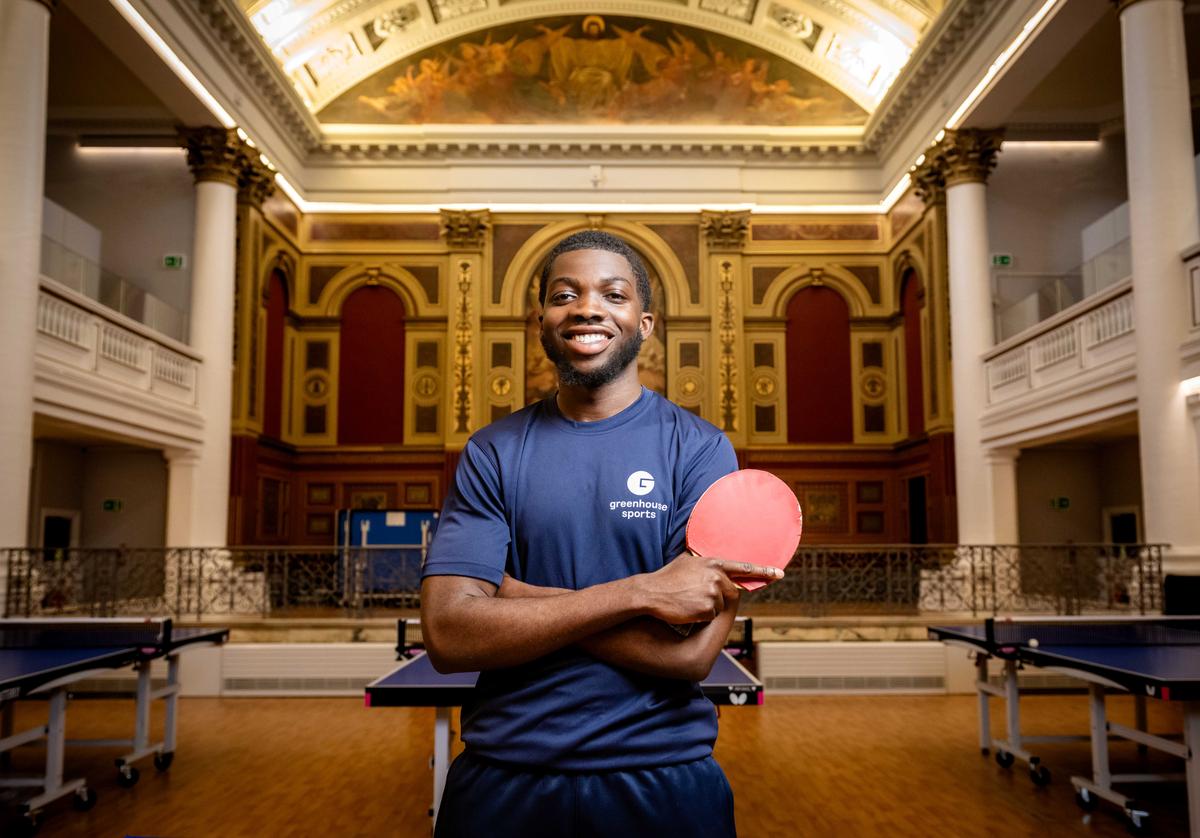
Josh was just nine years old when his mother died of cancer. After that he would come home from school to an empty house, as his father worked night shifts as a security guard. While this gave him freedom to stay out late, it left him vulnerable: home was a tough housing estate in Harlesden where gang violence and stabbings were common. As he entered secondary school, Josh saw only two paths open to him: “Join a gang and get involved in crime, or find a minimum-wage job and get by.”Five miles to the south, in the Church Street ward of Westminster where child poverty rates are over 55 per cent, 11-year-old Luna struggled for different reasons. She was shy and lacked confidence so she hid at the back of the class, hoping nobody would notice her. At one parent-teacher evening, her science teacher asked her name because he had forgotten it, and the humiliation stung in front of her parents. She would frequently return home in tears after being “picked on” by other girls.Fast-forward to today. Josh, 24, graduated from university with a 2.1 in marketing. As a teenager, he went on to become one of the country’s top-30 table tennis players for his age.Luna, too, is on a different trajectory. Now 18, she is an articulate and self-possessed public speaker who plays table tennis for England. No longer reticent, a few weeks ago, on the bus home from school, she witnessed a distressed 13-year-old girl being called “fat” by her “friend” and being mocked when she read out something she had written in class.LunaJohn Nguyen/JNVisualsLuna leaned in. “You don’t have to be friends with this person,” she said. “I was once in your situation. You don’t have to take it.” Luna adds: “The bully looked at me like I was crazy, but the relief on the other girl’s face was instant. The bully got off at the next stop. The other girl got off at my stop and we chatted until she felt calm.”What caused these transformations?In both instances, it was something at once simple and profound: a charity arrived at their respective schools when they were 11. It started running table tennis sessions, instilling a passion for the sport and, even more importantly, providing them with a mentor. In Josh’s case, the charity-run sessions took place in his school; in Luna’s, at a nearby community centre.That charity is called Greenhouse Sports, and this year The Standard and Greenhouse Sports are partnering to launch Sporting Chance, a campaign to champion the transformative role that sports coaching and mentoring can play in the lives of disadvantaged young Londoners. Greenhouse employs coach-mentors to run sports such as basketball, table tennis and tennis in schools and at its flagship community centre in Westminster, helping around 8,000 young people a year.A host of British sporting stars have stepped up to back our campaign. They include Seb Coe, Greg Rusedski and Denzel Bentley, the current WBO world middleweight boxing champion, as well as England rugby player Ben Earl and the number one Paralympic world table tennis player Will Bayley.The Standard has joined forces with Greenhouse Sports to deliver sports coaching and mentoring to up to 500 young people in five secondary schools across some of London’s most deprived boroughs. So far, £500,000 has been committed by the Standard’s Dispossessed Fund, with half going to Greenhouse Sports and the balance divided between four other sports charities. We are calling on corporations, foundations, philanthropists — and our readers — to give generously. Every pound raised will fund additional Greenhouse programmes in London, enabling more young people to build brighter futures.Seb Coe said: “I know first-hand what long-term investment in young people does and how years of consistent coaching and mentoring changes how a young person sees themself and what they think is possible. London has extraordinary young talent in every borough and I am delighted to back the Sporting Chance campaign."Greg Rusedski added: "As a child, sport gave me structure, ambition and a sense of identity. Behind every athlete is someone who helped them believe they could achieve more. Greenhouse brings that same power of support to young Londoners who may not have had the same opportunities. It gives them the chance to discover what they’re capable of, both on and off the court.”To kickstart the campaign, the Evening Standard Dispossessed Fund — which is administered by The London Community Foundation — has donated £500,000. Half will be used to fund Greenhouse Sports programmes in five secondary schools in London, helping up to 500 young people in some of the most deprived boroughs in the capital. The other £250,000 will support four more charities — to be announced during the campaign — offering coach-mentoring in football, boxing, martial arts and kayaking to disadvantaged young people in London.This marks The Standard’s second campaign to support disadvantaged youth through sport coach-mentors since the establishment of the Dispossessed Fund in 2010. In 2014, our London United campaign funded the training of 100 Level 1 and 24 Level 2 football coach-mentors at 18 grassroots charities, with training delivered by the Football Association and backing from Arsenal, Tottenham Hotspur and QPR.We are returning to funding sport coach-mentors because, according to the UK’s National Youth Strategy, Youth Matters, today’s young people are the first generation to have grown up entirely in the digital age and are simultaneously “the most connected generation in history and the most isolated”. The strategy argues that the loss of community spaces, combined with the rise of social media and online entertainment, has left many young people living increasingly solitary lives — connected to the world through a screen, but disconnected from those around them.Sporting ChanceThe StandardThe data tells the story: over the past 15 years, spending on youth services has fallen by 73 per cent, contributing to the closure of more than 1,000 youth centres and the loss of over 4,500 youth workers, according to a YMCA England & Wales 2025 report, Beyond the Brink? The State of Funding for Youth Services. The consequences are felt most acutely by the 40 per cent of teenage Londoners who live in poverty and cannot afford to access private sports facilities.Yet while youth provision has been shrinking across the country, Greenhouse Sports, founded in 2002 by social entrepreneur Michael de Giorgio and former Goldman Sachs banker Michael Sherwood, has considerably increased the number of young people it works with as demand for its services has grown. Its outcomes point to significant improvements in school attendance, attainment and social inclusion. Young people on its programmes: Attend on average more than two additional weeks of school per year; achieve half a GCSE grade higher in English and Maths than their peers and; are 50 per cent more likely to report strong support networks than their peers.In addition, 94 per cent reported increased confidence and 85 per cent improved behaviour in school.Coaches are asking for punctuality, resilience, commitment — things we want to see in the classroom and in lifeEmma Loveland, headteacherEmma Loveland, headteacher of St Anne’s Catholic High School for Girls in Enfield, says that bringing a Greenhouse tennis coach-mentor into her school four years ago has improved outcomes. The broader impact, she says, is “enhanced attendance, up from 93 to 97 per cent”, “better behaviour, with the lowest suspension rate in the borough” and “children who are more energised and enthused to learn”.But the most important thing about Greenhouse, she says, is this: “It’s the person who turns up every day who is there for the students in a different way to a teacher. Coaches are asking for punctuality, resilience, commitment — things we want to see in the classroom and in life — and students are learning these transferable skills through tennis.”Don Barrell, a former professional rugby player for Saracens and now CEO of Greenhouse Sports, says: “For some children who live in difficult circumstances and struggle to engage in class, sport is the key that opens them up and makes them excited to come to school. Through our coach-mentors, we help these children become the best versions of themselves — which is not only good for the individual but the economy as well.”8,000+ Number of children who receive coach-mentoring from Greenhouse a year150 Greenhouse enrichment trips a year3.5 million Hours of sport sessions delivered by Greenhouse coach-mentors a year1.1 million Hours of pure mentoring sessions delivered by Greenhouse a year 2 weeks Additional school attendance of people on Greenhouse programmes versus peersTo reach more young people like Josh and Luna, we are seeking donations from corporations, philanthropists — and our readers. All funds raised will support Greenhouse programmes across London. Every £1 invested generates £11 of social value through improved outcomes for young people and wider society.Josh recalls the time when the bottom fell out of his world. “I knew my mother was sick because a big van came to our house to deliver a hospital bed, but I didn’t know she had cancer,” he says. “I was very close to my mum, but in that final year she didn’t have her normal energy. Eventually Mum went to a hospice. I didn’t understand what that meant or how sick she was.”He adds: “One day I was playing at home with a friend when my dad and the pastor came home and called me out of the living room. My dad sat me on his lap but he was too emotional to talk, so the pastor said, ‘Unfortunately your mother won’t be here anymore — she’s gone to heaven.’ I tried to process what that meant and said something like, ‘Oh, okay,’ and then I picked up something and threw it on the floor, but I didn’t know what to say or feel, so I went back to the living room and continued to play with my friend.”JoshJohn Nguyen/JNVisualsThe loss took time to sink in. “I’d have a dream about my mum and then wake up and she was not there. It wasn’t easy to get used to.”The estate in Brent where Josh lived was a violent area and Josh would brush up against gang members whenever he played football or went to the shops. Some of his peers would succumb to that way of life and end up in prison or dead, but two things helped Josh make good choices. First, he came from a family with strong Christian values. Second, as he started secondary school in Neasden, Greenhouse Sports entered his life in the form of coach-mentor Jason Sugrue.“I started playing table tennis once a week and this quickly developed into three times a week — and then into sessions before, during and after school, plus travelling on weekends to tournaments,” says Josh. “At first, I wasn’t very good but I felt that, with practice, I could be. Jason took an interest in my well-being in a way that no teacher or anyone outside my family had, and we became close.”How your money can help Greenhouse Sports£15 Could enable a young person to access their programme for a week£65 Could provide 4 weeks of sports coaching and mentoring, helping a young person build confidence, resilience and a sense of belonging£165 Could provide coaching and mentoring during school holidays£800 Could provide a full year of coaching and mentoring, ensuring they stay engaged with school and develop the life skills to fulfil their potentialJosh adds: “For the next five years, Jason played one of the most pivotal roles in my life. Jason had also lost a parent when he was young — in his case, his father — so he understood how to open me up.Today I think of Greenhouse as a system of preservation. It held me in a space where my life was fully occupied and there was no chance to end up in a gang. In my neighbourhood, I mainly met boys who looked like me, but through table tennis, I met a much wider ethnic and social mix from across London. It brought me into contact with different realities and opened my horizons to what was possible.”Josh also experienced knock-on benefits. “Greenhouse gave me structure and community,” he says. “I’d wake early to play before school, then I’d play again after school, and during school holidays I’d attend tournaments. I loved it. I won the Harrow and Wembley U16 championships and became a top-30 player for my age in England. Being excellent at table tennis made me realise I could do well in life and, with that self-belief, I started to do better academically and got into university. I also played for the university and represented it on a tour to Czechia.”Being excellent at table tennis made me realise I could do well in lifeToday, having graduated, Josh works for Greenhouse as its centre operations officer, helping to manage and co-ordinate events and centre activities. “I still live with my dad in the same rough street in Harlesden,” he says. “But because of Greenhouse and the choices I’ve made, I’m no longer vulnerable.”Josh Amanour, played table tennis with Greenhouse when he was younger and has now come on as one of the Greenhouse staffJohn Nguyen/JNVisualsLuna also became a table tennis star and, with it, discovered a talent for public speaking and leadership that she never imagined she had.“When I was in primary school, I felt left out of friendship groups and I didn’t know how to stand up for myself,” she says. “I wasn’t bullied, but I got picked on by a couple of people and I would easily burst into tears.”Maria, 52, her mother, recalls: “It was hard to see Luna come home from school so upset. It would break my heart to see her suffer. As a parent, you feel helpless.”Luna adds: “Young teenage girls can be mean. I would do one thing wrong and suddenly the whole year group would know. I would spiral into feeling low self-worth. I didn’t know how to share my emotions or talk about how anxious I was. I didn’t want to be that shy girl curled up at the back of the class. I wanted to make something of myself and be an example to my younger brother, but I didn’t know how.”One day Greenhouse came to Luna’s school to tell students about a new sports community centre that was opening down the road. Luna decided to give it a go and started to make new friends.“There was something about how open they were,” she says. “There was a sense of a caring, tight-knit community in which people looked after one another.”She also discovered that she had excellent hand-eye co-ordination became highly accomplished at table tennis — playing for Middlesex County from the age of 13 and representing England at international schools tournaments in the Isle of Man and Jersey.“Doors began to open for Luna,” says Maria. “She got excited about table tennis and her new friendship group. I watched her start to blossom as a person. To see my daughter happy means everything.”She laughs ruefully: “I could give her advice until I was blue in the face, but when it comes from coach, it’s taken as gospel. It’s not just about becoming good at table tennis — it’s the community and so much more.”It’s not just about becoming good at table tennis — it’s the community and so much more Today Luna is in the top 15 in the country for U19s and also plays in the senior ranks, where she is ranked 35th. Watching her play is revealing. She is suddenly transformed from an unassuming, quietly spoken teenager into a tenacious athlete, hitting the ball so hard that it’s difficult to keep track of it with the naked eye.Greenhouse has also given her the confidence to step forward into public speaking and leadership roles. “Last year, Greenhouse asked me to do a speech and a reading at a carol concert,” she says. “I could never have imagined myself doing it, having always said no at school to challenges like that, but my coach gave me the confidence. I ended up speaking in front of 150 people.”She adds: “Making friends at Greenhouse gave me the confidence to make friends more easily at school. I am no longer afraid to put my hand up, I no longer sit hoping to go unnoticed in the back row. I speak my mind now and feel comfortable sharing my opinions without being ridiculed — and if I was, I would brush it off. Now some teachers say I talk too much!”“Greenhouse is a second home for me. I feel like I’ve found my people.”Join the conversation online: #SportingChance
How sports coaching and mentoring are transforming the lives of disadvantaged young Londoners
Full Article
Original Source
Read the full article at Standard →KhanList aggregates and links to publicly available news content. We do not host full articles from third-party sources. Always verify important information with original sources.