
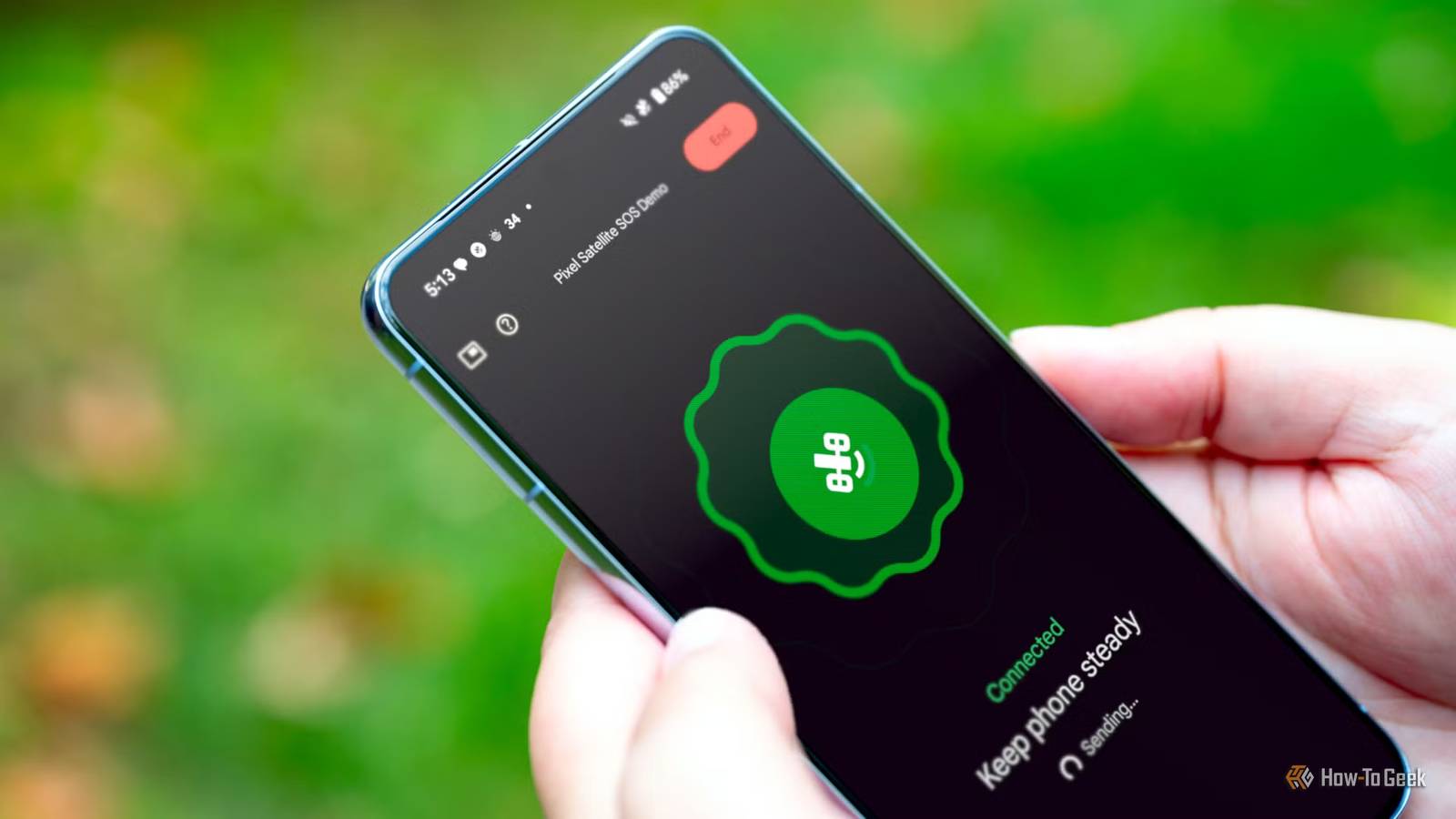
Published Nov 25, 2026, 3:00 PM EST Tyler is an journalist and content contributor at How-To Geek with over three years of experience covering the automotive and tech industries. His work focuses on delivering clear, well-researched, and engaging content that helps readers better understand the vehicles they drive and the technology that they use everyday. Before entering automotive media, he spent five years as an academic editor, developing a strong foundation in research methodology, factual accuracy, and structured analysis. This background informs his journalistic approach today, ensuring that every article balances technical insight with accessibility for a broad audience. Imagine heading out into the wilderness, miles away from the nearest cell tower, and still being able to send a message to friends and family. Satellite messaging is making this a reality. Several smartphone manufacturers and mobile network operators are rolling out technology that allows compatible phones to communicate directly with satellites, bypassing traditional cellular infrastructure. It's a particularly useful feature for hikers, campers, and anyone who spends time in areas with poor network coverage. However, there are a few things you need to know before assuming your phone can do the same. Device compatibility, network providers, regional availability, and the type of satellite service all play a role. So, how exactly does satellite messaging work, which smartphones support it, and what can you actually do with it? You can send messages even if you don't have a network connection Beam the message up Credit: NASA/JSC Depending on your smartphone, network provider, and location, you may not need a traditional mobile network connection to send messages anymore. When you're outdoors and find yourself somewhere without cellular coverage, satellite messaging can come in clutch, allowing you to stay in touch with friends and family. There are a few caveats, though. Your device, mobile carrier, and the country you're in all play a role in determining whether you can use the feature. While satellite connectivity is expanding, it isn't yet something you can expect to find on every smartphone. Essentially, the concept is pretty simple. Instead of communicating with a nearby cell tower, your compatible smartphone connects directly to a satellite orbiting Earth. Depending on the service, this could involve low-Earth orbit (LEO) or geostationary (GEO) satellites. The satellite then relays your message to a ground station, which connects it to the relevant communications network and forwards it to the intended recipient. Some satellite networks can also relay data between satellites before sending it down to Earth. The process works in reverse when someone replies. Making this possible requires some clever engineering. Modern satellite-to-phone services use specialized network technology to compensate for the considerable distance between your smartphone and the satellite. Because LEO satellites travel at high speeds, their movement can also introduce changes in signal frequency and timing. Network systems must account for these factors to maintain a reliable connection. Your phone's location information can also help with satellite acquisition and positioning, depending on the service. There are plenty of use cases for satellite messaging If you're adventurous, it comes in handy If you like taking the path less traveled, satellite messaging can help you stay connected with friends and family. Campers, hikers, boaters, and overlanders could all benefit from having access to this technology. Exploring nature doesn't necessarily mean you have to completely cut yourself off from the outside world. It's also a potentially valuable service when things go dark. In South Africa, where I live, we experience periods of widespread power outages. These can sometimes affect cellular infrastructure, making it difficult to communicate. Satellite connectivity could provide an alternative when conventional mobile networks aren't available, although it is worth remembering that satellite services also have their own coverage and availability limitations. Natural disasters can create similar problems anywhere in the world. Floods, wildfires, storms, and other emergencies can damage cellular infrastructure or disrupt electricity supplies. Having an alternative way to communicate with loved ones can be incredibly valuable in these situations. Some smartphones also offer satellite-based emergency services, allowing users to contact emergency responders when conventional networks are unavailable. However, it's important to distinguish these emergency features from ordinary satellite messaging, as they don't necessarily offer the same functionality. Compatibility is still limited, but it is expanding The list of people who can use this feature is limited Satellite messaging is a useful concept, but many people still don't have access to it. Your mobile carrier matters quite a lot, which also means regional availability is a significant consideration. For carrier-provided direct-to-phone services, your network operator needs an agreement with a satellite provider and must offer the service in your region. Your smartphone also needs compatible hardware and software. Satellite-based emergency SOS capabilities don't automatically mean your device can send ordinary messages over satellite. Apple, Samsung, and Google have all introduced satellite connectivity features, although their capabilities differ. iPhone 14 and newer models support Apple's satellite features, including Messages via satellite in supported countries. Users can send and receive iMessages, while satellite SMS also depends on carrier support. These features are not available everywhere, so owning a compatible iPhone doesn't automatically guarantee access. Samsung has also expanded satellite communication support to selected Galaxy smartphones through partnerships with mobile operators in North America, Europe, and Japan. Google's Pixel range also supports satellite connectivity, but it's important to distinguish between Satellite SOS and general-purpose satellite messaging. Satellite messaging is becoming more widely available across different smartphone manufacturers and mobile networks. As satellite providers and cellular operators continue to expand their partnerships, we can expect more devices and regions to gain access to these services. Emerging technology is filling in the gaps in connectivity infrastructure The increase in low-Earth orbit satellites and improved direct-to-device technology means you no longer need a bulky antenna or a separate satellite phone to stay connected when you go off grid. With there still being a reasonable number of dead zones out there, it fills in the gaps and makes sure that you don't have to completely disconnect just because you don't have cell service.
How satellite texting lets your phone send messages from miles beyond cell towers
Full Article
Original Source
Read the full article at Howtogeek →KhanList aggregates and links to publicly available news content. We do not host full articles from third-party sources. Always verify important information with original sources.