
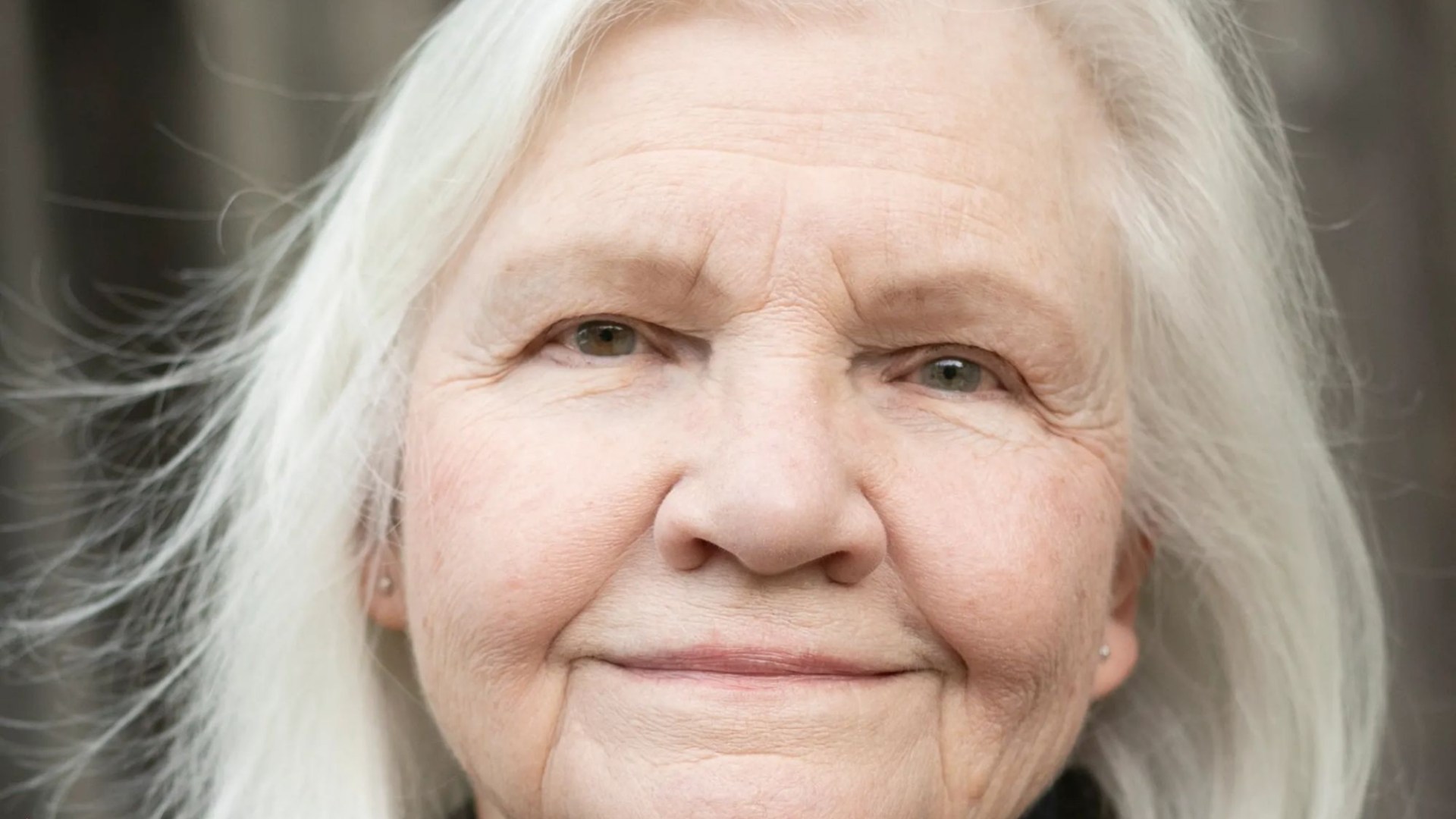
A 79-YEAR-OLD grandmother who loved reading thrillers ended up cracking a 40-year-old case – from the comfort of her bungalow. Margaret Press was looking forward to spending more time reading and cooking with her granddaughter when she retired in 2017. Grandmother Margaret Press has been using DNA submitted to genealogy databases to solve cold cases Credit: Supplied One of the cold cases was ‘The Buckskin Girl’ who was identified as 21-year-old Marcia King (pictured) Credit: Supplied But after reading a thriller that featured an unidentified woman’s body found dumped in a quarry, based loosely on a real-life cold case, Margaret realised she knew how to solve the mystery of who this woman was. And she’s now helped to identify more than 150 individuals as part of real police cold cases. Sign up for the Fabulous newsletter Thank you! In a move that could have come straight from the pages of The Thursday Murder Club – Richard Osman’s best-selling murder mystery series that follows a group of pensioners who tackle cold cases – Margaret contacted police and begged to be allowed to work on the case from her book. The grandmother realised that there was a huge untapped resource for police to use when trying to identify people using DNA samples – the millions of people who had voluntarily submitted their DNA to genealogy databases in the hope of finding relatives online. Marcia was known as ‘The Buckskin Girl’ – because of the distinctive Buckskin jacket she was wearing (pictured) Credit: Supplied Once she had been identified, Marcia’s family erected a headstone where she was buried Credit: Supplied Margaret realised that if she could run the DNA of unidentified murder victims through those databases, there was a high chance she could find a relative of the deceased. Incredibly, her plan worked – and she finally managed to do what police had struggled to do for decades. Now, nine years on, Margaret leads a team of around 100 volunteers from across the USA, UK and Canada– most of them retirees – on the DNA Doe Project. They have been involved in helping to identify more than 150 people through online DNA testing. Most read in Fabulous Margaret said: “When I retired from my job in computer science, I was looking forward to picking up my grandbabies from school and baking with them. “Now, my grandson tells his friends: ‘My mawmaw solves bodies’. “I’m probably not your average grandmother, but I’d rather work on cold cases than sit around playing Sudoku. “Once you get bitten by the bug, there’s no going back. “There’s nothing like getting that call from the lab saying ‘we’ve got them.’ “The first time we got a match, I felt like Thomas Edison discovering electricity, it was just incredible. “Nobody had ever done it before.” Margaret became determined to solve her first missing person case after Sue Grafton’s Q is for Quarry. The book is loosely based on a real-life murder mystery, following the discovery of the body of an unidentified young woman, who came to be known as ‘The Buckskin Girl’ – because of the distinctive Buckskin jacket she was wearing. “I became determined that I needed to help identify this woman,” said Margaret. Margaret had already formed a plan of just how she would be able to finally confirm the Buckskin Girl’s true identity. “I had always been interested in genealogy,” she said, “and I’d taken a DNA test on one of the sites many years ago. “The databases were very small back then, but it had still been able to tell me quite a lot about my DNA. “I’d recently used the same systems for some work I’d been doing to help adoptees trace their birth families. “I used my background in computer programming to help them connect with blood relatives on the sites and I knew that these DNA databases were now massive.” She began reaching out to police and law enforcement agencies, asking whether the method was already in use. “I was expecting somebody had already tried it,” Margaret explained, “but to my surprise, it seemed nobody had.” Margaret then faced a battle to get police, scientists and the DNA databases themselves to cooperate with her. But eventually, after partnering with forensic genealogist Colleen Fitzpatrick, they managed to convince one database to allow them to run tests – and they came back with a match, found through a cousin. “It felt unbelievable,” Margaret said. “Even though we had faith in the idea, we couldn’t quite believe it had actually worked.” Buckskin girl was revealed to be 21-year-old Marcia King. After informing her family of her identification, they were able to erect a headstone with her name where her body had been buried, marked only as ‘Jane Doe’. “We’d been able to restore a small piece of dignity for Marcia, and help bring the police a step closer to finding her killer.” After Ohio police revealed how Buckskin Girl had been identified, the caseloads started piling up for Margaret. “We suddenly had police force after police force coming to us for help,” she explained. “We were only too happy to take on the cases, and luckily, we had lots of other people getting in touch offering their services to help. “Most of our volunteers are retired, and they come from all walks of life. Some are detectives, but we also have a black hawk helicopter pilot and even a former cirque de soleil performer. “It sounds like a cliché, dragging us all out of retirement to help solve these missing people cases, but it really does feel as though we could be living in a book. “Some people think its violating privacy, but we are able to eliminate people from being intruded on. It saves thousands in public money. “They have voluntarily uploaded their DNA onto a public database, after all.” Although all the cases are currently based in the USA, the team has helped identify bodies belonging to Brits in the US – however, the team does not publicly detail all the cases they are involved in to protect the privacy of the victims. They have identified victims as well as perpetrators who have left DNA at the scene of a crime. “We don’t always find out whether identifying a body always brings about a conviction, as the police forces don’t always tell us. “That can be a little frustrating, but we carry on knowing that just being able to identify that person is a huge step,” says Margaret. “It’s exciting for us, but it’s also really important work. “Sometimes we get to speak to the families of people we identify, and they are always incredibly grateful for what we’ve done. “It feels important and we’re so glad to have been able to help identify so many victims. “I have a passion for solving mysteries.” Comment now
How retired granny helped solve more than 150 cold case killings from her bungalow after police missed major source
Full Article
Original Source
Read the full article at Thesun →KhanList aggregates and links to publicly available news content. We do not host full articles from third-party sources. Always verify important information with original sources.