
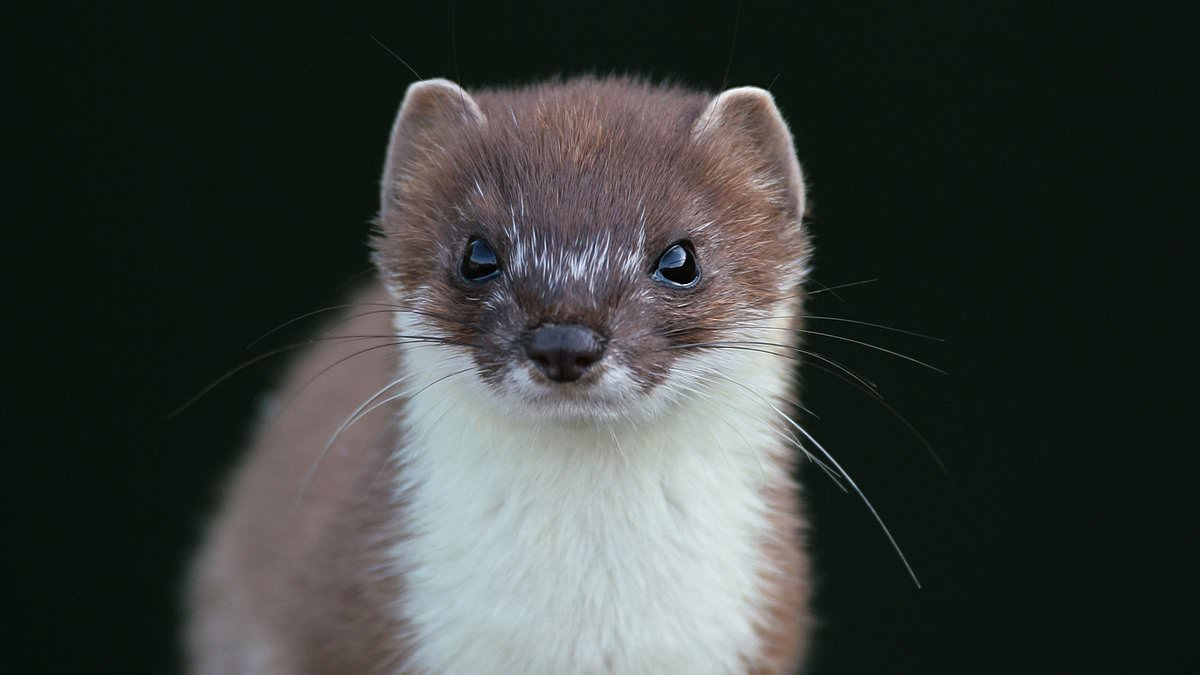
A £150,000 operation to track down a lone stoat on a remote Orkney island has so far failed to catch its target.The animal, believed to be a male, was first reported on Rousay in April after a visitor raised the alarm.Its presence was confirmed the following month, triggering a major effort to locate and remove it before it could become established.Since then, hundreds of traps and dozens of cameras have been deployed across the island, alongside searches by specially trained detection dogs.Despite the scale of the operation, the elusive stoat remains uncaught, with the most recent confirmed sighting recorded on camera on September 6.The amount of money committed to the search has been revealed following a Freedom of Information request made by The Orcadian.NatureScot documents show that an additional £148,790 was approved in June to bolster the response on Rousay.The funding was requested by the Orkney Native Wildlife Project (ONWP), which warned that the animal needed to be removed quickly to prevent it from establishing a population. A lone stoat on the Orkney island of Rousay has evaded a £150,000 operation to capture it, despite 229 traps, 59 cameras and specially trained detection dogs being deployed since May The additional £148,790 funding was approved by NatureScot after the Orkney Native Wildlife Project warned that the stoat needed to be removed before it could establish a population or spread to other stoat-free islandsOfficials also highlighted the possibility that a breeding population on Rousay could provide a route for stoats to reach other islands where they have not yet spread.A total of 229 traps and 59 cameras have been positioned around the island since the search began.The operation has also made use of detection dogs trained to identify stoat droppings and other evidence of their presence.People living on and visiting Rousay have meanwhile been encouraged to report any sightings or signs of the predator.The additional funding has supported extra staff, including a dedicated trapper, as well as vehicles and specialist equipment.Rousay had previously been considered free of stoats, which are an introduced species in Orkney rather than a native part of the Northern Isles' wildlife.Stoats were first discovered in Orkney in 2010, although exactly how they arrived remains uncertain.One theory is that they were inadvertently transported in hay carried by ferry, while another suggests they may have been deliberately released to control rabbits.Their distribution had previously been concentrated on Orkney Mainland and the southern islands connected by the Churchill Barriers.The arrival of a stoat on Rousay is particularly concerning because the island is close enough to the mainland for the animals to swim across the intervening water. Stoats are an invasive species in Orkney and threaten native wildlife, including the Orkney vole and ground-nesting birds such as curlews, lapwings and oystercatchers. Pictured is a dead stoat in a trap The wider £16 million eradication programme has killed more than 9,000 stoats since it began in 2019, but the Rousay animal remains uncaughtConservationists are also worried about the impact the predator could have on the island's native wildlife.Rousay is home to internationally important nesting populations of birds including curlews, lapwings and oystercatchers, all of which could be vulnerable to stoat predation.The Orkney vole is another species at risk, with the animal found nowhere else in the world outside the archipelago.The vole is also an important food source for rare birds of prey such as hen harriers and short-eared owls.The hunt for the Rousay stoat forms part of a much larger campaign to eradicate the species from Orkney.The £16million Orkney Native Wildlife Project is being delivered by RSPB Scotland, NatureScot and Orkney Islands Council, to protect the islands' native wildlife.The programme has been running since 2019 and has already resulted in 9,039 stoats being killed.The project has previously indicated that the risk of animals swimming between islands should fall as the number of stoats on Orkney Mainland declines.A spokesman for ONWP said: 'This was a short-term solution to ensure that Rousay was responded to in the most appropriate way.'
How £150,000 has been poured into the hunt for a single stoat... and it's still on the loose
Full Article
Original Source
Read the full article at Dailymail →KhanList aggregates and links to publicly available news content. We do not host full articles from third-party sources. Always verify important information with original sources.