
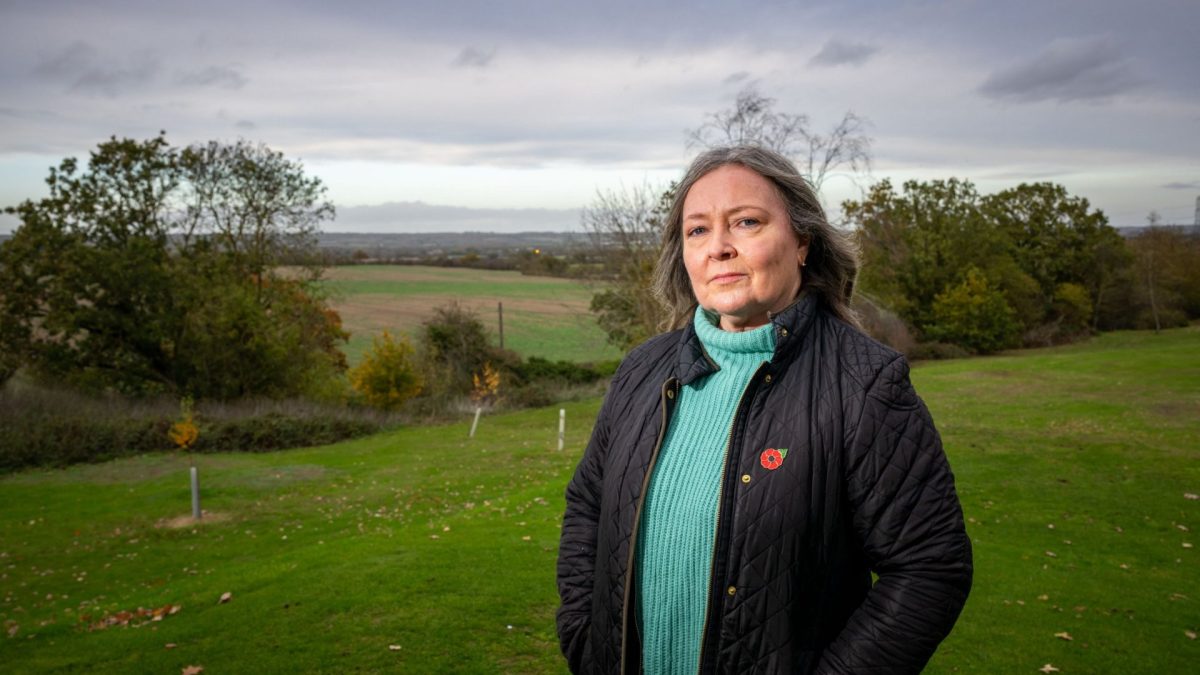
On a Tuesday evening in March this year, members of Havering Council in East London met to discuss a planning application for what could be the largest data centre in Europe. The application had generated a backlash from local residents, who said the council was waving through the development of a mammoth 500-acre project on London’s greenbelt. At the meeting, Keith Prince, a former Conservative Councillor who had recently defected to Reform UK, spoke out against the “bulldozing through” of the plans and said his party could “cancel” the application if elected. “We thought ‘oh great, somebody’s behind us’ and so we all voted for him,” said Emma Edmonds, a resident of North Ockendon, the village where the data centre is set to be based. Reform took power of the council in May, with Prince named leader of the local authority. However, Reform is yet to do anything to halt the plans – and residents say they have been “betrayed”. The issue threatens to boil over into a bigger issue for Reform; spoof ads recently appeared on bus stations in the borough suggesting the party’s leader, Nigel Farage, was supportive of the giant data centre. “Struggling with your utility bills? We don’t give a f**k,” one poster read. Giant East London data centre sparks backlash Plans for the data centre first emerged in 2022. Havering Council, which until May was run by the independent Havering Residents Association, claimed the project would provide a “boost to much-needed Council finances” in the form of business rates. Plans for a 500-acre data centre development in North Ockendon sparked a backlash (Photo: James Linsell Clark/SWNS) At this time, the general public knew very little about data centres, the giant warehouses used to store the servers, routers, switches and firewalls needed to power the internet. However, a backlash has been growing against these developments across the UK, as the public has become aware of the huge amounts of water and energy they require, as well as the impact they can have on local communities. More than 150 new data centres are currently in the UK planning system, according to analysis by Computer Weekly, as the country looks to keep up with the data demands of AI. The concerns of the North Ockendon residents are similar to those being echoed nationwide: the giant warehouse will cover the equivalent of 330 football pitches of greenbelt land, while having an electricity demand equivalent to more than one million households. “I like the peace and quiet,” said Edmonds. “I just thought I would end up having the rest of my life in this lovely quiet little village that is now being completely destroyed.” Emma Edmonds fears the planned data centre will ruin the atmosphere of the village (Photo: James Linsell Clark/SWNS) The site’s developer, Digital Reef, said the project will improve the local area via the creation of a 280-acre Ecology Park, but residents say this won’t make up for the impact of having a mega warehouse in their back garden. “It would take years for that to develop into a proper rich ecosystem,” said Ian Pirie, coordinator at Havering Friends of the Earth, who also volunteers at a community forest that will neighbour the data centre. Ian Pirie from Friends of the Earth Havering said the development is a threat to biodiversity (Photo: James Linsell Clark/SWNS) ‘Reform betrayed us’ The i Paper first met the North Ockendon residents in the summer of 2025 when an alliance was forming between the campaigners and the local Reform UK party. The residents were being supported by Nick Palmer, Reform’s parliamentary candidate for the 2024 general election who narrowly lost out to the Conservatives. After years of being stonewalled by the council over the data centre, the residents were hopeful Reform would give them a voice, but now feel they’ve been lied to. “I voted Reform. All my life I’ve voted Conservative. I voted Reform because I felt like Nigel Farage was a completely different man,” said Danny Leach, whose home backs directly onto the fields where the data centre is planned. “We listened to this Keith Prince and what he had to say in the council chambers,” he added. “Really we’ve been hoodwinked.” Danny Leach believes he was ‘hoodwinked’ by Reform UK (Photo: James Linsell Clark/SWNS) Local resident Karen Fitzgerald said she was in daily contact with some Reform candidates before the election and said a powerpoint presentation she created on the data centre was used at a Reform campaign event. However, they say they have struggled to get responses from the Reform councillors since they were elected. “They had previously said if they got in they would tear up the [Local Development Order]. That hasn’t happened…so we feel massively let down in that respect,” Fitzgerald said. A Local Development Order (LDO) is a planning tool councils can use to grant upfront permission for certain types of developments. The previous Havering Council administration created a draft LDO for the data centre but this is yet to be approved. Views of fields that would be covered by the data centre (Photo: James Linsell Clark/SWNS) The council did not respond to requests for comment, however Prince recently told the Romford Reporter that his party has “had more information shared with us” and “cannot prevent a private company from submitting a planning application”. The council leader has promised “further consultation” and said the council will “drive the hardest bargain possible” if the data centre is approved, but residents still feel betrayed. Palmer, who has moved out of the borough and is no longer associated with the local Reform Party, told The i Paper he felt “extremely sorry” for the residents. “It’s just extremely frustrating when you don’t get a response, you don’t get the communication that the council should be giving to the residents because they’re the ones that voted them in,” he said. Reform rethinks data centres The issue has potential to spill out of North Ockendon as the backlash against data centres grows. Earlier this month, campaigners from Resist Reform put up fake adverts at bus shelters across Havering with pictures of Farage and slogans such as: “Don’t like the hosepipe ban? Better get used to them” and “Struggling with your utility bill? We don’t give a f**k”. Spoof ads have appeared at bus stops in Havering related to the data centre (Photo: Resist Reform) “It is a joke that Reform UK can claim to be for the people, but then sell us out once they’re elected,” said Sam Simons, Resist Reform spokesperson. Nationally, Reform UK also appears to be in conflict over its stance on data centres as the developments become increasingly unpopular with the public. Generally the party has been supportive of Britain’s AI industry. At the end of October, the party’s shadow chancellor, Robert Jenrick, said the party would support on-site gas generation for data centres as part of a 64-step growth plan for Britain’s economy. However, Farage recently signalled his party could be retreating from this position when he supported the Scottish Government’s decision to pause planning approvals for hyperscale data centres. “For once, I think maybe just taking a bit of time to think about this is the right thing to do,” he told ITV Scotland in September, referencing the growing backlash to data centres in the US. Reform has won big in places like Havering by promising to represent the voices of local residents. But as opposition to data centres grows, the party will have to decide whose side it is on.
How plans to build Europe’s biggest data hub in the tiny village Reform UK left in turmoil
Full Article
Original Source
Read the full article at Inews →KhanList aggregates and links to publicly available news content. We do not host full articles from third-party sources. Always verify important information with original sources.