
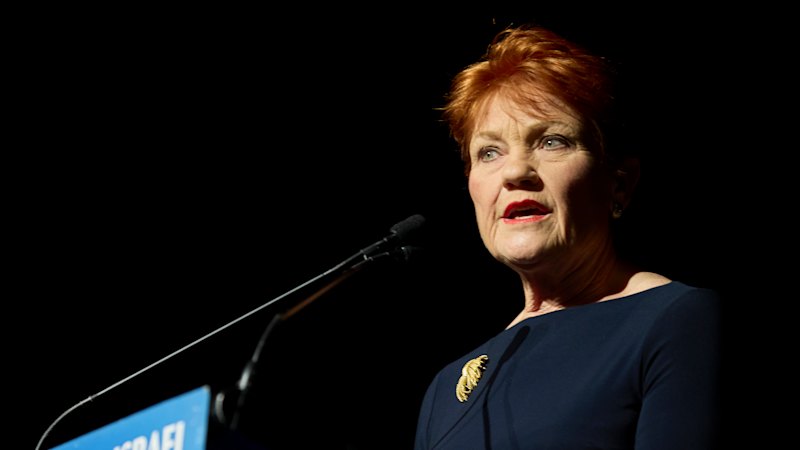
October 18, 2026 — 5:00amAustralia’s budget would remain mired in deficit for more than 10 years under One Nation’s plans for lower migration, delivering an economic blow that would drive up national debt by an extra $275 billion.As political parties of all stripes come under pressure to appease public anxiety about immigration, a 10-year analysis of lower migration scenarios using Parliamentary Budget Office tools exposes the economic and fiscal consequences of blunt measures to bring fewer people to the country.According to the analysis, Pauline Hanson’s three-year negative migration scenario would also reduce Australia’s economic output by $212 billion by the middle of next decade, when there would be 820,000 fewer taxpaying workers in the economy.Former Coalition finance minister Mathias Cormann, now head of the OECD, on Saturday warned against setting “arbitrary migration caps” without thought to their impact on businesses, hospitals or universities.“An ageing country that chooses to shrink its working-age population while promising to spend more on health, care and defence has not developed a plan. It has put forward a contradiction,” he said in a speech.One Nation leader Pauline Hanson.Alex EllinghausenThe analysis shows cutting migration to the Coalition’s desired levels would mean $150 billion more debt in a decade under current migration settings, demonstrating the opposition has a high-wire task in executing precise changes to the visa system that avoid a compounding fiscal fallout.The Labor government is already wearing backlash from the hospitality and accommodation sector, which relies on migrant labour, for its decision to limit working holidaymaker visas as a key measure to quickly bring down the net overseas migration intake.Public anxiety about immigration has grown alongside the number of temporary visa holders in Australia, but industry and business groups are becoming increasingly concerned that a political contest to drive numbers down quickly risks jeopardising the economy.The Australian Hotels Association made its own intervention into public debate this week with an AI-generated advertisement that showed services falling apart as migrant workers disappeared from cafes, aged care homes, supermarkets and hotels across the country.“The hotel industry understands the need for migration changes, but it’s unfair our sector is copping the brunt of the planned cuts,” Accommodation Australia chief executive James Goodwin said. “There must be a better balance across the different visa categories and sectors of the economy.”Labor will cut second- and third-year working holidaymaker visas and student family visas in its plans to get net overseas migration numbers down to 225,000. The Coalition will target graduates and refugees to hit a 100,000 target, before lifting it to 160,000 with more skilled entrants.One Nation has not specified its plans but wants three years of negative migration, before a maximum net intake of 130,000 people a year, which would retain regional workers.Deciphering the economic impacts of lower migrationEconomist Chris Richardson said higher migration levels generally gave the federal government a higher tax intake, although they saddled state governments with more spending. He said there were not examples of economic models that effectively combined the impact of migration on federal budgets, state budgets and the complex issue of housing.The budget office’s “build your own budget” calculator is one tool that enables users to compare policy initiatives, including cuts to net overseas migration, and their impact on the federal budget and population growth over time.It is limited and assumes current policy settings, so the Coalition’s plans to reconfigure the migration program cannot be factored into the forecasts. But without published budget analysis from the opposition or One Nation, it is one measure to gauge the fiscal impact of cuts if current migration settings were maintained but scaled down to include fewer people.Based on One Nation’s desired immigration levels, by the middle of next decade the country would have 820,000 fewer people in paid employment. That has a flow-on impact on personal income tax, company tax and GST collections.Under the government’s policies, the budget is expected to show cumulative deficits of $108 billion over the next decade, returning to the black in 2034-35. But One Nation would run cumulative deficits of $391 billion, and the budget would not return to surplus over the next 10 years.The larger deficits mean more gross debt, which is currently $995 billion. By the middle of next decade, current government policy would take debt to almost $1.4 trillion. But with deep cuts in net overseas migration, One Nation would have debt at $1.67 trillion.The Coalition’s numbers, under today’s migration settings, would lead to debt at $1.54 trillion. There would also be a 430,000 drop in the number of working people, and run-up deficits worth $262 billion. It would get back to surplus in 2036-37.The opposition’s own analysis deviates significantly from these estimates because the Coalition plans on changing the mix of migrants, whereas the PBO budget tool assumes the make-up of the migration program remains the same as today but in smaller numbers.The Coalition forecasts losing $6.1 billion over the four-year forward estimates because of lower migration. However, halving the refugee intake from 20,000 to 10,000 people would deliver $2.7 billion in budget savings, while a new skilled project visa scheme is forecast to deliver $3.9 billion.The Coalition says its policy would improve the budget bottom line by $260 million in four years and $2.5 billion over the decade, although it has not published the analysis, which was also completed by the PBO, so it is unclear what other caveats or conditions are factored into that scenario.Richardson said high-skilled young adult migrants delivered the most positive budget and economic impact, but changing migration policy was complex. “As the government has tried to wind back migration in recent years, it’s increasingly clear that it’s hard,” he said.“Regardless of what any political party wants to do, we’ve built a system that’s a supertanker – it doesn’t change direction fast. The politics have changed, but the poles and wires of the system haven’t.”The Coalition is mounting its case for lower migration levels as it competes in the polls with One Nation, which has not outlined any policy details or addressed economic impacts.A spokesperson for leader Angus Taylor said One Nation’s policy was a mess while the government had been relying on migration to pump up their budget, claiming the Coalition could both deliver a historic cut to migration and fully protect the economy.Cormann, in his speech to the right-leaning Centre for Independent Studies in Brisbane on Saturday, doused that argument. He acknowledged public concern about immigration had grown, particularly because of housing shortfalls, but rejected cutting immigration as the answer.“That concern [housing] is legitimate ... The answer is to fix what made it legitimate: housing supply, infrastructure, services and the composition of the intake, not to shrink the country,” said the former minister in the Abbott, Turnbull and Morrison governments.“We cannot have fewer workers and more hospitals, more aged care, a bigger pension bill and more defence all at the same time. Someone has to pay for all that. You cannot shrink your way out of that bind. You can only grow your way out of it.”Cut through the noise of federal politics with news, views and expert analysis. Subscribers can sign up to our weekly Inside Politics newsletter.From our partners
How One Nation’s negative migration plans would drive up debt by $275b
Full Article
Original Source
Read the full article at Smh →KhanList aggregates and links to publicly available news content. We do not host full articles from third-party sources. Always verify important information with original sources.