
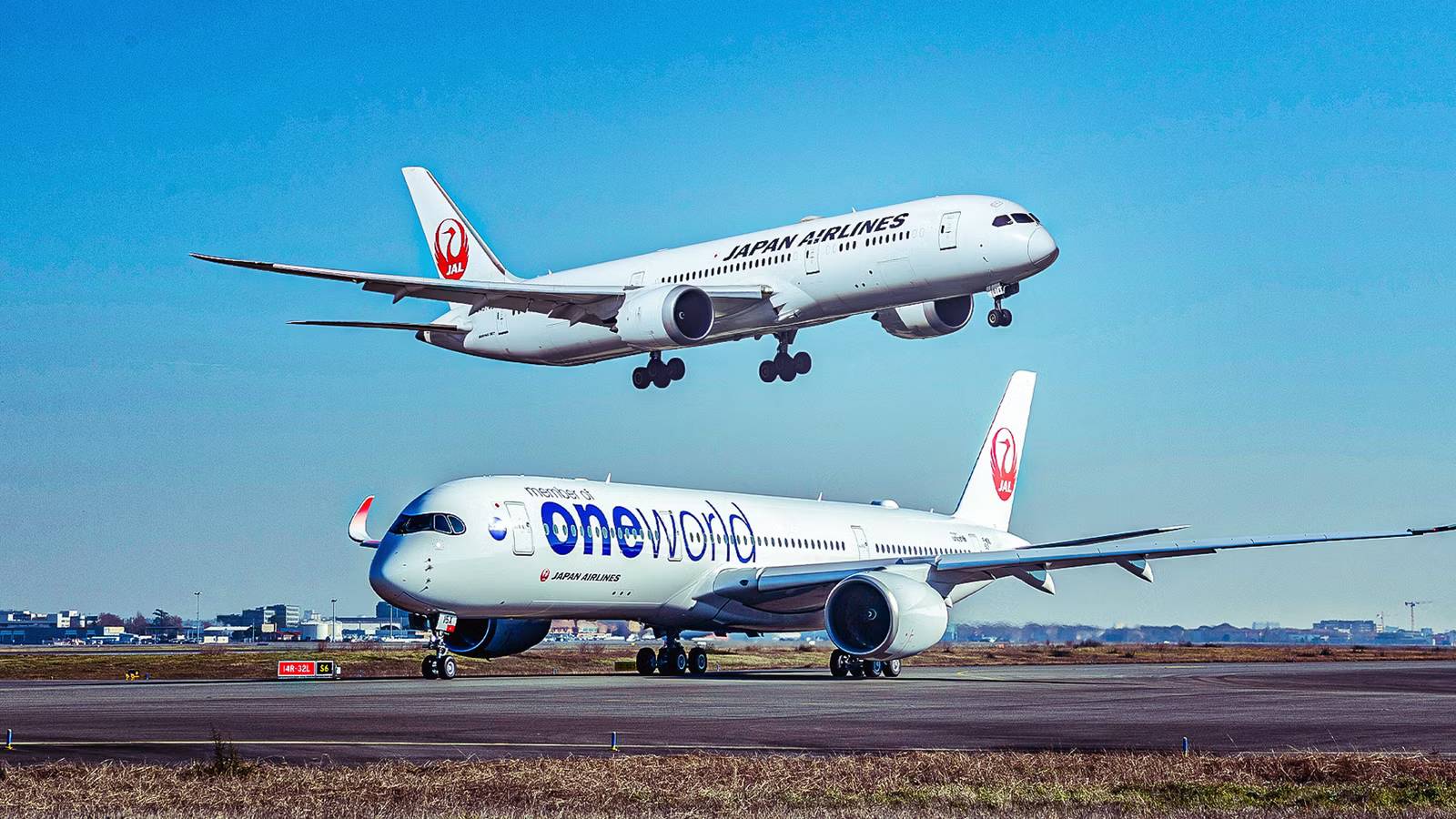
Credit: MH.Chuang | Shutterstock | Airbus | Simple Flying Published Nov 26, 2026, 7:00 AM EST Passionate about promoting aviation, the beauty of flight and the science behind it, Antonio is an avid reader of aviation magazines and books, and he loves visiting airshows all over the world, taking photos and writing about airplanes and helicopters as well. He is currently based in Palermo, Sicily. Sign in to your Simple Flying account Ask what a Boeing 787-9 Dreamliner costs and you will get different answers. The price changes between the number on the price list and the number the airline actually paid. And they are rarely close. That gap is why the question of how much a Boeing 787-9 costs compared with an Airbus A350-900 is harder than it looks, and why it matters. These two jets carry a large share of the world’s long-haul traffic, so what airlines really pay for them ends up in fleet plans, route maps and, eventually, ticket prices. The 787-9 entered service in 2014 and the A350-900 followed early in 2015, and they have fought over the same orders ever since. Neither manufacturer has published a current price list in years, so every figure below comes with a date and a source. We will cover the last official catalog prices, the discounts that shrink them, what each jet costs to operate, and where the comparison breaks down. The running-cost numbers, in particular, do not point to the way the sticker prices do. Boeing 787-9 Vs Airbus A350-900 List Prices: The Short Answer Credit: kentaylordesign | Shutterstock On paper, the Airbus is the more expensive jet. Its last published list price for the A350-900 is $317.4 million, from the 2018 Airbus price list covered by 24/7 Wall St. Boeing’s 2018 list put the 787-9 at $281.6 million, as The Points Guy reported when both manufacturers raised prices that year. The difference is $35.8 million, or roughly 13% of Boeing’s price. Boeing’s number has since moved. View From The Wing cites a later list price of $292.5 million for the 787-9, which trims the gap to $24.9 million, about 8.5%. Both manufacturers have stopped publishing current catalogs, so the 2018 figures are the last matched pair available. Lufthansa’s May 2026 order shows how dated they are: 10 A350-900s and 10 787-9s carried a combined list value of $7.7 billion, an average of about $385 million per aircraft, well above either 2018 price. Lufthansa did not break the total down by model. Nobody pays list, though. View From The Wing puts a new 787-9 at around $160 million in practice, nearly 45% below that $292.5 million figure, and 24/7 Wall St noted that discounts of 30% to more than 50% are common for both manufacturers. So the real question is not which jet has the bigger sticker; it is which one comes with the bigger discount, and that is a much harder number to find. How Much Do Airlines Actually Pay For A 787-9 Or A350-900? Credit: Just dance | Shutterstock The quoted price is only as good as its label. IAG’s $397 million figure for its 787-10 order was a reference price that bundled the airframe, engines and optional features. The airline itself acknowledged that Boeing had granted a substantial discount, View From The Wing explains. Order values from price lists usually come from multiplying the number of aircraft by an inflated catalog figure, which is why they rarely survive contact with the contract. How deep the discount goes depends on timing and leverage. Buyers of a brand-new program can pay close to 80% of a list price that was much lower at the time. A mature program tends to trade around 50% to 55% of the list, and a “white tail,” built for a customer who never took delivery, can go for 45% of the list or less. An airline desperate for scarce delivery slots has little bargaining power, while a manufacturer trying to keep a line busy may cut deeper. Early deals also tend to get cheaper after signing. Launch customers often hold most-favored-nation clauses that adjust their price when later buyers win better terms, so an early published price is seldom the final one. On the Airbus side, the picture is thinner still. With 1,009 A350-900s ordered by August 2025, according to Simple Flying, there are plenty of contracts out there, but the public sources we checked offered no net-price estimate for the A350-900 that we could verify. What Do Airlines And Analysts Say About Real Aircraft Prices? Credit: Boeing View From The Wing offers a blunt rule of thumb: cut any announced order value roughly in half. The disclosed cases mostly support it. When Hawaiian Airlines ordered 10 787-9s in 2018, Boeing valued the deal at $282 million per aircraft at list, while one estimate at the time put the real figure near $150 million, about 53% of the list. Distressed inventory goes lower. Biman reportedly received a 55% discount on two 787-9s in 2019 because the original buyer, Hainan Airlines, could not take them, which works out to about $131.6 million each. Appraisers land in the middle: three firms valued factory-new American Airlines 787-9s at $151.2 million to $161.1 million apiece in 2025, though that is an asset value and not a disclosed price. Lufthansa is a useful case because it buys both jets. When the group added five 787-9s in 2021, American Machinist put the reported cost of each at $145 million, with deliveries reportedly coming from jets built for other carriers. Lufthansa has said publicly that it negotiated a significant reduction on its 2019 order and agreed not to disclose the price. Put those figures together, and the 787-9 looks like a $130 million to $160 million aircraft in practice. What the A350-900 costs Lufthansa is anyone’s guess, and we would like to hear yours. Boeing 787-9 Vs Airbus A350-900: Size, Range And Operating Costs Credit: suppawich suksong | Shutterstock The purchase price is only part of the bill. AirInsight compared total operating costs, including ownership, using 2022 data from Skailark's Airline Economics database across North American and European carriers. The 787-9 averaged about $0.125 per seat mile, which is 3.3% above the A350-900's roughly $0.121. Per block hour, the result flips: $16,899 for the 787-9, about 8% below the A350-900's $18,370. Size explains most of it. The Airbus is the larger aircraft, so its costs are spread over more seats, while the Boeing is lighter, so each hour in the air costs less. AirInsight concluded that the pair nearly tie in economics, and both airframes lean heavily on carbon fiber, which makes up 53% of the A350 and 50% of the 787 by weight. The weight gap itself is a moving target: AirInsight cited 62,408 pounds (28,308 kg) in the 787-9’s favor, while current published maximum takeoff weights imply about 52,400 pounds (23,780 kg). Boeing 787-9 Airbus A350-900 Typical seats 250 to 325 (two-class) 332 to 352 (three-class) Range, up to 8,300 nautical miles (15,370 km) 8,500 nautical miles (15,750 km) Max takeoff weight 571,500 lb (259,220 kg) 623,900 lb (283,000 kg) Length 206 feet, 1 inch (62.8 meters) 219 feet, 2 inches (66.8 meters) Wingspan 197 feet, 3 inches (60.1 meters) 212 feet, 5 inches (64.75 meters) Cabin layout can distort those averages. Simple Flying describes United’s new Elevated 787-9s, which have just 222 seats (64 in business, 35 in premium economy and 123 in economy), well below the 250 to 325 Boeing quotes for a typical two-class layout. A per-seat figure for that airplane will look nothing like an industry average, and the same goes for a premium-heavy A350-900. That raises an awkward question for the list-price debate: is Airbus’ premium of roughly $25 million to $36 million really a premium, or just the cost of a bigger airplane? Why Boeing 787-9 And Airbus A350-900 Price Comparisons Can Mislead Credit: Alexandr Zimovskoy | Shutterstock Every number here carries a caveat. The A350-900 list price is from 2018, the 787-9 has at least two list figures in circulation, and net prices are private. The sources we reviewed give a rough net estimate for the 787-9 but none we could verify for the A350-900, so the true price gap could be narrower than the list difference, or wider. Nobody outside the contracts can say. Specifications are a moving target as well. In March 2026, the FAA certified a higher takeoff weight for the 787-9, about 10,000 pounds (4,540 kg), which Boeing says enables roughly 300 additional nautical miles (560 km) of range or about three metric tons of extra payload. Boeing’s earlier releases quoted the 787-9’s range as 7,565 nautical miles (14,010 km) and 7,635 (14,140 km), while its website now says up to 8,300 (15,370 km). Airbus’s own A350-900 page shows 8,500 nautical miles in one place and 8,600 in another, and AirInsight’s comparison listed a 665-nautical-mile (1,230 km) range gap between the two jets. Timing is the other wildcard. Lufthansa’s latest order for 20 jets does not start delivering until 2032, and as Simple Flying reports, Air Canada’s first A350-1000s are not due until the second half of 2030. With slots booked that far out, airlines are paying for certainty as well as hardware, and a bargain price on an aircraft you cannot fly for up to eight years is worth less than it looks. So check three things before trusting any price: its date, whether it includes engines and options, and whether it is a list price, an appraisal or a reported deal. Which Is Better Value: The Boeing 787-9 Or The Airbus A350-900? Credit: Aviators777 | Shutterstock At catalog prices, the A350-900 costs more, from $24.9 million to $35.8 million depending on which 787-9 list you use. After discounts, the 787-9 appears to sit at roughly $130 million to $160 million, and Airbus remains a question mark. The reported figures suggest the Boeing is probably the cheaper airplane to buy, but the evidence is lopsided, and that matters. On running costs, the contest is close. The A350-900 wins per seat and the 787–9 wins per hour, so the better deal depends on whether an airline can fill the bigger aircraft on a given route. Lufthansa ordering 10 of each in the same deal suggests the market sees no obvious winner. The practical tip for our readers is simpler: next time an order is announced with a gigantic price, mentally halve it before reacting. Without public price lists, new orders will keep arriving with inflated purchase values and confidential discounts, and the real competition will play out in delivery slots and operating costs. So over to you: if both jets end up costing about the same after discounts, would you take the 787-9’s lighter airframe and lower hourly cost, or the A350-900’s extra seats and range?
How Much Does A Boeing 787-9 Cost Compared To The Airbus A350-900?
Full Article
Original Source
Read the full article at Simpleflying →KhanList aggregates and links to publicly available news content. We do not host full articles from third-party sources. Always verify important information with original sources.