
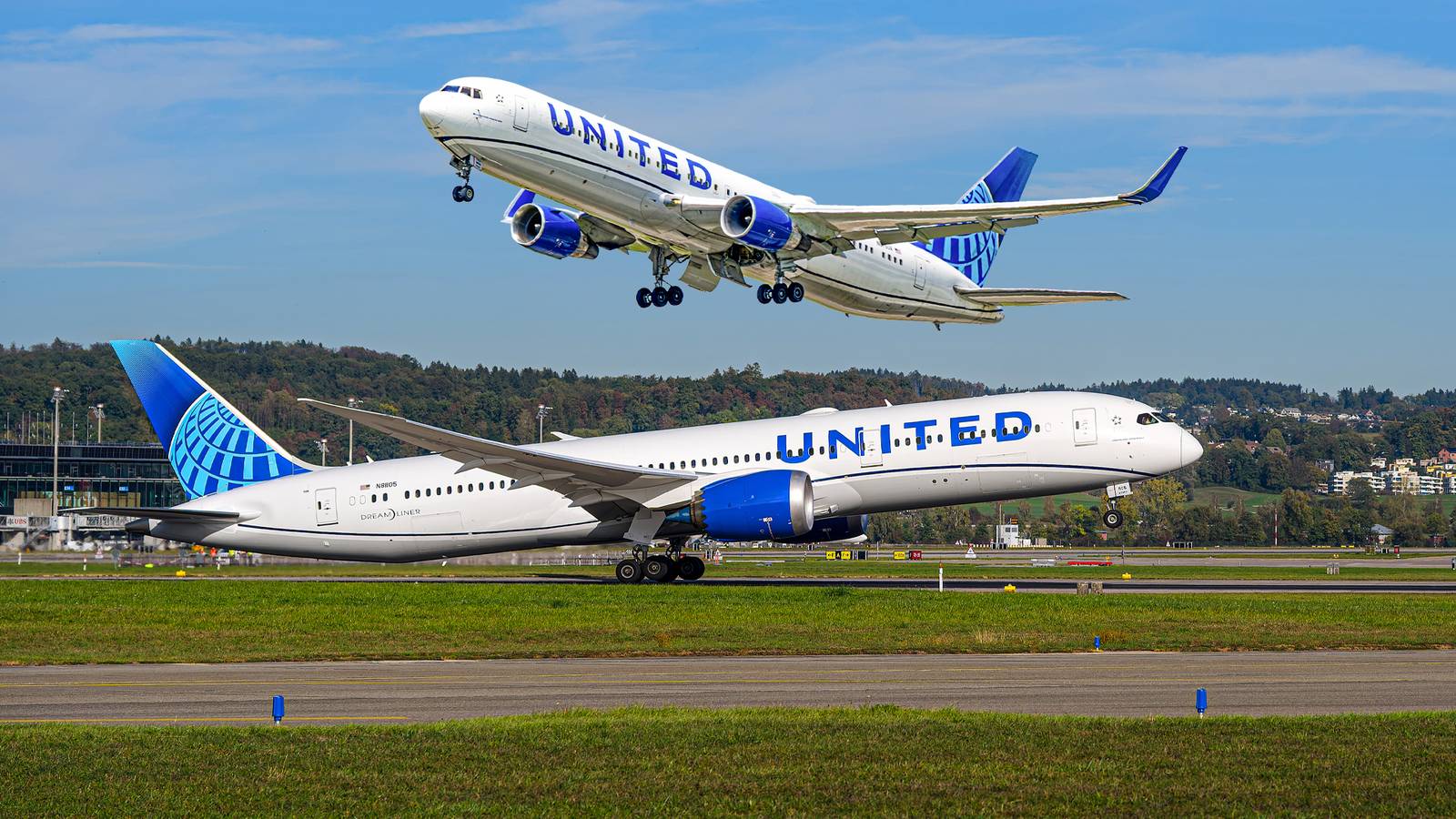
Credit: Michael Derrer Fuchs | Shutterstock, Simple Flying Published Nov 29, 2026, 7:00 AM EST Jasper Yu-Dawidowicz is a New York City-based aviation journalist with over seven years of journalism experience across different publications. Currently an undergradate student, Jasper is pursuing dual degrees in Professional Flight and Aviation management, completing his flight training as part of Purdue's part 141 R-ATP eligible program. Sign in to your Simple Flying account For nearly 40 years, the Boeing 767-300ER has been a workhorse for airlines worldwide, becoming one of the most successful long-haul widebodies ever built. However, its successor, the Boeing 787-9 Dreamliner, has fundamentally changed the economics of operating these routes. Despite being significantly larger and capable of carrying more than 50 additional passengers, the 787-9 burns approximately 25% less fuel per seat than the aging 767-300ER, a major efficiency advantage that has driven the global 767-300ER fleet down to just 179 compared with 777 Boeing 787-9s today. The global transition from the 767-300ER to the 787-9 reflects the dramatic improvements in widebody efficiency over the past four decades. With advanced engines, a lightweight composite structure, and redesigned aerodynamics, the Dreamliner allows airlines to carry more passengers over longer distances while significantly reducing fuel consumption per seat. But how much gas does the 787-9 actually save compared with the aircraft it replaces? The 787 Vs. 767: How Do The Aircraft Compare? Credit: Ian Dewar Photography The 787 and 767 are two aircraft built to serve similar markets, albeit several decades apart. The 767 family first entered commercial service in 1982 with the Boeing 767-200, later expanding to the 767-300 and 767-300ER in 1988. The 787, meanwhile, entered commercial service 15 years ago in 2011, with the most popular variant, the 787-9, joining the family in 2014. The two aircraft were designed for medium- and long-haul operations, but the Dreamliner offers operators considerably greater capacity and range. A closer look at the 787-9 reveals an impressive range of 8,300 nautical miles (15,370 km), according to Boeing’s manufacturing data. This range comes with a typical two-class seating capacity of 250 to 325 travelers, compared with about 200 to 250 for most 767-300ER configurations. However, that decreases significantly for carriers operating these aircraft with three-class layouts. For example, United Airlines, the second-largest operator of both the 767 and 787, fits 167 seats on its premium 767-300ERs compared to 222 seats on its new “Elevated” 787s. Specification Boeing 787-9 Dreamliner Boeing 767-300ER First commercial service 2014 1988 Typical two-class configuration 250-325 200-250 Maximum range 8,300 nautical miles (15,370 km) 5,977 nautical miles (11,070 km) Maximum takeoff weight 571,500 lb (259,228 kg) 412,000 lb (186,880 kg) Engines General Electric GEnx-1B or Rolls-Royce Trent 1000 General Electric CF6, Pratt & Whitney PW4000, or Rolls-Royce RB211 Largest Operators United Airlines (52), All Nippon Airways (ANA) (44), Etihad Airways (37) United Airlines (37), Delta Air Lines (37), Japan Airlines (JAL) (24) While the 787-9 has, on average, around 50 additional seats compared to the 767-300ER, given its 26-foot (7.92 meters) length advantage, the 767-300ER still offers a sizable 5,977 nautical miles (11,070 km) range. Nevertheless, the 787-9’s additional range and passenger capacity give air carriers considerably more flexibility when planning their networks. This difference in size and capability also makes comparing both aircraft’s fuel consumption interesting, especially since the 787 does not necessarily burn less every hour. How Much Fuel Does Each Aircraft Burn Per Hour? Credit: kamilpetran | Shutterstock The 787-9 and 767-300ER have considerably different fuel requirements, reflecting the difference in their design. The 787-9 typically consumes around 1,400 to 1,900 gallons (5,300-7,192 liters) of fuel per hour. The 767-300ER, meanwhile, generally burns approximately 1,500 to 1,700 gallons (5,678-6,435 liters) per hour under normal operating conditions, according to US Department of Transportation Data. Given these ranges, it may seem at first glance that the 787 does not actually burn less gas than the 767. Looking at actual airline data provides a more interesting perspective on the difference between the two aircraft. According to 2025 US airline data compiled by Green Airlines using Bureau of Transportation Statistics filings, the 787-9 averaged approximately 1,884 gallons (7,131 liters) per hour, compared with 1,684 gallons (6,374 liters) for the 767-300ER. This means the newer Dreamliner consumes about 12% more fuel per hour than its older predecessor across the aircraft types’ respective operations. This figure includes fuel associated with taxiing and holding, not just inflight burn. However, the difference becomes more understandable when you consider that the average 787-9 operates with around 260 seats, compared with about 200 on the 767-300ER. The Dreamliner is a considerably larger aircraft, carrying more passengers and often operating longer flights. In turn, comparing the hourly burn alone does not capture the full picture of the efficiency improvements offered by the 787. The Boeing 787-9 Saves Up To 25% More Fuel Per Passenger Than The 767-300ER Credit: Vytautas Kielaitis | Shutterstock Looking at the per-passenger fuel savings of the 787-9 reveals why airlines are increasingly looking to substitute the 787 in place of the 767 on most routes. Comparing these two aircraft’s fuel burn per available seat-mile measures how efficiently an airplane transports its maximum passenger capacity over a given distance. This provides a more useful comparison than hourly consumption because it accounts for the difference in passenger capacity between the aircraft. According to the same 2025 operating data, the 787-9 achieved approximately 74.5 seat-miles per gallon, meaning if a flight was 100% full, each gallon of gas would transport one passenger 74.5 miles. In comparison, the 767-300ER came in at roughly 58 seat-miles per gallon, the lowest of any commercial Airbus or Boeing aircraft flying today. This means the Dreamliner transports an available seat about 28% farther for every gallon of gas consumed, consistent with the American manufacturer’s initial promise of up to 25% greater fuel efficiency than older-generation widebodies. Aircraft Fuel Burn Per Hour Seat-Miles Per Gallon Avg. Fuel Burn Per Flight Boeing 787-9 Dreamliner 1,400-1,900 gallons (5,300-7,192 liters) 74.5 19,060 gallons (72,150 liters) Boeing 767-300ER 1,500-1,700 gallons (5,678-6,435 liters) 58.0 10,335 gallons (39,122 liters) The difference is particularly significant given the types of flights each airplane operates. While the 787-9 averaged approximately 19,060 gallons (72,150 liters) of fuel consumed per flight in 2025, compared with 10,335 gallons (39,122 liters) for the 767-300ER, the average flight durations were 10.1 and 6.1 hours, respectively. These figures reflect different operating missions and show how airlines prioritize efficiency per passenger rather than simply looking at the total amount consumed by each aircraft. Ultimately, the biggest advantage of the 787-9 is its ability to transport more fliers over longer distances while using less propellant relative to its overall available seating capacity. How The Boeing 787’s Design Contributes To Its Fuel-Efficiency Credit: Ian Dewar Photography | Shutterstock The Dreamliner’s improved efficiency results from several technological advancements introduced during its development. Approximately 50% of the 787’s primary structure by weight is made from composite materials, including its fuselage and wings. These carbon-fiber-reinforced materials offer a high strength-to-weight ratio, allowing the American planemaker to build a strong aircraft without the added weight of traditional aluminum construction. Reducing an aircraft's overall weight means less thrust is required to remain airborne, thus reducing the total fuel required as well. The 787 also benefits from considerably more advanced engine technology compared to the older 767. Air carriers can choose between General Electric’s GEnx-1B and Rolls-Royce’s Trent 1000 engines, both specifically developed for the Dreamliner family. These engines feature high bypass ratios, with the Trent 1000 reaching almost 10:1, meaning significantly more air passes around the engine’s core than through it, resulting in thrust ratings of up to 75,000 pounds (334 kN). This improves the engine’s efficiency, with larger fan designs further helping to reduce fuel consumption during takeoff and in cruise. The 787 also reduces the need to use engine bleed air for many onboard systems, improving cruise efficiency by about 4% compared to the 767. Finally, the Dreamliner’s aerodynamic design contributes significantly to its fuel savings. The 787’s long, high-aspect-ratio composite wings are designed to generate lift while minimizing drag, especially at high speeds. This helps the 787 maintain efficient cruise performance over the long distances it operates. While the 767-300ER has been fitted with several aerodynamic improvements since its 1988 introduction, including large wing sharklets designed to reduce induced drag, the Dreamliner benefits from being designed with those aerodynamic concepts in mind from the start. Combined with a lighter structure and more efficient engines, these improvements allow the 787-9 to deliver substantially lower fuel consumption despite its proportionally larger size. Where Airlines Are Replacing The Boeing 767 With The 787-9 Credit: Markus Mainka | Shutterstock For airlines operating aging 767 fleets, the 787-9 offers an opportunity to improve operating economics while expanding their international networks. United Airlines provides the best example, as the Chicago-based carrier operates both aircraft types and has been investing heavily in its Dreamliner family. As previously touched upon, United’s newest 787-9 aircraft offer 222 seats in the “Elevated” layout, accommodating 55 additional passengers compared with its premium-heavy “High-J” 167-seat 767-300ER configuration, an increase of approximately 33%. United’s Elevated 787s have increasingly been taking over routes traditionally operated by the carrier’s 767 fleet, including routes from Houston to several South American cities. While these aircraft are not necessarily direct one-for-one replacements for the 767, they offer a much improved passenger experience on well-established routes, opening the 767-300ER up to new long-haul routes that may not have proven demand yet, like Palermo in Italy or Split in Croatia. The operational advantages extend beyond United. The 787-9’s additional range could allow airlines to introduce nonstop services that might not have been economically viable with the 767-300ER. The aircraft also offers improvements in passenger comfort, including larger windows, higher cabin humidity, and a lower cabin altitude than any older widebodies, including the 767. Boeing also advertises a smaller noise footprint than the 767-300ER, providing another benefit for airports and surrounding communities. How Does The Boeing 787 Compare With The Airbus A330neo & A350? Credit: Phung Quang Minh | Shutterstock Although the 787 represents a significant improvement over the 767-300ER, Boeing is not alone in developing more fuel-efficient widebody aircraft. Airbus’ two modern widebody platforms, the Airbus A330neo, which competes directly with the 787, and the A350, match up well with the Dreamliner across several long-haul markets. All three families incorporate modern aerodynamic designs and advanced engines, along with lightweight composite construction to deliver greater efficiency over previous generations of widebodies. The A330-900neo, for example, offers a typical seating capacity of approximately 260 to 300 passengers, depending on the airline’s specific configuration. The Rolls-Royce Trent 7000 engines that power the airplane incorporate technology developed for the 787’s Trent 1000s, lowering fuel burn across its 7,350 nautical miles (13,612 km) range. The larger A350-900 typically accommodates approximately 300 travelers in a three-class configuration and offers a maximum range of 8,500 nautical miles (15,742 km), putting it in a similar long-haul category to the 787-9. Interestingly, 2025 US airline operating data shows relatively similar efficiency results across these aircraft. As previously described, the 787-9 averages 74.5 seat-miles per gallon, while the A330-900neo achieved 78.6 and the A350-900 recorded 74.3. While these aircraft all grouped together, the American planemaker’s stretched version of the 787-9, the 787-10, averaged a staggering 86.2 seat-miles per gallon, nearly 10 seat-miles per gallon higher than the A330-900neo. Regardless, all these modern widebodies offer substantial fuel-efficiency improvements over older aircraft, with savings sometimes exceeding 25% depending on the comparison. For airlines replacing aging 767-300ERs, the most popular Dreamliner offers a particularly compelling combination of similar long-haul capabilities, greater passenger capacity, and significantly lower fuel consumption per seat.
How Much A Boeing 787-9 Saves In Fuel Compared With The 767-300ER It Replaces
Full Article
Original Source
Read the full article at Simpleflying →KhanList aggregates and links to publicly available news content. We do not host full articles from third-party sources. Always verify important information with original sources.