
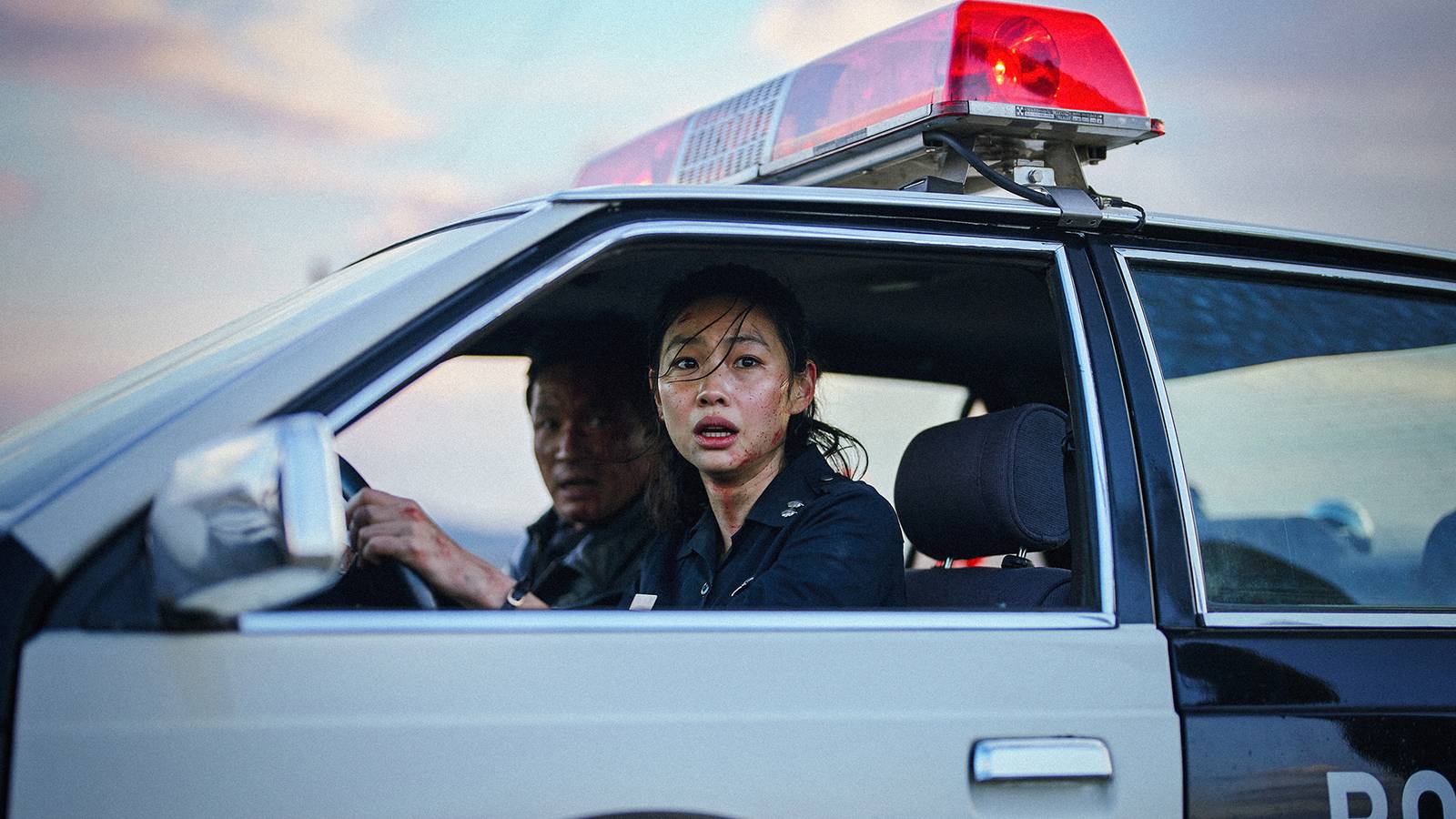
Published Sep 7, 2026, 1:48 PM EDT As a graduate of Columbia University in New York City, Tatiana studied theater and comparative literature. She has been passionate about all manner of storytelling from Jane Austen adaptations to anime. Aside from writing for Screen Rant, she co-hosts podcasts: The Flash Podcast and Ladies With Gumption. Sign in to your ScreenRant account Hope, South Korea's epic action-adventure movie about aliens, finally arrives in U.S. theaters after its Cannes Film Festival premiere. The movie serves as acclaimed director Na Hong-jin's filmmaking comeback, a full decade after 2016's The Wailing made waves worldwide. The star of that project, Hwang Jung-min, returns to lead a delightful ensemble cast of small-town folks dealing with horrors far above their pay grade. Hwang plays Bum-seok, the police chief of Hope Harbor, whose initial search for a wild cow-killer soon becomes a race against a gargantuan creature on a rampage. Eventually, he and his team (which includes Squid Game star Hoyeon as sensational sniper shot Sung-ae) realize it's not Godzilla they're facing down, but a group of aliens (Michael Fassbender and Alicia Vikander among them) with motivations as human as their own. But whether they can stop the rolling stone already set in motion by their own actions — and whether they even want to — is another question entirely. ScreenRant interviewed director Na and star Hoyeon prior to Hope's wide release, discussing how the universe built by the movie expands far beyond the confines of the film's runtime. Na also explained what went into crafting the aliens' look and language, while Hoyeon shared her biggest challenge on set, and both reacted to the likelihood of sequels. Balancing The Comedy & Tragedy Of Hope ScreenRant: Hope really plays with the comedy even as it leans into pathos and action. How do you toe that line when writing and directing? Na Hong-jin: I just remained really privy to that balance between the different tones. I went through so many trials and errors during post-production, where I was extending scenes or cutting them, trying to find the right timing. I truly hope that worked for you. ScreenRant: I’m curious about your first reaction to the screenplay. What stood out to you about the story, and did the shape of the movie change from when you signed on to when you finished filming? Hoyeon: When I read the screenplay, the first thing I said to Director Na was, "Is it alright for me so be laughing when all this tragedy is happening?" I almost felt guilty laughing so much. I thought it was incredible that this was director Na's next film, because I don't think a lot of people expected that from him. Audiences wouldn't have expected his next movie to be filled with so much comedy, and I felt like he is indeed a man of many twists and turns. I also thought that it was very clever of him to still manage to maintain all the gore from his previous films while including a huge comical twist in this new film. He's definitely someone with a huge talent for surprising audiences. As for the second part of your question, I don't think that there were any significant differences from when I first read the screenplay to the final edit. But when I was reading the screenplay, the action scenes just existed inside my head. Actually getting to play them out onscreen, though, was even better than what I had ever expected. It was incredible. Hope’s Cast Chemistry Was Written In The Stars ScreenRant: Hwang Jung-min and Hoyeon make for a dynamic duo throughout the film. Did you have them in mind from the start, or did the casting come after the screenplay was ready? Na Hong-jin: I discovered many of the actors throughout the casting process. As for Hwang Jung-min, I thought of him as soon as I finished writing the script, so he was the first actor that I cast. As I was looking for the right actress, Hwang Jung-min recommended Hoyeon to me. So, I reached out to her, and that's how she ended up being a part of the film as well. Screen Rant: How did you build Sung-ae and Bum-seok's buddy cop dynamic on set? Hoyeon: In our culture, we have [a zodiac made up of] 12 animal guardians, and you're assigned a particular animal depending on the year you were born. I remember how Hwang Jung-min and I would joke around about how we were born in the Year of the Dog, and maybe that's why we click so well. We had great chemistry from the get-go. We didn't even have to discuss it; we would look in the same direction at the same time without even knowing the other person was going to do that. We wouldn't need any words to just know instantly when we would look into each other's eyes. All because we were born in the Year of the Dog! As for the other cast members, there was really great chemistry overall, and we didn't feel like we had to deliberately create something that wasn't there. It almost came as a surprise to me just how well we worked together. Screen Rant: Hope is a roller coaster ride of emotions, both comic and tragic at the same time, and there's also so much CGI and action to deal with. Was there one aspect that was most challenging for you, or that you were proudest of having accomplished? Hoyeon: Because this was my first action project, I had to do a lot of training prior to shooting. I spent about six months on gunfire and driving training, but when I got to set, I realized I hadn't yet thought about having to do all of that in relation to the camera. There are a lot of details you have to take into consideration when you are working with the camera. For example, when I am firing a gun, I would obviously do that in the direction of the creature I'm fighting. But if the camera angle changes to a lower angle in that instant, the eyeline also has to be adjusted on my end. Things like that were minute details that I hadn't realized I would have to take into consideration. As for what I was most excited about, the universe of Hope was all contained within Director Na's head, and the character development within the film was very clearly written as well. It was almost as if all I had to do as an actor was completely immerse myself in the world he created. You could almost say that it was a very simple direction, in the sense that I wasn't constrained by the backstory of my character or any unique characteristics. The only thing I had to do was to completely concentrate on what was happening and react to my circumstances. I think that gave me a lot of freedom. All I had to do was focus on the circumstances and run straight ahead, and I think that was one of the things I had the most fun with. How Na Hong-Jin Brought Hope’s Aliens To Life ScreenRant: How did you cast the aliens, and how clear did you want it to be that they were foreigners - or specifically not Korean - even underneath the CGI, makeup, and alien language? Furthermore, why did you want Alicia Vikander and Michael Fassbender specifically? Na Hong-jin: There was actually more story for the aliens when I was first developing the film, and I initially believed all of the story would be told onscreen. When it came to casting Alicia, I already knew her from another project that we were working on together. So, I told her about the story of the movie, and that this movie was going to be the first part of a larger story. She came on board, and after that, we decided to cast Michael as well. As for the question of why foreigners had to play the part of the aliens, it didn't necessarily cross my mind that they were foreigners. I did think it might be helpful, because they might have an easier time pronouncing the alien language, but more important than their cultural background was really just finding good actors who could give good performances and play the characters' parts faithfully. ScreenRant: While it takes a minute for the audience to get their first true look at the aliens, many of the scenes with them are shot in the daytime with a full view of them. What was behind the decision not to cut corners with darkness and other tricks, and to instead ensure we have very clear shots of them in the second half? And how challenging was it to bring the aliens to life the way you wanted to? Na Hong-jin: This is ultimately a movie about aliens - even if it's not a typical one, because the point isn't an invasion or a big fight. Instead, it's actually a story about people with a very sad backstory and perspective of their own. I'm using the tool of the alien to express this story, which is why conveying their emotions was so important for the film. I would say the biggest difficulty in bringing them to life was that if this were live-action and we actually had those actors on set, it would have been so much easier to direct their emotions. Not being able to do so was the biggest challenge. ScreenRant: Another thing that I imagine would be challenging, at least for the actors, is taking on this alien language. What was the process of crafting that language like, and what did you want it to bring out in the story? Na Hong-jin: During the creation of this alien language, I went through a lot of meetings with linguistic scholars, and we had a lot of discussions about what kind of feeling it should convey. I received a lot of advice and learned a lot about ancient languages, and we ended up creating an alien language that's fundamentally based on Mongolian. When you hear this language, you can imagine just lying in a wide prairie and seeing the twinkling stars at night. That scene really makes you feel like you're in the middle of space, and I believe that the sound of the language has a cosmic, introspective, poetic, emotional, and deep feeling that also brings you a sense of consolation. I tried to convey all of those elements of the Mongolian language in this new alien one. Could There Be More Hope Movies In The Future? ScreenRant: You mentioned the movie being part of a larger story. Do you know how many movies you would like to do in this world, and what conditions need to be met for those movies to happen? Na Hong-jin: I think I would need one or two more movies to tell the full story, but in the process of making this movie, the thought did occur to me that maybe the story told within the movie Hope might be enough. As for the circumstances that would have to be met in order to make those sequels, I think the number one circumstance that needs to be met is me having more time to really think about it. Screen Rant: Hope ends on something of a cliffhanger, but Na Hong-Jin has said he’s comfortable with it as a complete story. How about you? Would you like to revisit Sung-ae and see what happens to her after the final scene? Hoyeon: I'm half and half, because we already premiered our film in Korea, and it's become a trend for people to start making up backstories for both the human characters and the aliens. Everyone is making their own story. At the beginning, I really wanted to make Hope 2, but just watching audiences make their own story is great. It's actually kind of cool to just let it happen, so I'm actually fine if we just end the story with Hope. But I don't know! There's a whole universe in this film, and I really want to present an ending for the story because it's just so fun. So, I'm going to say that MY hope is that we make a Hope 2. ScreenRant: Since Squid Game, you returned to Korean dramas for Chicken Nugget, which was hilarious, but you also did Disclaimer on Apple TV. Do you have plans to do more Korean shows, or are you keeping your eye on Hollywood and movies in general? Hoyeon: I like both. It's hard working in both countries, though! Because when you're acting in English, your English is getting better. I'm like, "Oh, I'm so good." And then you have an opportunity to work in Korean again, and even though it's my mother tongue, it's hard because there are so many technical aspects to delivering the [dialogue]. So, when I go back to Korea, I've got to work on those skills again, but then another Hollywood project comes in, and I've got to start practicing English again! It's quite hard and stressful, but I love working on both sides. If it's possible and I'm good at it, then my goal is to keep doing both at once. Hope is now playing in premium large-format screenings across select theaters before its wide U.S. release on September 9. Release Date September 9, 2026 Runtime 157 minutes Director Na Hong-jin Writers Na Hong-jin Producers Eugene Kim, Saemi Kim, Saerom Kim, Hong Jeong-in Cast Hwang Jung-min Go Bum-seok An ominous and unfathomable force descends on the remote town of Hope Harbor, near the Demilitarized Zone.
How Korea's Big-Budget Alien Blockbuster Developed Its Expansive Universe Explained By Hoyeon & Na Hong-Jin
Full Article
Original Source
Read the full article at Screenrant →KhanList aggregates and links to publicly available news content. We do not host full articles from third-party sources. Always verify important information with original sources.