
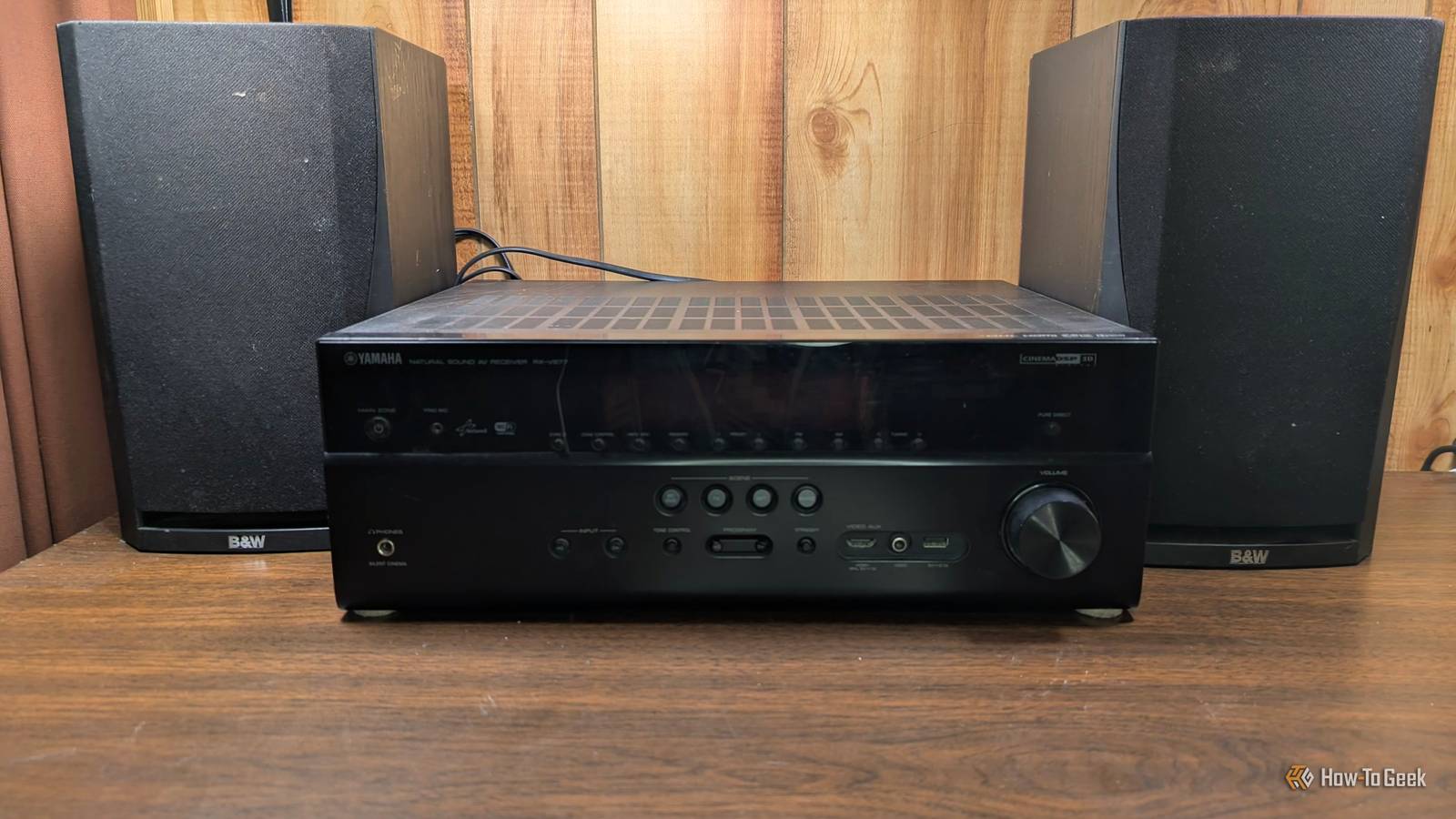
Published Oct 10, 2026, 11:00 AM EDT Nick Lewis is an editor at How-To Geek. He has been using computers for 20 years --- tinkering with everything from the UI to the Windows registry to device firmware. Before How-To Geek, he used Python and C++ as a freelance programmer. In college, Nick made extensive use of Fortran while pursuing a physics degree. Nick's love of tinkering with computers extends beyond work. He has been running video game servers from home for more than 10 years using Windows, Ubuntu, or Raspberry Pi OS. He also uses Proxmox to self-host a variety of services, including a Jellyfin Media Server, an Airsonic music server, a handful of game servers, NextCloud, and two Windows virtual machines. He enjoys DIY projects, especially if they involve technology. He regularly repairs and repurposes old computers and hardware for whatever new project is at hand. He has designed crossovers for homemade speakers all the way from the basic design to the PCB. Nick enjoys the outdoors. When he isn't working on a computer or DIY project, he is most likely to be found camping, backpacking, or canoeing. For $150, you can walk into most brick-and-mortar stores and buy an inexpensive soundbar that sounds like a tin can, or you can start assembling a real 5.1 from the basic pieces. The key here is that this setup is "upgradable." In the world of budget audio, most people buy all-in-one setups that are effectively e-waste once you want to upgrade. With this approach, no single purchase gets thrown away when better gear comes along. What my beginner home theater needs Dream up your specs first At its most basic, a home theater consists of an AV receiver—which acts as your amplifier, surround decoder, and input switcher—and a set of passive speakers. I started my used audio equipment adventure with a bit of planning first. What kind of speakers did I want? How many channels would I need? My list was fairly basic. The sound system is going to be installed in a moderately sized room, so a ton of power isn't necessary. The seating arrangement and room setup will allow for side surrounds but not rear speakers, so I only need a 5.1 system rather than a 7.1. I want at least one subwoofer, but two would be ideal. The amp must have at least one line-level output for the sub. The speakers need to be bookshelf speakers to save a bit of space. I prefer banana plug connectors to the older style clamps. The receiver needs to connect to a TV over HDMI. I wanted to opt for all separate components because it gives me control over replacements in the event of failure or upgrade. A $40 used receiver was a great start Older receivers are often cheap You can often get older receivers for much cheaper than you'd expect because they lack the bells and whistles that come with modern receivers. If you don't need fancy digital processing, however, that deficit becomes an excellent opportunity for savings. In my case, I just need something that can act as a multichannel amplifier and little more. After watching the used market for a week, I spotted a Yamaha RX-V677 for $40 and bought it immediately—it is significantly more capable than my minimum, but at that price, what's the harm? The RX-V677 is a 7.2 channel receiver, which means it supports up to 7 speakers with two subwoofers. It delivers 90 watts per channel (8 Ohms, 2 channels driven), supports HDMI 2.0 with 4K pass-through, has Wi-Fi, six HDMI inputs and one output, and a few other things. Older devices often go for so little because they don't support Atmos or the latest HDMI standards, and they don't meet HDCP 2.2 requirements. Fortunately, the workaround is simple: Plug everything into your TV instead, then just send the audio back to the receiver through the TV's ARC-enabled HDMI port. I have $110 left for speakers Put most of the money into the front speakers Your front three speakers are the most important in a home theater setup since they produce most of the sound you'll hear, including dialogue. In keeping with the theme, I opted to buy all used speakers too. I had to wait several weeks before I found the right speakers for sale about a 30-minute drive away, but I paid only $60 for a pair of Bowers and Wilkins (B&W) bookshelf speakers. At the time, neither the seller nor I knew exactly what the model was, but that didn't matter too much. B&W is a pretty safe bet if you want good sound at a reasonable price, and more importantly, I liked the sound. The sound was clean and fairly detailed, and the speakers got loud enough without distorting. I suspect they'd struggle in a large room, but my room isn't large, so that is irrelevant. If I ever need bigger front speakers, these two can easily become very nice surround speakers instead. I eventually identified the speakers as DM302s, which were released in 1997. They also desperately need a dusting! I found a sub for almost nothing Credit: Adam Davidson/How-To Geek Bass heads are famously insatiable and seem to upgrade more frequently than other audio enthusiasts. They also tend to leave a trail of used subwoofers in their wake, so there are usually a million cheap subwoofers available on Facebook Marketplace. With only $50 left, I wanted to get the subwoofer for as little as possible. I found a used Dayton Audio SUB-1200 for $20, which is a competitive price. The SUB-1200 isn't an audiophile subwoofer by any means, but I like the sound well enough—I actually owned two in college before a mishap one weekend put one of them out of commission permanently. The SUB-1200 gets loud, has relatively deep bass (for a 120W 12-inch speaker), and isn't especially muddy. If you're interested in super detailed bass or have a larger room, this is not the sub for you. Be very careful buying used subwoofers. The unending pursuit of louder, deeper bass also means that a huge number of used subs on Facebook Marketplace are damaged. Always test listen first. Surround speakers are easy Credit: Adam Davidson/How-To Geek I found a few potential satellite speakers that I'm interested in purchasing on Facebook Marketplace. Because they don't usually produce as many important sounds as the front speakers, I'm going to cheap out on them. I regularly see old Realistic speakers (RadioShack's house brand) going for between 5 and 10 dollars a pair. So long as they're not damaged, they'll do. The search for the center channel continues With $30 left in my budget, I'm still on the lookout for a nice center channel to pair with everything else. However, as with the subwoofer, speakers, and amplifier, it'll probably take some time for the right deal to show up. There are some speaker problems to avoid Be careful with home-theater-in-a-box speakers that have been removed from their systems. These often have 3 to 4 ohm ratings or proprietary plugs that make them a pain to integrate with other sound equipment. You also need to give everything a once-over. If the cones look rotted, torn, or otherwise damaged, I'd pass. Look out for pushed-in tweeters too—it happens a lot. A cheap DIY system beats a similarly priced soundbar If you can live with used components and take the time to piece a system together, you'll almost always get better sound quality than a soundbar. However, the real strength is the upgradability. If one component fails, or you decide you want to upgrade, you can just replace that component. That makes an expensive hobby much more affordable.
How I set up an upgradable "beginner" home theater for under $150
Full Article
Original Source
Read the full article at Howtogeek →KhanList aggregates and links to publicly available news content. We do not host full articles from third-party sources. Always verify important information with original sources.