
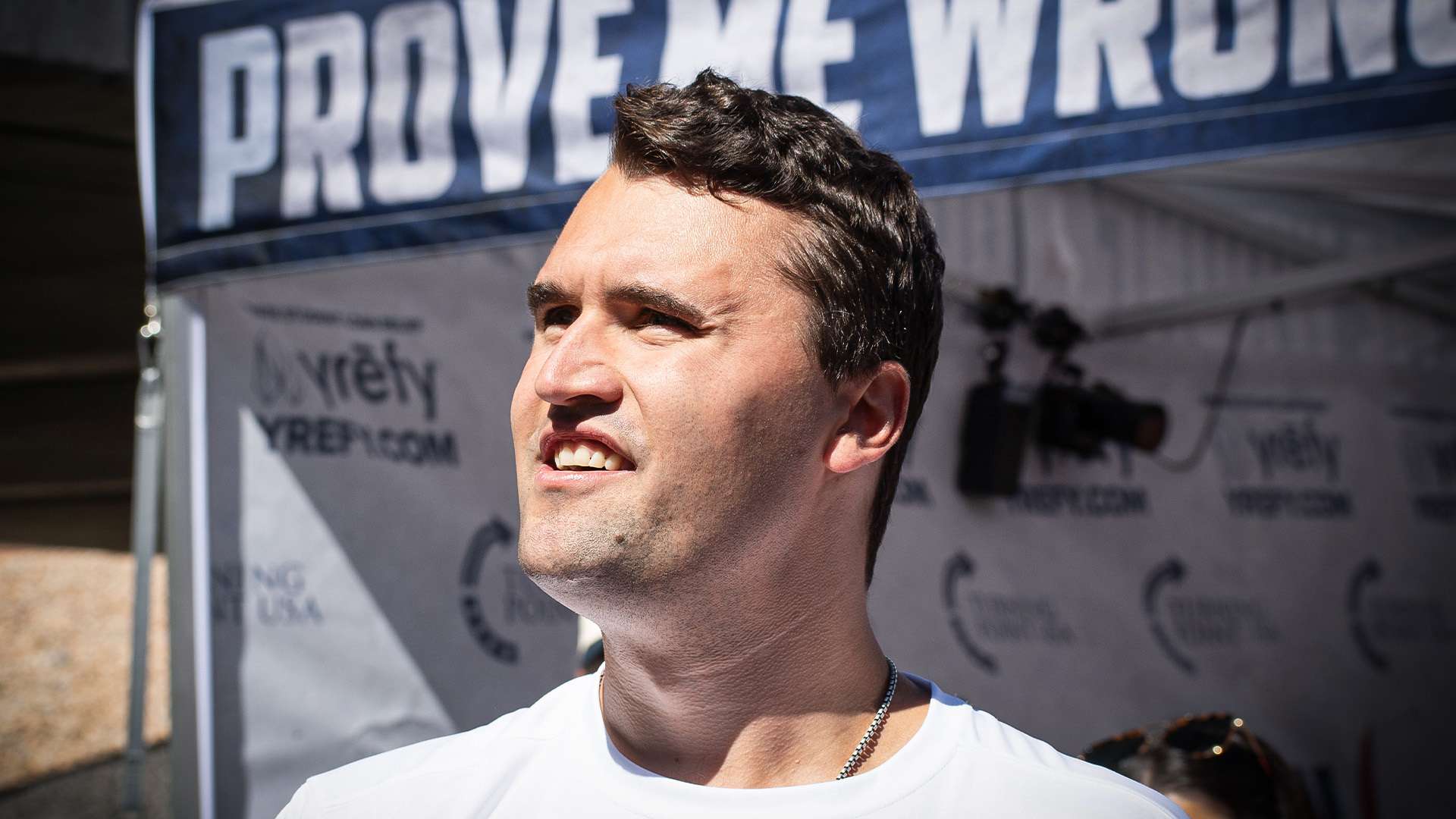
On this day last year, just before 12:30 p.m. local time, a single shot rang out across the campus of Utah Valley University (UVU). That single bullet, which ended the life of political activist Charlie Kirk, has reverberated through American culture and politics ever since. While most of us were watching the atrocity and its aftermath on our screens, the students, faculty, and administrators at UVU were seeing, hearing, and living it on the ground. After Kirk's murder faded from the news cycle, the university community continued to process the trauma, anger, and grief of that day. One year later, we now know the impact it has had on the campus's free speech climate. Yesterday, the Foundation for Individual Rights and Expression (FIRE), my employer, released its annual College Free Speech Rankings. Our rankings use a mixture of student survey responses, college policies, and campus speech controversies to assess the free speech climates at America's top colleges. UVU's ranking fell from 71 out of 257 schools last year to 210 out of 261 schools this year. The deterioration of UVU's speech climate demonstrates something clear: Political violence corrodes a culture of free speech, regardless of someone's politics or administrators' responses. We know this because UVU students told us so. The chilling effect was immediate. A few weeks after Kirk's murder, FIRE surveyed over 2,000 college students nationwide to assess how the assassination had affected campus life. The survey oversampled UVU students. Students at UVU reported being less comfortable expressing their opinions on a controversial political topic in class, in a common space, or on social media compared to students at other colleges. They were also less comfortable attending public events, and they reported self-censoring more often than before the murder. Encouragingly, the students' tolerance for using violence or other illiberal tactics to disrupt a speaker declined. None of this should be surprising in the immediate aftermath of a violent tragedy. But the chill continued. When we surveyed UVU students again during the first half of 2026, the free speech climate on campus hadn't recovered. Over 50 percent of UVU students said that they had self-censored on campus at least once or twice a month. Before the assassination, it was 38 percent. Approximately 50 percent of students said they were uncomfortable expressing their views on controversial topics both in class and in common campus spaces, up from 40 percent before the assassination. These student responses seriously impacted UVU's place in this year's rankings. Compared to last year, the school fell from 96th to 230th on self-censorship, 183rd to 251st on students' ability to have open and honest conversations, and 23rd to 153rd on students' comfort expressing controversial views. Kirk became the most difficult topic to discuss openly and honestly on campus. Nearly two out of three UVU students said so—the highest percentage of the 261 schools we ranked this year. When we asked about a time they self-censored, many students simply replied, "Charlie Kirk." Others gave lengthier answers. The reluctance to speak, however, crossed ideological lines, exposing something not immediately apparent: Political violence doesn't just silence people who share the victim's beliefs. It disfigures political disagreement—and the stakes—for everyone. One somewhat liberal student said: "After Charlie Kirk's death, I felt concerned and frightened about expressing views that were regarded as more 'liberal' due to a concern that people would try to blame me (or my 'like')." The most concerning response came from a very conservative student: "I have personally heard threats on campus of violence towards those who share opinions with right-wing figures like Charlie Kirk." What makes these results particularly striking is that UVU administrators responded thoughtfully and compassionately to the tragedy, and students gave credit where credit was due. After expressing shock at the shooting and condolences to the Kirk family in a public statement, UVU's president doubled down on the institution's commitment to free expression. "We firmly believe UVU is a place to share ideas and to debate openly and respectfully," wrote Astrid S. Tuminez. "Any attempt to infringe on those rights has no place here." Many students believed her and other administrators. Forty-eight percent said it was "very" or "extremely" clear that UVU administrators protect free speech on their campus, up from 42 percent before the assassination. More impressively, 42 percent of students said administrators were very or extremely likely to protect speech during a controversy. Before the assassination, it was 29 percent. UVU's speech climate darkened despite the best efforts of administrators to defend free expression. And their record wasn't spotless: This spring, administrators rescinded commencement speaker Sharon McMahon's invitation after conservatives protested her criticism of Kirk's rhetoric. On the anniversary of Kirk's murder, UVU offers a grim case study in how political violence poisons free expression. Students there became less tolerant of violence and disruption. They grew more confident that administrators would defend their rights. Yet they still became more reluctant to speak. That is the lasting damage of political violence. It does not have to persuade people to abandon free speech as a principle. It merely has to make speaking out feel dangerous. The students at UVU experienced political violence up close. A year later, their campus is quieter.
How Charlie Kirk's Murder Chilled Speech at Utah Valley University
Full Article
Original Source
Read the full article at Reason →KhanList aggregates and links to publicly available news content. We do not host full articles from third-party sources. Always verify important information with original sources.