
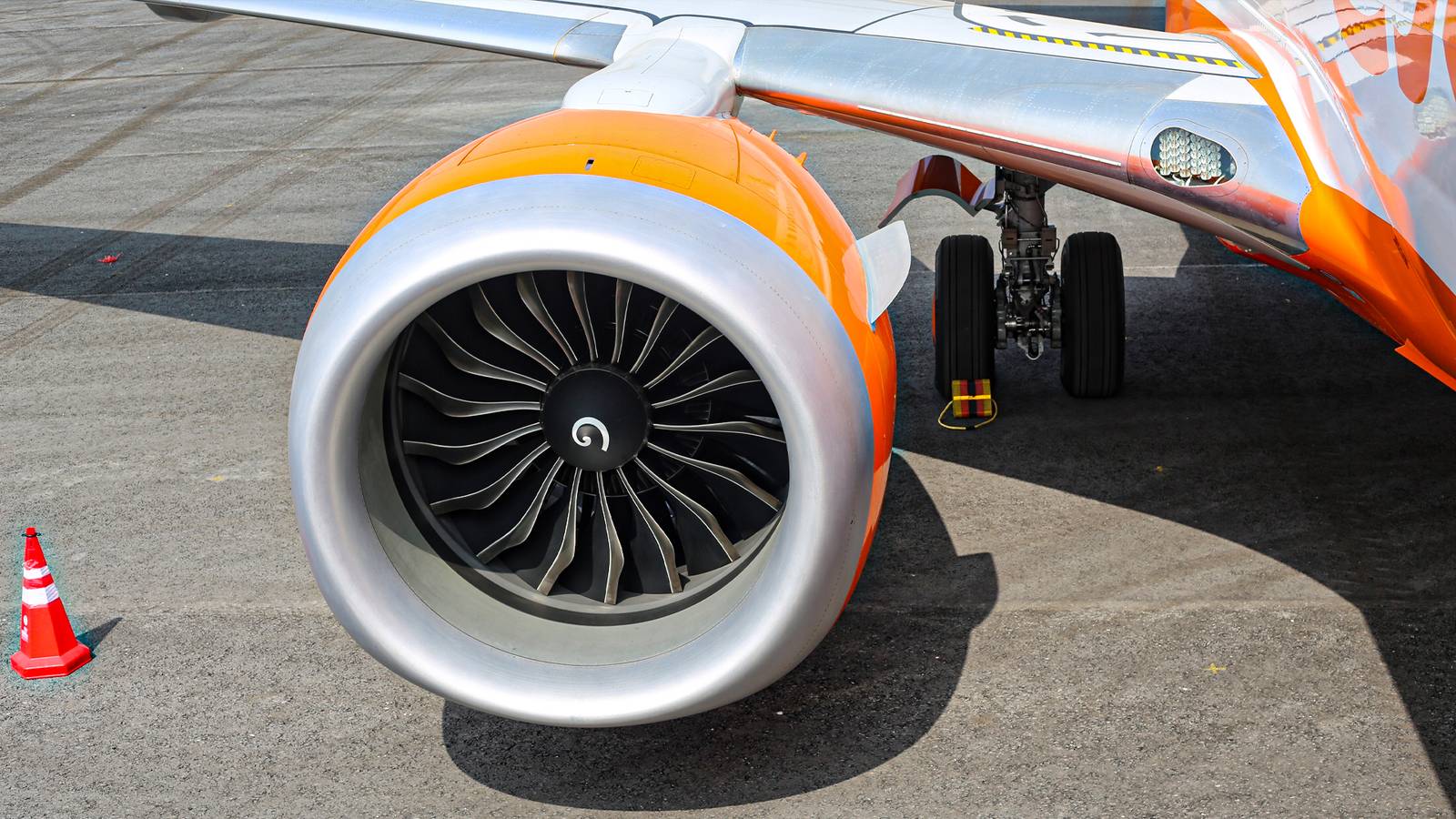
Published Sep 19, 2026, 9:00 PM EDT Louis is a military historian and the staff writer for History of War magazine, a leading military history monthly. He also has an interest in private and commercial aviation. CFM International's LEAP engines have suffered from durability problems, which have been caused by the additional strain of hot and dusty conditions. Such severe environments include the Middle East and India. The manufacturer has responded to this challenge with a new high-pressure turbine (HPT) durability kit for the CFM LEAP-1B. The technology has just received certification from the Federal Aviation Administration (FAA) and the European Aviation Safety Agency (EASA). At the same time, CFM is also working on the LEAP-1B reverse bleed system (RBS). This novel cooling system will help with on-wing maintenance needs by reducing demand for on-wing fuel nozzle replacements. “These systems will increase time between shop visits while also reducing maintenance burden, especially for customers in severe environments,” said Gaël Méheust, president and CEO of CFM International. What Is The HPT Durability Kit? Credit: CFM International The HPT durability kit aims to double time on wing, specifically in the Middle East and China. Its ability to perform in severe operating environments has been validated by over 17,000 dust ingestion testing cycles. It has already been deployed on the LEAP-1A, with introduction in December 2024. This July, CFM International achieved 40% fleet incorporation. The HPT durability kit includes the HPT stage 1 blade, HPT stage 1 nozzle, and forward inner nozzle support, reworking these parts to be more resistant to dust and heat. To create the technology back in 2024, CFM International worked with a team of geologists. They used a proprietary dust ingestion system to replicate the blade wear from dust that operators of the engine are experiencing. Although the technology is now certified, it won't immediately be available. The manufacturer is now beginning to industrialize production of this hardware. It expects that full production cutover will come in early 2027. The Durability Kit Makes Sense For CFM International's Design Philosophy The aviation industry today, from business-class seats to airframe design, is obsessed with tearing up the rulebook. In the aeroengines industry, this disruption has been seen most acutely with Pratt & Whitney's introduction of geared turbofans. Traditional aeroengines have fans and turbines that spin at the same speed. This is not optimal for efficiency. Pratt & Whitney's solution has been to put a gearbox between the two components. That lets them spin at the most efficient speed possible, though it also makes the engine heavier. Yet, a radical approach to aviation design can cause enormous problems that outweigh the advantages. This has been seen with the geared turbofan. Microscopic contamination defects in the powdered metal used for the HPT discs led to groundings and lengthy repair delays. It has been a costly time for the geared turbofan's manufacturer and its operators. The table below shows the specifications for one of the PW1000G geared turbofan engine family: the PW1500G. It uses the EASA's type certificate data sheet for the engine: Usage Airbus A220 family Service entry 15 July 2016 Static thrust 19,000–23,300 lbf (85–104 kN) Length 125.4 inches (3.184 meters) Fan case diameter 79 in (2 meters) Weight 4,800 lb (2,177 kg) Thrust-to-weight ratio 4.12 to 5.08 CFM International takes a different approach. They stick to traditional turbofan design, but make use of the latest strong and lightweight materials to evolve. For example, the LEAP engine was the first commercial turbofan with a full composite blade and fan case. The turbine shrouds are also made from ceramic matrix composites (CMCs). This material can sustain higher temperatures than standard metal components. The result has been a highly efficient engine that doesn't turn its back on the past design decisions that have made traditional turbofans so effective. Therefore, it is no surprise that its response to the LEAP family's durability issues has not been to completely redesign the engine, but to work on the specific components that will have the most impact. Why The HPT Presents Such A Difficult Durability Challenge Aeroengines' high-pressure turbines struggle to maintain durability because of the conditions that they operate in. General Electric notes that HPTs spin at thousands of revolutions per minute, with temperatures getting high enough to melt wrought iron. These temperature swings also stress the engine, with large differences across flight phases—takeoff, cruise, and landing. The rapid spinning of the HPT also generates tremendous centrifugal forces that try to rip the fan blades apart. This violence is needed because the HPT powers the compressor, allowing air to be fed into the combustion chamber. The table below shows the specifications for the LEAP-1B, making use of the EASA's type certificate data sheet for the engine: Turbine 2-stage HP, 5-stage LP Overall pressure ratio 40:1 or 50:1 at the top of climb Fan diameter 69.4 inches (1.76 meters) Bypass ratio 9:1 Length 123 inches (3.15 meters) Maximum takeoff thrust 29,300 lbf (130.4 kN) Maximum continuous thrust 28,690 lbf (127.6 kN) Maximum RPM HP: 20,171 LP: 4,586 This heat and stress create microscopic stretching inside the fans, which is known as creep. It also causes thermo-mechanical fatigue, a phenomenon that can create cracks and blade fractures. HPT fan blades also have a protective coating. This can break down or oxidize, forming a weak point where fractures are more likely to occur. Finally, foreign objects, such as debris and particles from the runway, can be propelled through the HPT at exceptionally high speed. Nicks can occur when these particles collide with the fans. The HPT Durability Kit Isn't The Only New Technology Enhancing Time On Wing Another key innovation that will be coming to the LEAP-1B is the reverse bleed system (RBS). This technology has already come to the LEAP-1A engine. The problem it addresses comes from the one-piece construction of nozzles that mix air and jet fuel before it is delivered into the combustion chamber, helping the engine to be more efficient. CFM has detected a coking accumulation within the internal circuits caused by unpurged fuel during the engine shutdown procedure. This means that the engine is producing an unwanted buildup of a hard, coal-like residue that forms when fuel is exposed to extreme heat. This coking creates a number of issues inside the engine. It increases fuel pressure, causes hot streaks at both high and low power, and impacts engine performance. The performance reduction is most concerning during takeoff. CFM International's solution is the reverse bleed system. It includes a reverse-bleed blower, reverse-bleed valve, check valve, and ducting. The technology sucks air into the engine core during shutdown. It reduces the internal temperature and the amount of coking occurring. The system runs for up to 60 minutes after shutdown, but it switches off if the engine is powered back up or the cowling opens. The reduction in coking ensures the engine can perform at its best and reduces the frequency with which engineers need to take the engine apart to clear it. New Maintenance Challenges Are A Price Worth Paying For A Cutting-Edge Engine Whenever a new technology arrives in the aviation industry, it brings unforeseen maintenance problems. CFM International is still working them out for the LEAP engine family. Yet the engine's advantages will make the niggles worth it. The LEAP engines are built from Carbon Fiber Reinforced Plastic (CFRP) composite, producing a far lighter engine. Although the LEAP engines use the same fan design as the CFM56, the blades have been stretched and thinned. Efficiency upgrades like these have led airlines using the LEAP engines to benefit from a 15% fuel consumption improvement compared with previous-generation CFM International engines. That greatly reduces the operating costs that airlines must pay. The efficiency improvements also help airlines contribute to a more sustainable industry, with lower CO2 and NOx emissions than the CFM56. Despite the issues outlined in this article, CFM International has claimed that departure reliability, delays, cancellations, and in-flight shutdown rates for this engine family are on par with the CFM56. As a result, the maintenance costs are comparable. This reliability has now been confirmed by over 100 million flight hours across over 10,000 dispatched engines. Daily operations across the A320neo and 737 MAX are executed with a 99.95% reliability rate. The Engine's Popularity Required A Substantial Production Acceleration Last Year CFM LEAP family powers two of the world's most popular narrowbody aircraft families, the 737 MAX and the A320neo. Both families have substantial order backlogs driven by the aviation industry's post-pandemic recovery. To help its manufacturing customers meet this pressure, CFM International had to substantially accelerate its engine production last year. According to FlightGlobal, the target was to boost production by 15-20% compared with 2024, going up to between 1,618 and 1,688 engines produced. The ramp-up targeted the LEAP-1A and the LEAP-1B specifically. Meeting increased production targets requires more labor, factory floor space, materials, and more. Boeing and Airbus can build as many airframes as they like. Yet, if they are sitting on the tarmac without functional engines, they are useless. 2026 will see yet another production increase. In a LinkedIn post, CFM International reported that it delivered over 1,800 engines in 2025. It plans to continue this record-breaking trend, reaching a production rate of 2,600 engines by 2028.
How CFM's New LEAP-1B Turbine Redesign Could Double Time On Wing In Harsh Conditions
Full Article
Original Source
Read the full article at Simpleflying →KhanList aggregates and links to publicly available news content. We do not host full articles from third-party sources. Always verify important information with original sources.