
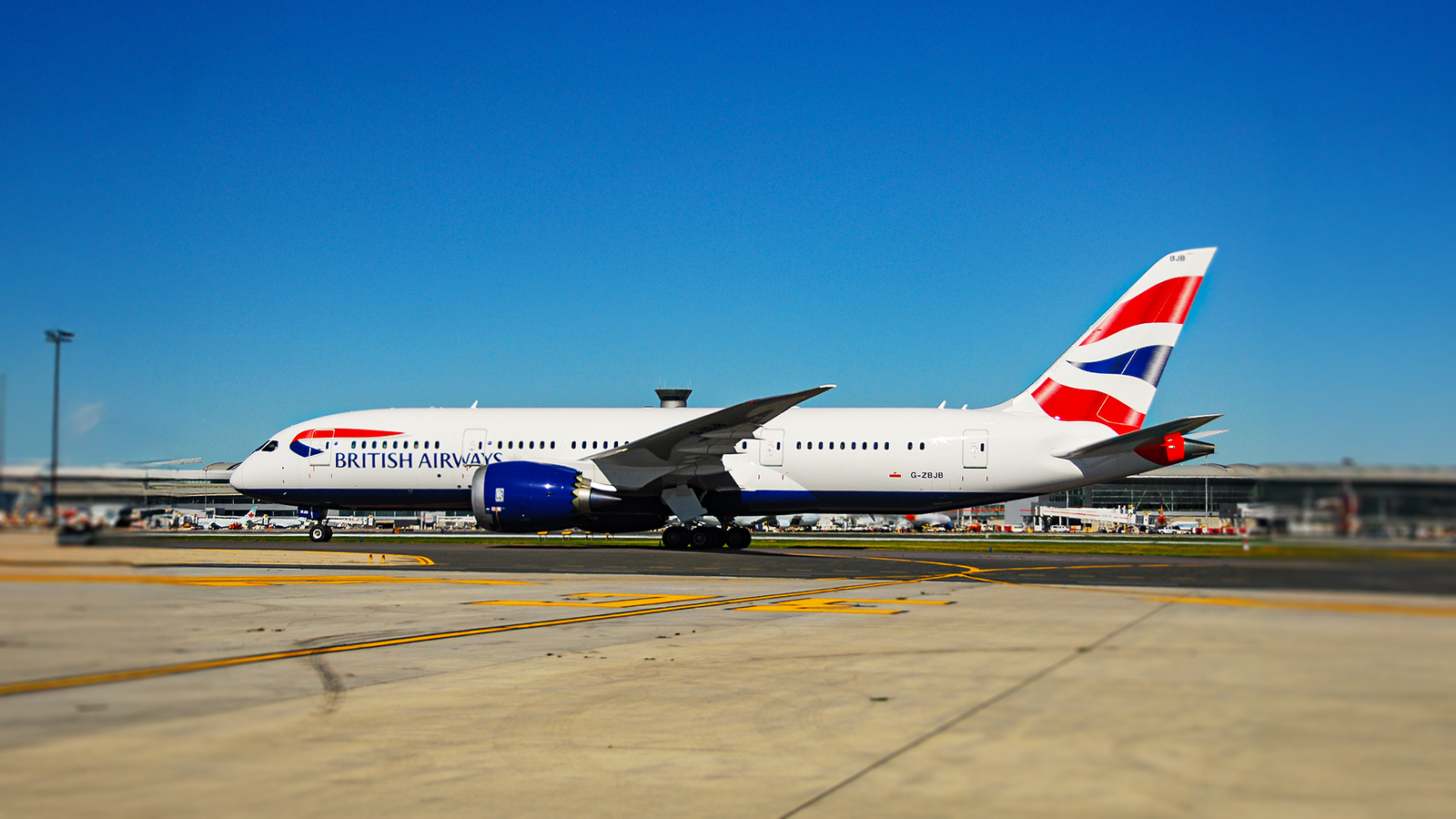
Published Sep 22, 2026, 5:00 PM EDT Aaron is an aviation enthusiast and world traveler with a deep interest in aerospace history and technology. He has traveled around the world numerous times, often incorporating visits to aviation museums and historic aircraft collections into his journeys. A native of New Zealand, he is an expert in aviation and maintains a broad interest in a variety of other subjects. Sign in to your Simple Flying account On April 19, British Airways commenced its direct flights to Missouri's St. Louis Lambert International (STL) with Flight BA220 operated by a Boeing 787-8. After a generation of American Airlines' absence, this marked a move by British Airways to fill some of the vacuum left by post-9/11 US-based airline consolidations. The route is also point-to-point, bypassing the usual United States hubs, although Heathrow is one of the world's largest hubs. The opening of the St. Louis to London route points to a void left behind by the US mergers that left only three major intercontinental airlines standing, while almost every Western European country retains a legacy carrier and hub. For this article, only Delta, United, and American are relevant among US carriers. JetBlue only operates narrowbody A321neos from East Coast destinations to Europe, Alaska is just starting to grow its intercontinental network from Seattle, and Southwest is not an intercontinental carrier. The Post-9/11 US Airline Mergers Credit: Robin Guess l Shutterstock Between 2001 (in the wake of 9/11) and 2013, US-based legacy carriers moved to consolidate their hubs. This followed the US legacy industry evolving from six or more major network carriers to the Big Three, namely American, Delta, and United. The mergers saw the TWA, US Airways, Northwest, Continental, and AirTran brands disappear (or mostly disappear). The mergers came as almost every legacy airline had entered or emerged from Chapter 11 bankruptcy. The goal of these mergers was not only to become larger, but also to provide the opportunity to eliminate redundant hubs, improve aircraft utilization, concentrate on connecting traffic, and help the industry recover from years of chronic losses. Before the mergers, many of the Midwest hubs were geographically close enough that they were in competition for connecting passengers. Trans World Airlines (TWA) used St. Louis as a hub, but following its acquisition by American, American progressively wound the hub down and dismantled it. This was repeated with Pittsburgh (US Airways), Cincinnati (Delta), Memphis (Northwest), and Cleveland (Continental), which had all previously been hubs, but lost that status as merged airlines consolidated traffic into larger and more efficient centers. This Didn't Happen In Europe Credit: Ceri Breeze | Shutterstock Meanwhile, this did not happen in Europe. The European aviation market is structurally different from that of the United States in that each country has its own national carrier. Each country has its own capital, long-haul demand, airport infrastructure, and political interest in maintaining a flag carrier and national gateway. Not only does that mean that Germany will have a major hub, it means that it can have multiple complementary hubs (e.g., Frankfurt and Munich) in a way that St. Louis and Chicago never could be. European airlines have consolidated ownership ( e.g., IAG with BA, Iberia, and Aer Lingus), but that does not have the same impact as mergers in the US. The respective hubs at London, Madrid, and Dublin are largely unaffected by the consolidation. While the US is one giant market, the European market is somewhat comparable to if the US had a national carrier for every state (like Hawaii has with Hawaiian Airlines). All this means that there are more legacy airlines and more hubs in Europe (especially Western Europe). While the post-9/11 consolidations did help regain efficiency in the US aviation market, it also provided unintended opportunities for European airlines to exploit. At the same time, the most significant cities in Europe are hubs for European legacy airlines. In the UK, the main long-haul hubs are London Heathrow, London Gatwick, and Manchester. British Airways dominates at Heathrow and Gatwick, while Virgin Atlantic and TUI dominate at Manchester. Opportunities For European Airlines Credit: Kevin Hackert l Shutterstock The Big Three US carriers became better at funneling passengers into their mega-hubs. Delta hubs that offer flights to Europe include New York JFK, Atlanta, Boston, Detroit, Minneapolis-St. Paul, Seattle, Salt Lake City, and Los Angeles. United's hubs with transatlantic flights include Newark, Washington Dulles, Chicago, San Francisco, Houston, Denver, and Los Angeles. American Airlines has Philadelphia, New York JFK, Charlotte, Chicago, Dallas/Fort Worth, Miami, and Los Angeles. This is around 17 metropolitan areas, although there are around 56 metropolitan areas in the United States with a population of more than one million people. Those other cities are often smaller with comparatively thin routes. The Big Three airlines focus on connecting these passengers through one of their hubs and then flying to Europe. That has left a thin, but still existing demand for direct flights to Europe from these centers. Big Three US-based airlines Current intercontinental hubs (per Delta, etc.) Major former hub lost/dehubbed Airlines absorbed American Philadelphia, New York JFK, Charlotte, Chicago, Dallas/Fort Worth, Miami, Los Angeles St. Louis, Pittsburgh, Las Vegas, Columbus (few intercontinental flights) TWA, US Airways, American West Delta Air Lines New York JFK, Atlanta, Boston, Detroit, Minneapolis-St. Paul, Seattle, Salt Lake City, Los Angeles Cincinnati, Memphis, Milwaukee (few intercontinental flights) Northwest United Airlines Newark, Washington Dulles, Chicago, San Francisco, Houston, Denver, Los Angeles Cleveland Continental This presents European legacy carriers with some opportunities to directly serve these secondary cities that the big US legacies force to connect through their hubs. While this is generally accurate, there are still some opportunities for US carriers to exploit underserved secondary European cities, and it's important not to labor the point. For example, United is the only carrier flying direct between Chicago and Scotland's Edinburgh. In fact, all of Edinburgh's seven routes to the United States are exclusively served by US-based carriers (United, Delta, American, JetBlue). British Airways Restarts Flights To St. Louis Credit: Airlinephoto l Shutterstock In 2003, American Airlines dropped its Gatwick flight from St. Louis Lambert International. In April 2026, British Airways launched its four-times-a-week London Heathrow to St. Louis route using its Boeing 787-8s configured for 204 passengers (with business, premium economy, and economy classes). This was the first time the UK and St. Louis had direct flights in 22 years. The route is British Airways' 27th US destination and is part of a broader push to target mid-market Midwest metros. The only other intercontinental flight from St. Louis is Lufthansa's flight from Frankfurt five times a week with Airbus A330s. Going to another mid-sized Midwest city, Pittsburgh, and the picture is similar. The only direct intercontinental flights are to London and Dublin by Aer Lingus and British Airways. Meanwhile, Aer Lingus is currently the only airline offering an intercontinental route (to Dublin) from Continental's former Midwest hub of Cleveland (Ohio). Cincinnati. At the former Delta hub of Cincinnati, British Airways is the only airline offering direct flights to the United Kingdom (London). That said, on this particular thinner route, Delta does operate a single intercontinental flight to Paris three times a week. Rise Of The 787 And A330neo Credit: Ronen Fefer l Shutterstock Delta and United have long used the Boeing 767-300ER for thinner transatlantic routes (with 210 to 240 seats). However, the type is aging and is being phased out. The Boeing 787 and A330neo have been transformative for longer-haul thinner routes and have weakened the hub-and-spoke model. The larger widebody Boeing 777Xs and Airbus A350s are typically reserved for flagship and thicker routes. The 787-8 is typically configured with 200–250 seats and is well suited to secondary long-haul routes, while the longer 787-9 (with 240–290 seats) is a good fit for medium-density long-haul routes. The A330neo is typically configured with 250–300 seats and is a better fit for slightly thicker markets. At the same time, the rise of the much longer-range narrowbody A321XLR opens up some much thinner East Coast transatlantic routes that were not viable with widebody aircraft. The Dreamliner and A330neo allow airlines to both replace older-generation aircraft (e.g., 767s, A330ceos) with around 20–25% fuel efficiency improvements. At the same time, these aircraft come with considerably longer ranges than their predecessors, allowing them to reach more destinations. The combination of lower operating costs and longer range allows more routes to open up and become viable. The US Legacies' Paradox Credit: Wspin l Shutterstock Ironically, the US hubs are also not consolidated enough to allow ultra-large widebody aircraft to become viable. Delta and United retired the last of their Boeing 747-400s in 2017 without direct replacement. No US-based carrier ordered the final Boeing 747-8 variant of the Jumbo, and none ordered the Airbus A380 Superjumbo. Only United and American ordered modest numbers of the Boeing 777-300ER late in the program, but even these sales accounted for around 5% of the variant's global sales, even as the US accounts for around a quarter of the global aviation market. As of September 2026, Boeing reports that the upcoming Boeing 777X (mostly the 777-9 variant) has accumulated an impressive firm order book of 657 aircraft, none of which are from US-based airlines. While US carriers may eventually purchase 777-9s, the dispersed nature of their hubs makes ultra-large aircraft problematic. This is not an issue British Airways has, as it mostly operates from its Heathrow hub and operates everything from the A380 to the Boeing 787-8 widebody. Ultra-large airliners are best suited to highly centralized, global-trotting models like Qatar Airways and Emirates. For US-based legacies, the paradox is that they are too dispersed for ultra-large airliners, but not dispersed enough to offer direct flights from secondary cities like St. Louis.
How British Airways Is Quietly Reclaiming The Midwest Cities US Legacies Abandoned After 9/11
Full Article
Original Source
Read the full article at Simpleflying →KhanList aggregates and links to publicly available news content. We do not host full articles from third-party sources. Always verify important information with original sources.