
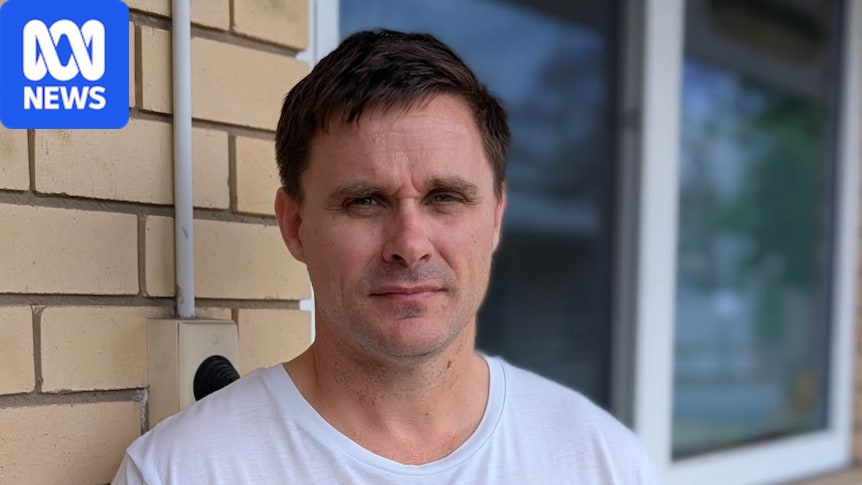
As interest rates started to rise earlier this year, Andrew Clifford decided he needed to protect his family from being stretched any further.In March, he changed his mortgage from a variable to a fixed rate for the next two years.That was well before the Reserve Bank of Australia (RBA) lifted the cash rate last week to its highest level in 15 years, from 4.35 per cent to 4.6 per cent."I'm relieved I locked it in … [but] it's only the people with mortgages that are doing the heavy lifting of trying to beat inflation," Mr Clifford said."If I could have got a 25-year fixed-rate home loan like they do in the US, I'd be all over it."Under the terms of a fixed-rate mortgage, lenders charge the same interest rate over the whole of the mortgage.Lenders can charge different rates over the duration of the loan under a variable-rate mortgage.Most Australians with a mortgage have a variable rate, with less than 5 per cent on a fixed rate, according to the RBA.Research has found Australians would benefit from longer fixed-rate home loans, similar to the US, South Korea and the European Union, where fixed-rate mortgages between 10 and 50 years were commonplace.How does Australia compare to other countries?In the US, government-sponsored entities such as Fannie Mae and Freddie Mac guarantee about 70 per cent of mortgages.According to the Consumer Financial Protection Bureau, this reduces risk for lenders and has made loans more affordable for consumers.In addition, a secondary debt market allows lenders to move risk off their books by selling mortgage-backed securities to investors like pension funds and insurance companies.These conditions allowed US lenders to offer 30-year fixed-rate mortgages, University of NSW economist Richard Holden said."They were founded with the idea home ownership was an important kind of social concept."And giving borrowers certainty about their future mortgage repayments."There are pros and cons but we don't have anything like that in Australia."Professor Holden said moving to a long-term fixed rate would mean borrowers would not be able to benefit when interest rates fell, such as between 2015 and 2021."You would have felt pretty silly if you'd borrowed at, just for the sake of argument, 6 per cent fixed rate … then watched interest rates plummet," he said."Then you are sort of saying, 'Well, new borrowers can borrow at 2 per cent, and I'm locked in at 6 per cent.'"University of Sydney's Doowon Lee said in Japan, despite not offering loans through government entities like those in the US, most mortgages were fixed-rate for 35 years.He said this was because Japan's interest rates were extremely low for the last 30 years.Dr Lee said during that period some lenders offered Japanese nationals and permanent residents full loans with no deposits."So you have for 35 years close to 0 per cent interest rate. [But] now it's a different story because Bank of Japan has been raising the interest rate," he said.In South Korea, most mortgages were variable, but the gap between the rate offered on fixed and variable loans was smaller, Dr Lee saidThe most common fixed-rate loans were between five and seven years, he said.Dr Lee said the smaller gap between fixed and variable was due to investor demand in Korea being affected by a rental scheme called "jeonse", which is often a two-year lease agreement.It allows someone to rent a property by paying between 50 to 70 per cent of its value, which is returned after the tenancy ends.Jeonse make up about 70 per cent of rental agreements in South Korea's capital, Seoul, according to the Asia Society.The not-for-profit said the arrangement works for landlords because they get access to a large amount of interest-free money to save in a high-interest account or to invest, while tenants can spend two years saving to buy their own property."The investor side demand is slightly lower in Korea. So that does create the banks to compete for customers, and that sometimes creates smaller spread [between variable and fixed loans]," Dr Lee said.What would it take to change?Professor Holden said for Australia to move to a 30-year fixed-rate home loan system, like the US, the entire mortgage lending market would need to change.If the Australian government issued a higher volume of 30-year debt, it would signal to mortgage lenders that offering 30-year mortgages is less risky.Professor Holden said government "scaffolding" would be required to encourage Australian banks to offer the product to lenders "because there's nothing stopping them doing it right now".Moving to a South Korean model would require government intervention, Dr Lee saidOver the last decade, the South Korean government has had a target to increase borrowers on fixed rates, offering fixed-term rates as long as 35 years.It now aims to have at least a third of all mortgages as fixed-rate loans by the end of 2026, Dr Lee said.There were other factors, such as South Korea's treatment of capital gains tax, which reduced investor demand in the housing market, he said."In Korea, if you sell your house within a year, then you'll be taxed at close to 70 per cent. If you sell it within two years, it's close to 60 per cent."So it totally discourages people buying a house [and] flipping it within one or two years."Thereby a five-year [loan] becomes more viable. So again, those are sort of government policies changing how the mortgage borrowers are actually going to a specific bucket of years rather than short-term versus midterm."
How Australian mortgages compare to the US, Japan and South Korea
Full Article
Original Source
Read the full article at Abc →KhanList aggregates and links to publicly available news content. We do not host full articles from third-party sources. Always verify important information with original sources.