
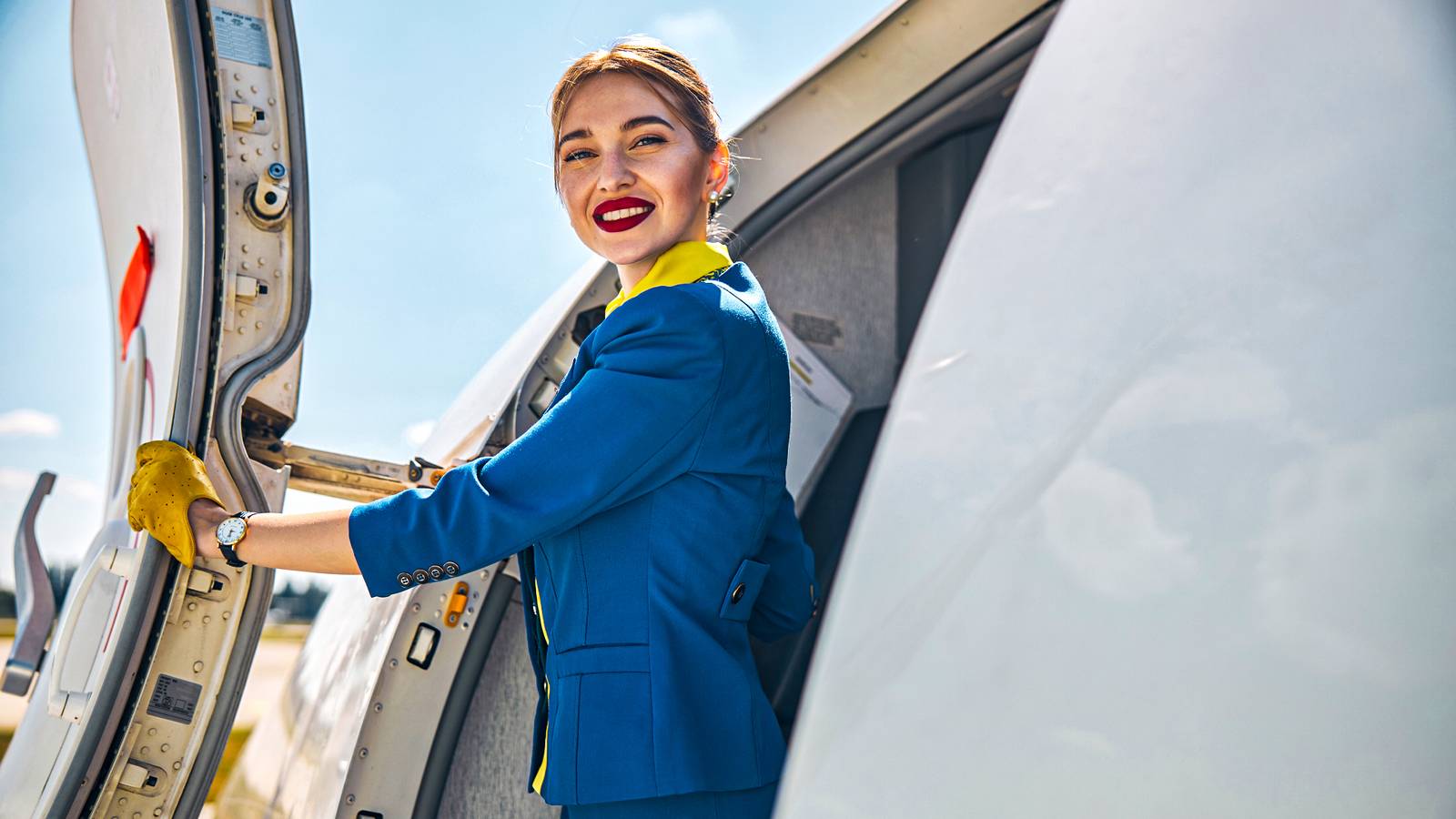
Published Oct 25, 2026, 12:01 AM EDT Writer - Patricia joins Simple Flying with over 20 years of experience in aviation. She has served as cabin crew on flights from economy-class through to first-class and on private jets as well as being head of cabin crew and cabin safety focal point. Patricia has a master's level postgraduate diploma in Human Factors in Aviation and has written about aviation since 2010. Based in Dubai/Cyprus. It's long been known that flight attendants in the US have not been paid for boarding and other duties on the ground, a reality that has always been heavily debated. Flying has become more stressful, flights are busier than ever, and often flights have the minimum crew needed, putting additional stress on the crew. The airlines insist that flight attendants are fully compensated, but still a fair amount of duties are conducted without pay. How did airlines get away with only paying flight attendants once the boarding door closed? How did the situation finally change? Let's find out in more detail. How Flight Attendants Are Paid Credit: Markus Mainka | Shutterstock Pay for flight attendants is based on "block time." At most major US airlines, flight attendants start earning their hourly flight pay only once all passengers have boarded, the door is closed, and the aircraft pushes back from the gate. That moment is called "block out," and pay stops when the door opens at the destination. So the time spent boarding, preparing the cabin, doing safety checks, and waiting through delays hasn't traditionally been paid at the regular hourly rate. One flight attendant told NPR that the unpaid duties can total five or six hours a day, and that can include four or five boardings. According to Aerocorner, the median US flight attendant pay was $67,130 in May 2024, ranging from under $34,030 at the bottom tenth to over $138,040 at the top. Pay is calculated per flight hour rather than per hour worked, so boarding, disembarking, and gate delays have historically fallen outside the paid clock. Most of a flight attendant's salary is block pay. This is supplemented by boarding pay (depending on the airline), reserve guarantee (being available on call), and per diem (meals and incidentals away from base). Duty or trip rigs are long days worked with little flying, which is paid at one hour for every two hours worked. When a flight attendant first starts flying for an airline, they are on reserve or standby to cover last-minute flights. There is no schedule, but there is a guarantee of 75 to 78 hours. No Overtime & Guarantees In Place Credit: Ian Dewar Photography | Shutterstock The Fair Labor Standards Act exempts employees of air carriers covered by the Railway Labor Act from federal overtime requirements. The Association of Flight Attendants argues this exemption, rather than the Railway Labor Act itself, is the core reason flight attendants aren't paid for every hour of their duty day. Airline workers have been exempt from those protections since the law was passed in 1938. Alaska Airlines argues that flight attendants are fully compensated and said on its website, "Contrary to union narratives, we do pay flight attendants for boarding time through a pay mechanism that was negotiated with the union in previous contract cycles." That "pay mechanism" is a guarantee of minimum pay, says Sara Nelson, president of the Association of Flight Attendants, the union representing flight attendants at Alaska, United and a number of other airlines. She told NPR that it was common that there was a guarantee of one hour of paid flight time for every two hours on duty. This can be further explained by saying that if a flight attendant has a day of 12 hours, they are guaranteed six hours of pay, even if not flying for those six hours. However, flying has changed since then, there are more seats on aircraft, unruly passengers are on the rise, and since 9/11, there have been threats to security. According to the Labor Department, flight attendants earn about $38,000 a year on the low end and close to $100,000 a year on the high end. A flight attendant in their first year earns close to the state minimum wage. Contracts Guarantee A Higher Rate Of Pay Credit: Markus Mainka | Shutterstock The idea has been that flight attendants are paid a higher hourly rate than they otherwise would be, to make up for the unpaid time on the ground. Contracts added protections like guaranteed minimums. A common one guarantees an hour of paid flight time for every two hours on duty. United Airlines' contract, for example, has a minimum monthly pay floor that builds the unpaid ground time into higher hourly rates and these guarantees. United’s published scale starts new flight attendants at $38.21 per flight hour and climbs with each year of service, with the top of the scale reaching $100.13 by 2030 under the current agreement. This sounds generous, but when actual flight hours are considered, and a full-time flight attendant line is 75 to 90 flight hours, it flattens the salary out. So, at $38.21 per hour multiplied by 80 flight hours a month, it is around $36,700 per year before per diem, boarding pay, and premiums. Today, many contracts include additional compensation (duty rigs, trip rigs, minimum day, holding pay, etc.) through negotiations between the unions and the airlines. The Association of Flight Attendants-CWA is one that is pushing to establish boarding pay as a new aviation industry standard. The Start Of Boarding Pay Credit: kamilpetran | Shutterstock On June 2, 2022, Delta Air Lines began paying flight attendants half their hourly rate for boarding, for a set 40 to 50 minutes depending on the aircraft and route. Delta's flight attendants aren't unionized, and the move was widely seen as an attempt to undercut an Association of Flight Attendants (AFA) drive to organize them. It also showed the old payment system could finally change. In April 2024, Southwest Airlines and TWU Local 556 members approved a four-year deal of 81 percent, with a 22.3 percent immediate raise plus premium pay for extended duty days and long ground time. In September 2024, American Airlines flight attendants received 50% of their regular hourly rate for scheduled boarding times under their labor contract with the Association of Professional Flight Attendants (APFA). This boarding pay applies to each actual flight segment boarded and typically adds roughly $300 to $834 plus per month, depending on seniority and the number of legs worked. Under the five-year labor contract ratified in May 2026, United Airlines flight attendants receive boarding pay calculated at 50% of their base hourly rate multiplied by the scheduled boarding duration for the operating aircraft type. The standard base hourly wage starts at $38.21 per flight hour. Boarding pay is paid based on the actual scheduled boarding time. The airline agreed to pay $741 million in retroactive pay, and sit pay for scheduled sits over two and a half hours. The Role Of Flight Attendant Unions Credit: Markus Mainka | Shutterstock Flight attendant unions have long fought for boarding pay in their contracts. Major US flight attendants are primarily represented by the Association of Flight Attendants-CWA (AFA-CWA) and the Association of Professional Flight Attendants (APFA), which negotiate contracts, advocate for workplace safety, and fight for better wages across the major airlines. Some airlines are represented by labor organizations such as the Transport Workers' Union (TWU). Delta Air Lines has no flight attendant union. In September 2024, American's flight attendants ratified a contract that made them the first to secure boarding pay in a union agreement, at half their hourly rate as at Delta. United's flight attendants filed a proposed class-action lawsuit in September 2025 claiming unpaid groundwork violates New Jersey wage law, according to View From the Wing, and boarding pay has since been part of their contract talks. Southwest's flight attendants, by contrast, chose higher pay for flight time instead of boarding pay in their 2024 contract. Flight attendants working for the major US airlines, especially those with union contracts, tend to receive higher hourly flight pay rates compared to smaller or regional airlines. Flight attendant pay is fixed by the airline and can differ between airlines and what is agreed by their union. The hourly pay rate then increases every year with seniority. This also affects moving from reserve to the line and schedules, base moves, and trip preferences. Key Points In Understanding Flight Attendant Salary Credit: Robin Guess | Shutterstock The pay structure for flight attendants in the US is a very confusing one. Flightattendant.pro suggests that airline recruiting materials often highlight hourly pay rates, but they do not always clearly explain how those rates translate into a real paycheck. They also say that many new flight attendants are surprised when they learn that the hourly rate advertised by airlines does not reflect all the time they spend working. Although most of the salary is based on block pay, additional increments include per diem and now boarding pay. Guarantees on salary means that flight attendants will always have a minimum guaranteed salary or guaranteed hours. Lead flight attendants, pursers, and language speakers may also attract an extra hourly rate. A new flight attendant may only earn the equivalent of the minimum wage, but an experienced flight attendant with seniority of ten-plus years may earn upwards of $100,000 per year. The flight hour-based pay system has been standard in the aviation industry for many years, and until recently, flight attendants at the major US carriers were not officially paid during the boarding process. In recent years, unions fought hard to introduce boarding pay Due to these major negotiations, it is unlikely that flight pay will change any time soon for flight attendants in the US.
How Airlines Got Away With Only Paying Flight Attendants Once The Boarding Door Closed
Full Article
Original Source
Read the full article at Simpleflying →KhanList aggregates and links to publicly available news content. We do not host full articles from third-party sources. Always verify important information with original sources.