
Jump to:The Benefits of an Extra Speed WorkoutHow the Extra Speed Session Shaped My TrainingWho Should Add a Second Speed WorkoutHow Speed Showed Up by Race DayIn my 39th year, after a steady stream of successful races, it was time to level up my training. Fresh off the hardest marathon training block I’ve ever pulled off and a hard-fought, mixed-emotion PR in Boston, I wanted to use that momentum and strong foundation to go hard for a fall half marathon.To do that, my training partner suggested we add a speed workout to my 12-week half marathon training cycle, bumping us up from one to two speed workouts, plus a long run with race-pace miles.She was convinced the extra workout, which would focus on 10K and half marathon paces—essentially tempo efforts—would elevate me to the next tier of fitness. I was quietly eyeing my first sub-1:30 half marathon, hoping this would offer the tipping point.The Benefits of an Extra Speed WorkoutAt its core, a training plan should introduce different stimuli—frequency, volume, and intensity—to keep your body adapting and getting stronger (but not all at once). For this half marathon training block, we swapped out an easy run on Monday for another day of speedwork, which meant adding the intensity variable because I was already running a speed workout on Wednesday.This was designed to offer a few benefits:Building a More Efficient Aerobic Engine“Simply said, this [additional workout] helps to elevate your athletic ceiling,” says Hiruni Wijayaratne, a coach with My Olympic Coach, and a Sri Lankan record holder in the half marathon. “It replaces the easy run with something that’s higher quality.”Instead of alternating between tempo paces and faster, 5K paces in my once-a-week speed session, having a day dedicated strictly to tempo got me very comfortable at 10K and goal half marathon pace. These paces can be tricky to nail down because they’re not easy to hold but they don’t have you redlining the effort, either.These efforts “are the bread and butter of someone who’s distance training,” Wijayaratne tells me. “They bridge the gap between high-intensity speedwork and recovery. It’s really important to have that in-between because it builds your aerobic engine so you can sustain the effort for a long amount of time.”Performing on Tired LegsThe extra speed day also forced my body to run another quality workout two days later, on tired legs. In the first few weeks of the cycle, I was really feeling it. My right hamstring acted up; I became diligent at hamstring and glute-specific strength and stretch exercises (and lots of foam rolling).Eventually, though, my body adjusted to the increased intensity, and with adequate sleep and nutrition, I was able to hit the workout, recover, and hit the next one.“The hallmark of getting faster as an athlete is increasing performance and continuing to balance that stress and rest,” says Holly Benner, co-owner of Metta Performance, a run-coaching service and a certified leadership and performance coach. “You have to absorb that workout,” meaning you’re able to recover and then hit the next workout consistently.“You can add a workout but you don’t then require two days off to make the next one happen,” she says.Boosting Race-Day Confidence There was no question about the physical benefits of adding another speed day to my training block. I was regularly running 6:50 pace, my goal race pace, and low 6:30s for a 10K pace, something I’d never done before. From a psychological standpoint, my second speed workout boosted my confidence as race day approached.“A lot of people underappreciate the mental confidence you gain doing that work, closer together in the week, repeating it time after time,” Wijayaratne says. “There are days in training when you didn’t feel fresh, but you found the rhythm. You need that exact skill set to help navigate races when you’re not feeling perfect.”For me, it wasn’t necessarily how I was feeling in a particular workout on a particular day, but the sum of its parts that not only gave me confidence, mentally, but made it possible to hold pace on race day. For example, my peak long run was 15 miles: 5 miles easy, 3 miles at half marathon pace, 2 miles easy, 2 miles at half marathon pace, 2 miles easy, 1 mile at half marathon pace—and placed at the end of a difficult week, workout wise. The long run was challenging but I nailed the paces and ended on my fastest mile.The fact that I was able to do that given the cumulative fatigue, including that second speed workout, and load of 10 weeks of training told me that I absolutely could run my A goal of a sub-1:30 half marathon.How the Extra Speed Session Shaped My TrainingIt had been five years since I set my sights on a half marathon PR when I picked the Philadelphia Distance Run this past September. The timing was right, and it’s a pretty fast course.Over the years I have focused on adjusting training paces to match faster finishing times, with fewer changes to the types of workouts I’ve run. This additional speed workout was adding intensity to the cycle, yes, but because the prescribed paces were 10K and half marathon, the workout was really guiding me toward half marathon success, specifically. It wasn’t just about hitting a faster speed, but holding a difficult pace and getting more comfortable with it.“Tempo efforts teach discipline,” Wijayaratne says. “As an athlete, you’re learning how to settle in [to a pace] and avoid yo-yoing. You’re committing to being uncomfortable, which is really important for racing and performing.”These paces are also low-risk and high-reward, she says. “It’s a low fire that’s cooking for a long time so you get away with doing more of it, versus short, explosive, high-intensity speed work.”In other words: You can get a lot out of each 30- to 40-minute session without totally destroying yourself.Dedicating a weekly workout to this crucial pace on Mondays also opened up my Wednesday workout to focus on quicker speeds, like 5K pace, to recruit more powerful fast-twitch muscles and promote higher leg turnover.When we run at faster paces, we create more neuromuscular connections between the nerves and muscles, Benner says. That means we get better at recruiting fast-twitch muscles to run more efficiently, more forcefully—like uphill or accelerating—and holding a faster pace toward the end of a race when we’re otherwise fatigued.“If you’re running faster more than once a week,” Benner says, “You’re going to help cement that connection.”Mixing up the paces will also make you a well-rounded runner, Wijayaratne says. “Training programs are recipes,” she explains. “You need a little spice, a little of that, not just one of everything. Great runners go beyond doing one pace. They teach their bodies to have different gears.”The bottom line? This second speed workout allowed me to focus on goal race pace, embrace discomfort for a long period of time, strengthen my aerobic capacity and musculoskeletal system, and get better at recruiting crucial fast-twitch muscles, while balancing out my faster paces and longer runs.Who Should Add a Second Speed WorkoutThere needs to be a readiness checklist before a runner decides to add a second speed workout to the training plan, Wijayaratne says. Although she didn’t coach me during this block, Wijayaratne has worked with me long enough to know that my consistency, fitness, and ability allowed for this step-up in training.She points to three things runners should think about before adding another workout:1. A Strong BaseYou should have a strong training base already, which consists of regular running, including one speed workout per week, being injury-free and running consistently for at least eight weeks (with at least four to six weeks in a focused training block), and having a low risk of dipping into energy deficiency (either via nutrition or sleep).“Before you build a second floor of your house, your foundation needs to be strong,” Wijayaratne says.2. Space for More QualityYou should be able to schedule quality days (workouts that require a warmup and cooldown, like a speed workout) with at least one buffer day in between.3. Solid RecoveryAssess whether a second speed workout is working for you. This is the testing phase, Wijayaratne says.After you’ve done a quality workout, the next day you may feel a little sore, but the day after that, if there isn’t any lingering stiffness, aches, or pains, “you can proceed safely.” If not? Scale back and try again.This second workout shouldn’t come at the cost of injury or burnout, Wijayaratne adds.How Speed Showed Up by Race DayFor 12 weeks, I hammered two speed workouts and one long run. Those long runs had race-pace miles about every two weeks. My body knew what a 6:50 mile felt like. It was revving to go on race day. Mile after mile clicked by, all within a couple of seconds of each other, smooth, comfortable.In the last 5K, I needed to accelerate slightly, to adjust for the inevitability of not running perfect tangents. (I ran 13.1 miles in 1:29:21, but crossed the finish line at 13.17 miles in 1:29:46, my official time.)I finished in pure elation, yelling, “I did it!” to anyone who would listen.I know the second speed workout helped me achieve my goal, but experts suggest using the second speed workout sparingly and thoughtfully. Wijayaratne says, generally, additional workouts should be added in the building and peak phases of training, which follow the base-building phase.I added the workout because I wanted a breakthrough performance, but it can also be beneficial for runners who are finding themselves in a rut or a performance plateau as it spices up training, Wijayaratne says.“That extra day is a lever, not a baseline,” Wijayaratne says. “A lever shouldn’t be down all the time. You should be using it strategically.”Over an extended period of time, the extra intensity and load could contribute to the risk of injury, fatigue, and all-around burnout.As race day approached, I told my training partners that I wouldn’t continue this second workout as a new norm. I was tired.Heather is the former food and nutrition editor for Runner’s World, the author of The Runner’s World Vegetarian Cookbook, and a nine-time marathoner with a best of 3:23. She’s also proud of her 19:40 5K and 5:33 mile. Heather is an RRCA certified run coach.
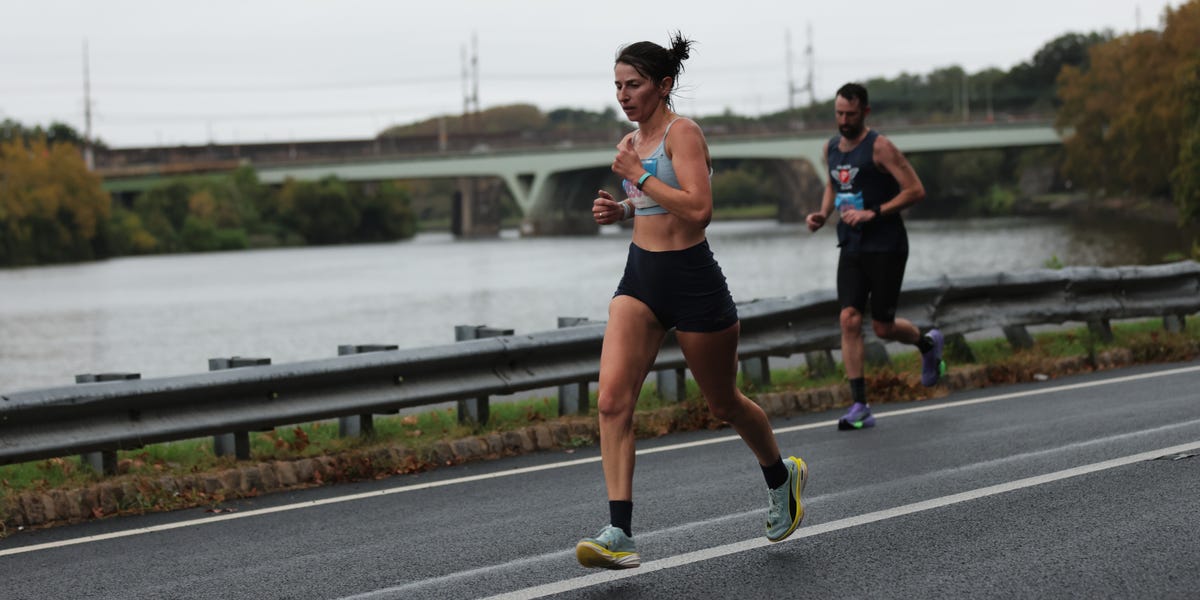
How a Second Weekly Speed Workout Helped Me Break 1:30 in the Half Marathon
Full Article
Original Source
Read the full article at Runnersworld →KhanList aggregates and links to publicly available news content. We do not host full articles from third-party sources. Always verify important information with original sources.