
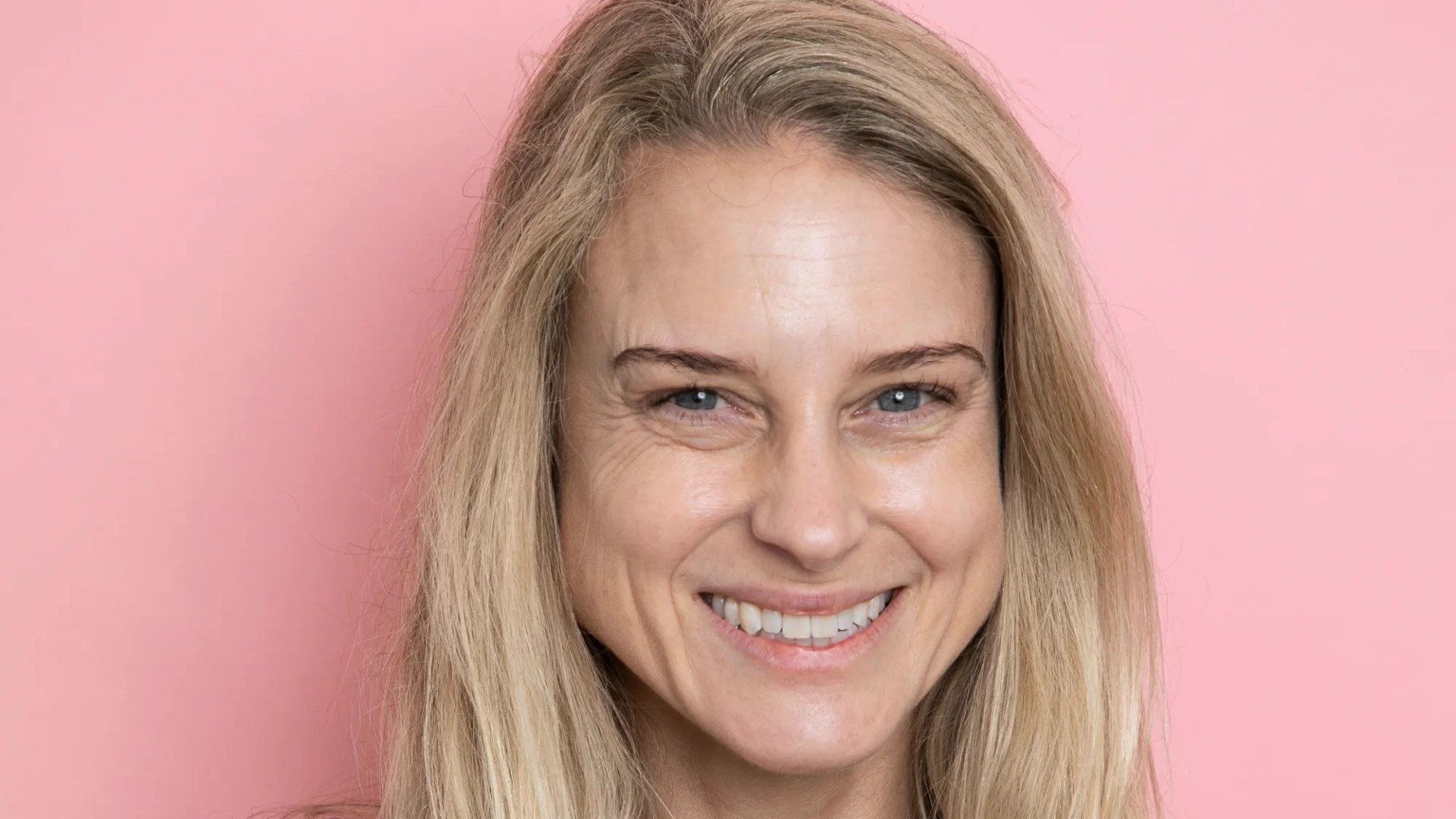
SCRUTINISING my make-up-free face in the mirror, it’s hard not to wince at the dull, dry reflection staring back at me. At 47 years old, any natural radiance my skin once had is now long gone – and a female friend’s comment recently stopped me in my tracks. Laura Stott tried a miracle Korean skin treatment that claims to give users glass skin in minutes, above before Credit: Olivia West Laura’s skin looks bouncier and less crumpled, and was glowing after the £249 procedure at London’s Omniere clinic Credit: Catherine Hack We’d met up in a pub garden, but when she mentioned over a glass of wine that I looked tired, it hit a nerve. It wasn’t the first time I’d heard it from a friend of mine, and no matter how well-intentioned, it really made me feel my age. Previously, I’ve always received positive comments and been told that I’m lucky to have such nice skin, so I can’t pretend it doesn’t bother me to hear their observations. It’s yet another reminder that the years are showing on my skin. Despite slathering on moisturiser, eating a healthy diet and drinking two litres of water daily, there’s no escaping the fact that in my fifth decade, my face has lost its lustre. My cheeks are dehydrated and flaky, while a multitude of fine lines criss-cross my forehead and crinkle around my eyes. I wear SPF daily, but a brown age spot has still appeared on my cheek, along with a cluster of unsightly open pores on my chin. It’s all a far cry from the current beauty phenomenon for so-called ‘glass skin’. The clue’s in the name for this complexion craze, meaning skin that appears so clear, hydrated and luminous it resembles a light-reflecting, translucent glass pane. First originating in South Korea in 2018, the hashtag #glassskin has since clocked up over 3 billion views on TikTok. Celebrities including Kim Kardashian, Hailey Bieber and actress Keeley Hawes are all fans of facials generating its trademark gleaming skin tone. I’ve also long coveted this glowing K-beauty look; right now, when I glance in the mirror, my skin looks more shattered glass than crystal clear. It’s a stark contrast to my twenties and thirties when my skin was still naturally dewy and hydrated, and just a slather of budget night cream was enough to keep it looking that way. But since turning 40, suddenly even pricey moisturisers don’t seem to cut it anymore. Over the last seven years, lines and wrinkles have noticeably crept in, and no potion seems to quench my skin’s thirst. Even expensive cosmetics promising to make my face shimmer simply sink into my furrows. I even splashed out on an expensive K-beauty cream called Tatcha (£69) that promised to encourage a cushion-like, plump complexion. But I didn’t notice any difference to my dewiness at all. So when I saw online about a new high-tech cosmetic treatment promising a glass skin glow-up in just five minutes, I couldn’t wait to give it a go. The £249 procedure at London’s Omniere clinic (omniere.com) is certainly cutting edge. A cocktail of active ingredients designed to boost natural glow will be distributed under my skin’s surface using tiny micro-injections – a non-surgical cosmetic technique known as mesotherapy. Except this time the needles won’t be administered by hand; instead I’m going to be injected by a robot. A futuristic machine called the Dermashine Pro will be used to dispense over 1,000 micro-needle shots into my face in just a few minutes. Although new to the UK, in South Korea, where it was engineered, the device is already used in thousands of clinics. Dr Wong uses the Dermashine Pro to dispense 1,000 micro-needle shots into Laura’s face Credit: News Group Newspapers Ltd Red marks immediately appeared on Laura’s face after the treatment Credit: News Group Newspapers Ltd It’s also 80 per cent faster than traditional manual methods, whittling the time it takes to treat a full face down to just five minutes. Could this new technology finally get my haggard face glowing again? At the clinic, Omniere founder and aesthetic physician Dr Vincent Wong shows me the contraption, which bears an uncanny resemblance to a handheld food blender. Fortunately for my face, it’s far more advanced than that. Dr Wong explains: “Using this allows me to administer hundreds of tiny microdroplets of active ingredients with pinpoint precision at a controlled, consistent depth across your face. That’s very difficult to achieve with manual injections.” This makes it ideal for creating the glimmering, flawless complexion synonymous with K-beauty. And because it’s so speedy, the ‘robodoc’ should also make the experience much more comfortable. But how will it make my skin look better? Dr Wong explains that treatments are always tailored to personal complexion needs and for those aged forty plus, like me, he focuses on restoring hydration, stimulating collagen, improving skin elasticity and softening fine lines to achieve a fresher face. “Glass skin is really healthy skin that reflects light evenly because it is functioning optimally,” he says. “Most ingredients in topical creams can’t penetrate deeply enough into the dermis, where your glow-getters, like collagen, elastin and hyaluronic acid are produced. “But injectable treatments can place regenerative ingredients directly into the skin. “Here, they stimulate repair, improve hydration and support collagen production so skin can naturally generate its own glow.” For my skin, Dr Wong settles on injecting an active ingredient called Meso-Wharton P199. This solution contains biomimetic peptides, hyaluronic acid, amino acids and vitamins – all scientifically proven to stimulate skin regeneration. Hopefully they’ll restore hydration to my thirsty face and boost my collagen levels, which are said to decline by around 1 per cent per year from the age of 40. Laura’s age spot on her cheek before trying the facial Credit: News Group Newspapers Ltd Laura’s fresher skin after the treatment Credit: Catherine Hack As numbing cream is slathered on, I’m told I’ll be getting 120 shots of the active ingredient. At nine injections per dose, I’m about to receive a whopping face-full of 1080 micro-jabs. Dr Wong guides the device to the correct areas by hand, but it will inject me automatically. As the first needles break into the skin on my forehead, I’m braced for pain. But to my genuine surprise, there’s absolutely none. I’m swiftly injected at a depth of 0.6mm around my forehead, eyes and mouth, with a deeper needle of 1.2mm used on my cheeks. I can hear a stapling sound and detect a slight suction sensation, but I can barely feel anything. Instead, the rhythmic mechanical pulsation is so soothing that I almost drift off. After five minutes, it’s over. There is no blood, but it’s a shock to sit up and see my bright red face covered in tiny needle dots and vacuum pressure lines from the machine. I do slightly resemble a human pincushion, and my cheeks feel warm, but Dr Wong assures me the marks and tomato hue will wear off fast. I’m sceptical, but he’s right. Just an hour later, the rosy colouring has already eased significantly. I don’t notice any soreness or sensitivity as the numbing cream wears off either. After over a thousand injections in my face, I am expecting some funny looks on the train home straight afterwards, but none are forthcoming. While I feel self-conscious, there’s nothing that draws any stares. My face has looked far more flushed than this after a sweaty gym session, and other than a slightly warm sensation on my cheeks it looks, and feels, completely normal. No hot showers, exercise, or strong topicals are permitted for 48 hours, then I can return to my usual routine. The following morning, my skin has settled fully with no marks or swelling at all. And to my amazement, it already looks better than usual on waking. Dr Wong predicted the earliest changes I’d see would be improved hydration and radiance, and that’s exactly what happens. Already my skin looks bouncier and less crumpled and that weekend, over a glass of wine in the garden, a friend comments, unprompted, on how glowing it looks. The changes don’t happen overnight, but gradually, and over the next month, more benefits keep emerging. My forehead looks smoother, and the creases around my eyes appear less pronounced. While it hasn’t gone completely, the brown pigmentation on my cheek also seems to have faded, and my face isn’t as dehydrated, so everything looks healthier. I don’t look different – just better. When I send a friend some photos of me following a day out, the first thing she replies is how young I look and that my skin looks amazing, and even my younger brother tells me that I look well. And beauty might be in the eye of the beholder, but there are tangible real-world results. Forget primer, make-up now glides perfectly over my newly smoothed skin, and it stays put all day too. My previous bad habit of examining the open pores on my chin in a magnifying mirror is also no more, as to my amazement they’ve vanished completely. It’s like I’ve used a photo filter on my skin, only in real life. These improvements should typically last around two to three months with further maintenance treatments, costing the same, then recommended around every four to six months. Spread over the three months it lasts, that works out at just £2.70 a day for a glowing, needle-fresh face. As with the initial session, these would always be tailored to deliver what my skin specifically needs at the time to help it naturally glow. There’s no need to reflect on whether I’ll be back for a top-up. When it comes to achieving glass skin, for me the results really are crystal clear.
How a £2.70-a-day ‘robot’ facial gave me glowing ‘glass’ skin in minutes – but there was one side effect
Full Article
Original Source
Read the full article at Thesun →KhanList aggregates and links to publicly available news content. We do not host full articles from third-party sources. Always verify important information with original sources.