
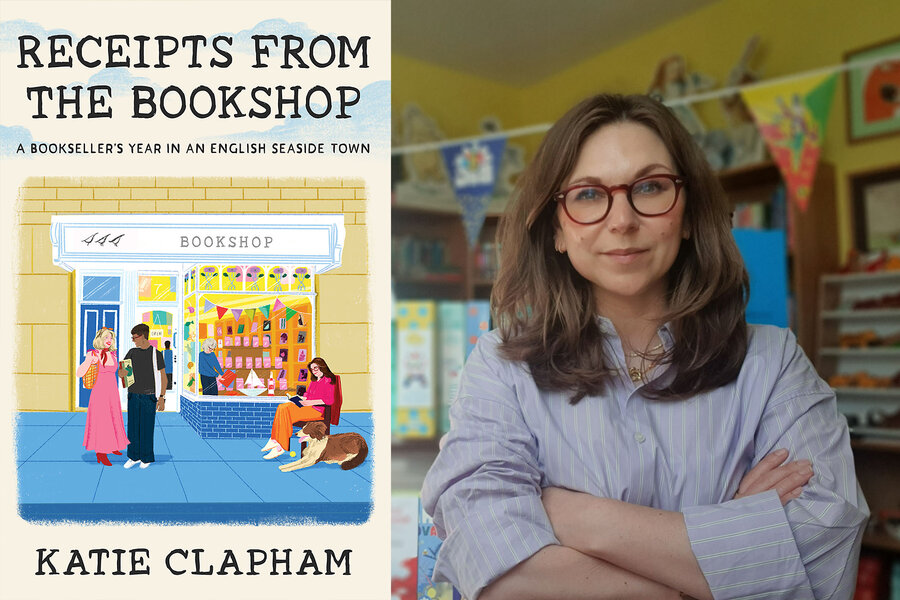
Since 2010, Katie Clapham and her mother have operated Storytellers, Inc., an independent bookshop in Lytham St Annes, a small seaside town in northwestern England. Beyond her circle of customers, Clapham has reached thousands of other book lovers around the world through her popular “Receipt from the Bookshop” column on Substack.With her new book drawn from Clapham’s wistful and often funny online dispatches from the front lines of literary retailing, even more bibliophiles are poised to learn about her misadventures as a bookseller. In one of her more revealing disclosures, Clapham admits to becoming “a bookseller by mistake.” She doesn’t quickly elaborate on that eventful turn, which points to both the complication and the charm of reading each of these bite-size entries from a year behind the cash register at a provincial English bookshop.The observations here tend toward the casual and the glancing, often taking the form of a brief sentence or two that summarizes a sales day. Reading “Receipts from the Bookshop” is a bit like book browsing itself, the eyes alighting on bright bits of language and imagery before moving on to something else. This is a perfect nightstand read, its delights dispensed in capsule form. As it carries readers through 12 months of bookselling, “Receipts from the Bookshop” invites obvious comparisons to Shaun Bythell’s “The Diary of a Bookseller” and its various follow-ups, which have chronicled Bythell’s oddball odyssey as a used-book dealer in Scotland. Clapham, like Bythell, is often droll, rolling her eyes at the quixotic premise of running a bookshop in the 21st century. “It’s cold but not icy,” she notes on a bleak January day, “so there’s no real reason why we shouldn’t be flooded with customers today, other than the death of the high street, the devaluation of books, the cost-of-living crisis and the town’s general ennui.”But “Receipts from the Bookshop” is ultimately a cheerier book than the ones in Bythell’s series. Clapham and her mother sell new books, so Storyteller’s aisles appear somewhat warmer and shinier than the dusty stacks of the secondhand trade. Along with novels, poems, and history, Clapham’s shop sells toys and puppets, too. Offering merchandise beyond books, of course, is how many bookshops are staying open these days. But Clapham’s pleasure in puppets chimes nicely with the equally tactile appeal of the books she sells. She muses on the physical presence of all those hardbacks and softcovers as they’re sold and welcomed into households near and far. Clapham imagines them “linked to the shop with an invisible thread that means sometimes, somewhere, even a decade later, someone might speak fondly of your little shop, where they got that book that time.”Such speculations reveal Clapham’s idealism as a bookseller, which she cultivates by not following the finances of her shop too closely. “Business Mum,” as the author has nicknamed her mother, “is the person who keeps our business running, in that she does everything to do with running a business. I show up one day a week and eat the biscuits.” Despite her professed innocence about the fortunes of Storytellers, Clapham offers some astute observations on the paradox of brick-and-mortar bookshops. One of her frequent laments is that countless people seem to love the idea of bookshops, though they rarely shop in them. “Great to see the independents open,” a pedestrian remarks as he passes by without darkening the door. Deepen your worldviewwith Monitor Highlights.Politics with respectGet political stories with respectful analysis.There‘s a world of new ideas in everyBooks newsletter.There‘s more to life, enrich yours withCulture & Learning weekly.Follow humanity‘s discoveries withScience & Nature stories in your inbox.Gain a spiritual perspectivefrom the stories in your inbox.Want to understand the deeper impact of critical events? Learn the Monitor‘s insight.Already a subscriber? Log in to hide ads. Clapham’s stiff upper lip against such adversity is quintessentially British, just like the setting of her book, another one of its abiding appeals. “It’s momentarily stopped raining, so I’ve opened the door,” she reports on a typically wet English day. “I am immediately rewarded with two customers, plus a dog in a coat.” “Receipts from the Bookshop” also offers a primer on World Book Day, a celebration in the United Kingdom and Ireland in which youngsters are given tokens to shop at local bookstores.The hope is that such enticements will help build the next generation of readers. In the meantime, Clapham is counting on her customers to keep the doors open. “We’re very lucky to be able to continue to serve them, our warriors against the threat of a bookshopless town,” she writes. “Ultimately, a town decides if they want a bookshop or not, and for now, we’re grateful that ours still does.” ALREADY A SUBSCRIBER? LoginReal news can be honest, hopeful, credible, constructive.The Christian Science Monitor was founded in 1908 to lift the standard of journalism and uplift humanity. We aim to “speak the truth in love.” Our goal is not to tell you what to think, but to give you the essential knowledge and understanding to come to your own intelligent conclusions. Join us in this mission by subscribing.
How a British bookstore has extended its shelf life
Full Article
Original Source
Read the full article at Csmonitor →KhanList aggregates and links to publicly available news content. We do not host full articles from third-party sources. Always verify important information with original sources.