
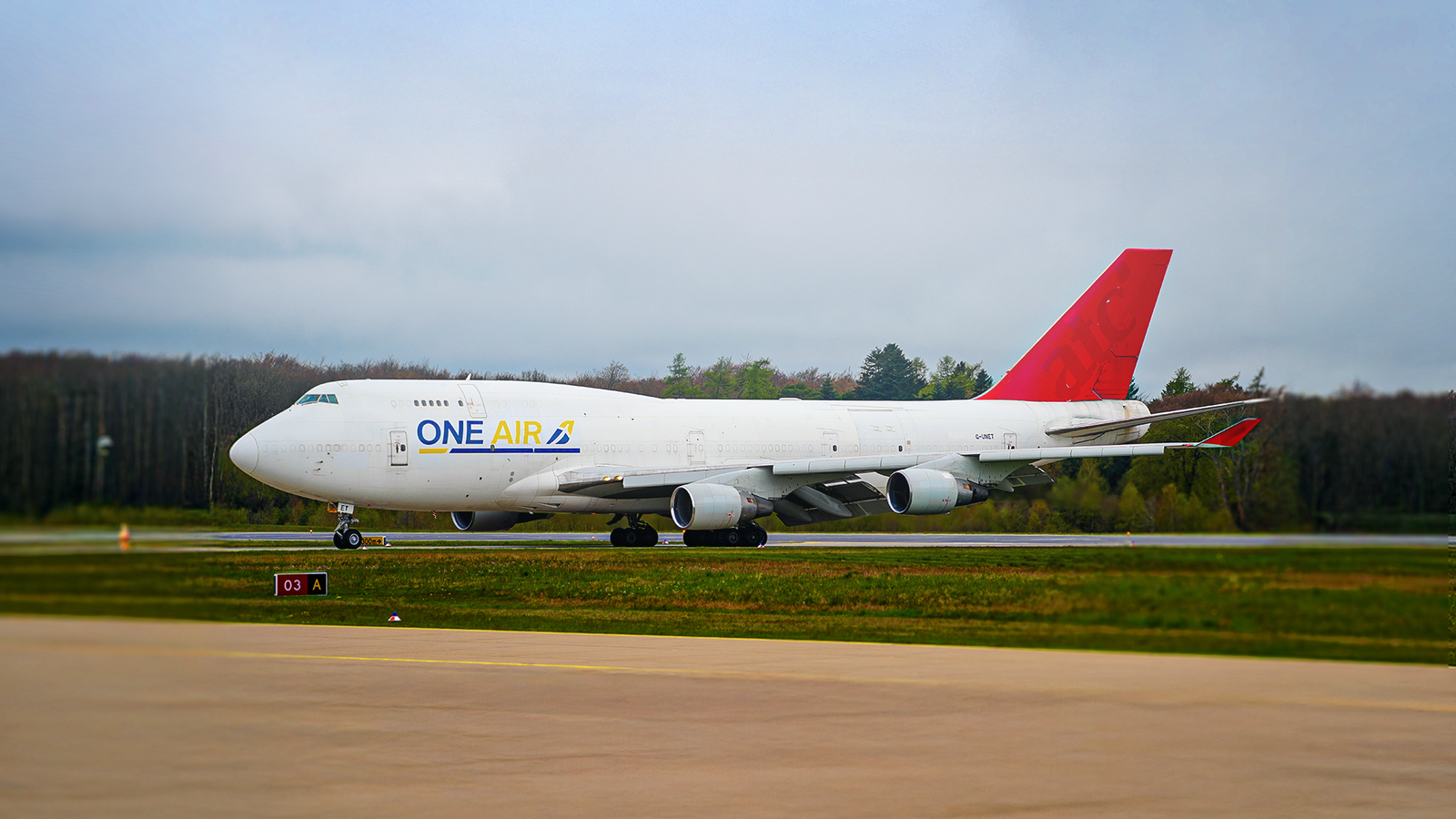
Published Sep 24, 2026, 4:00 AM EDT Brandon's passion for aviation started at a young age. He became involved in the flight simulator and VATSIM communities, which sparked his interest in aviation and eventually led him to earn his private pilot license. Outside of work, he continues to build flight hours, explore new airports, and stay involved in the aviation community. On February 8, 2024, a Boeing 747-400 freighter departed London Heathrow for Hong Kong and immediately began losing electrical systems. AC buses 1 and 4 failed during the takeoff roll and climb, stripping the aircraft of all pitot tube heating. When a pressurization issue forced the crew to descend into icing conditions, the pitot tubes froze, the airspeed indicators failed, and the autopilot pitched the aircraft into a 7.6-degree nose-down dive at 6,240 feet per minute before the tubes thawed and the crew regained control. They declared a MAYDAY and diverted to Amsterdam Schiphol (AMS). The UK Air Accidents Investigation Branch published its report on September 3, 2026, tracing the entire sequence to a single event on the ground: the L1 door had been left open during rain. Water entered the cargo deck, seeped through degraded floor seals and waterproof tape, and reached the Generator Control Units in the electronics bay below. The AAIB found that previous water ingress events on the 747-400 had produced service bulletins and airworthiness directives, but none required operators to check whether the protection systems were still working on a recurring basis. The report made four safety recommendations that change maintenance requirements for every Boeing 747-400 freighter in the world. What Happened To G-ONEE On February 8, 2024 Credit: Phung Quang Minh | Shutterstock On February 8, 2024, a Boeing 747-400 freighter registered G-ONEE departed London Heathrow Airport (LHR) for Hong Kong International Airport (HKG). During the takeoff roll, the flight crew began receiving electrical failure messages. The problems worsened during the climb. AC electrical buses 1 and 4 had both failed, producing a cascade of system failures that included the loss of all pitot tube heating on the aircraft. The crew ran multiple concurrent checklists, declared a PAN to air traffic control, and began diverting to Amsterdam Schiphol Airport (AMS). The situation escalated during the diversion. A pressurization issue forced the crew to initiate a descent, and the aircraft entered icing conditions. With pitot tube heating already lost, the pitot tubes froze. All three airspeed indicators began displaying erroneously low readings. The autopilot, still engaged, responded to the false airspeed data by pitching the aircraft nose-down to 7.6 degrees to regain what it believed was insufficient airspeed. The descent rate reached 6,240 feet per minute before the aircraft exited the icing layer, the pitot tubes thawed, and correct airspeed indications returned. The autopilot pitched up. The brief dive had produced an 18-knot overspeed. The crew managed a subsequent flap issue during the approach into Amsterdam and landed safely at Schiphol. No one was injured. The aircraft was not damaged beyond the electrical faults that had caused the emergency. The UK Air Accidents Investigation Branch opened an investigation and published its report on September 3, 2026, more than two and a half years after the incident. The cause of the cascading electrical failures traced to a single event on the ground at Heathrow before the aircraft departed: the L1 cargo door had been left open during rain. How Rainwater Reached The Aircraft's Most Critical Electrical Systems Credit: One Air The L1 door is located on the forward left side of the 747-400 freighter and opens onto the main cargo deck. When the door was left open during rain at Heathrow, water entered the cargo deck and pooled on the floor surface. Beneath that floor sits the Main Equipment Center, a compartment housing the aircraft's most critical electrical and electronic systems, including the Generator Control Units that regulate AC electrical power distribution. The GCUs for buses 1 and 4 are mounted in the E1/E2 electronic rack directly below the cargo deck floor panels. The AAIB investigation was unable to determine the exact path the water took from the cargo deck surface to the GCUs below. Investigators found a series of weaknesses in the water protection systems designed to prevent this scenario. The drip shield above the E1/E2 rack, which should deflect any liquid that penetrates the floor panels, showed deterioration. Floor panel seals that should have prevented water from seeping through gaps between panels had degraded. Waterproof tape applied around penetrations in the floor had lost adhesion. The floor mat near the L1 door had not prevented water from spreading across the cargo deck. No single barrier failed catastrophically. Multiple barriers degraded over time without being detected, and together they allowed enough water to reach the GCUs to cause the electrical bus failures. Water contaminated GCUs 1 and 4, causing both units to command their respective contactors to open. When a GCU opens its contactor, it isolates the associated AC bus from the electrical distribution system. Losing AC bus 1 and AC bus 4 simultaneously removed power from a range of systems that depend on those buses, including all pitot tube heaters. Pitot heating is distributed across different electrical buses specifically so that losing one bus does not eliminate all heating. Losing two buses at once defeated that redundancy. The System Failures The Crew Had To Manage Credit: Jaromir Chalabala | Shutterstock The loss of two AC buses simultaneously produced dozens of failure messages on EICAS as systems powered by those buses dropped offline. The crew had to identify which failures were primary and which were secondary cascading effects, running multiple concurrent checklists while flying the aircraft, communicating with ATC, and planning the diversion. They declared a PAN and turned toward Amsterdam Schiphol (AMS). The situation escalated during the descent into icing conditions. Without pitot heating, the tubes froze within minutes. All three airspeed indicators displayed erroneously low values. The autopilot, still engaged, responded by pitching the nose down to 7.6 degrees to regain what it calculated was insufficient airspeed, producing a descent rate of 6,240 feet per minute. The aircraft exited the icing layer, the pitot tubes thawed, correct airspeed returned, and the autopilot corrected. The brief dive had produced an 18-knot overspeed. After managing a subsequent flap malfunction during the approach, the crew landed safely at Schiphol. The AAIB's Four Safety Recommendations Credit: Terry Kent | Shutterstock The G-ONEE incident was not the first time water had reached the Main Equipment Center on a 747-400. The AAIB report stated that "there have been previous events of water ingress into GCUs and other events of water contamination of the electrical/electronic units in the E1/E2 rack on the 747-400." Boeing and the FAA had responded to earlier incidents with service bulletins and airworthiness directives, including a 2013 FAA AD requiring operators to clean the aft MEC drip shield gutter, inspect for disbonded seams, and install a fiberglass reinforcing overcoat. Each of those earlier actions addressed the problem with a one-time fix. Install the overcoat. Inspect the seams. Repair what is found. None required operators to go back and check those same components on a recurring basis. Drip shields deteriorate. Floor panel seals degrade. Waterproof tape loses adhesion over time. A protection system adequate when installed may not be adequate years later. Without a requirement to re-inspect, no one re-inspected. The AAIB made four safety recommendations targeting the gaps. The recommendations address the absence of repetitive inspection requirements for the drip shield above the E1/E2 rack, the floor panel seals, the waterproof tape around floor penetrations, the power drive units, and the L1 door floor mat. These components must now be inspected in detail on a recurring basis rather than fixed once and assumed to remain effective indefinitely. What Changes For Every 747-400 Freighter Operator Credit: StudioPortoSabbia | Shutterstock Approximately 80-90 Boeing 747-400 freighters remain in active service worldwide as of early 2026, operated by Atlas Air, Kalitta Air, Cargolux, UPS, and a dozen smaller cargo carriers across the US, Europe, and Asia. Every one of those operators now faces maintenance requirements that did not exist before the AAIB published its report on September 3, 2026. Components that were previously inspected once must now be checked on a recurring schedule, adding inspection time and documentation to every heavy maintenance visit. The components targeted are not exotic. Floor panel seals, waterproof tape, and door floor mats are basic elements any line maintenance team can inspect. Drip shields and power drive units require slightly more access but are reachable during routine cargo floor inspections. The burden is procedural more than financial. Operators must update their maintenance programs, train inspectors on what to look for, and document compliance at each interval. The 747-400 freighter fleet has an average age exceeding 25 years. Seals, tapes, mats, and coatings installed when these aircraft were new have been absorbing decades of cargo operations, cleaning chemicals, and environmental exposure. A one-time fix applied in 2013 may no longer be intact in 2026. The AAIB's recommendations formalize what the G-ONEE investigation demonstrated: on an aging fleet, the only way to ensure a protection system still works is to keep checking it.
How 1 Open Door At London Heathrow Just Rewrote Maintenance Rules For Every Boeing 747-400 Freighter
Full Article
Original Source
Read the full article at Simpleflying →KhanList aggregates and links to publicly available news content. We do not host full articles from third-party sources. Always verify important information with original sources.