
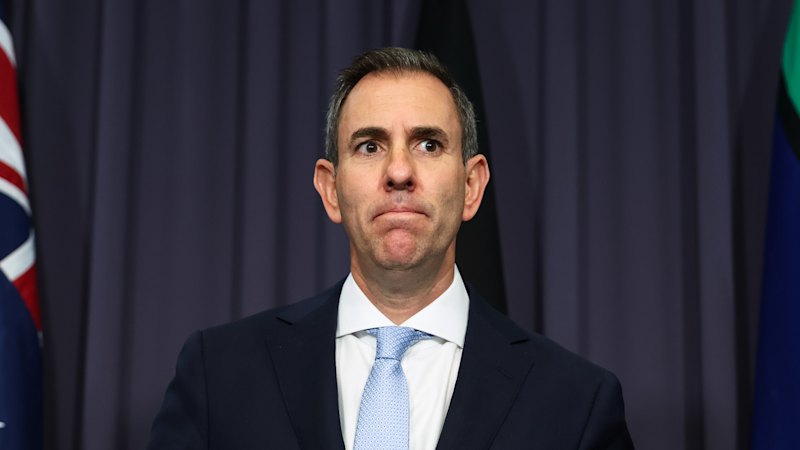
September 3, 2026 — 10:41amTreasurer Jim Chalmers has defended the government’s changes to negative gearing and the capital gains tax discount after admitting the budget overhaul is contributing to the fall in housing prices, insisting the downturn is temporary and will resolve over time.After Chalmers fronted a tense press conference in Canberra on Wednesday, Shadow Treasurer Tim Wilson once again accused the government of stoking inflation to raise taxes as the big banks and the Reserve Bank prepare to face a parliamentary inquiry into intergenerational housing inequity.Treasurer Jim Chalmers speaking at Parliament House in Canberra on Wednesday. Alex EllinghausenTreasury modelling in the budget predicted Labor’s changes to housing investment would slow the growth of dwelling prices by 2 per cent. However, drops of 6.7 per cent in Sydney and 6.3 per cent in Melbourne this year and predictions from the Commonwealth Bank of drops as high as 13 per cent have drawn criticism of the modelling.The Reserve Bank began raising interest rates in February, which began the market downturn, and increased again in March and May.“The Treasury assumption is over the next couple of years, not the last couple of months. And if you look at movements in house prices over the last couple of decades, it’s not unusual,” Chalmers said on Thursday morning.“In fact, we think on at least seven different occasions we’ve seen house prices come off, and that’s because they react to things like interest rate movements, like developments in the global and domestic economy.”Chalmers told ABC radio the government’s changes were part of a “range of factors at play” in the recent market downturn, adding that housing was a long-term investment that should not be tracked month-to-month, and that he was “not necessarily” surprised by the recent decline in prices.Over the last five years the median house sales price has increased by 34.8 per cent, from $701,000 in mid-2021 to $940,000 last month, according to data published by property analytics firm Cotality.“There are movements and volatility in house prices over time,” Chalmers said. “Overwhelmingly, over the past quarter-century, we’ve seen very quick house price growth that has locked a lot of young people out of the market, and that’s the challenge that we’re addressing.”Wilson was on the attack following Chalmers’ appearance, arguing the government had deliberately orchestrated a crash in the housing market and was stoking inflation to collect more tax revenue.Shadow Treasurer Tim Wilson.Alex Ellinghausen“Their active inflation agenda is focused on stoking revenue, stoking inflation, then taxing the inflation, then spending the inflation, because they know that it’s a pathway to sneak more tax from Australian hip pockets into their own revenue,” Wilson told ABC radio.“While we’re seeing wealth of Australians decline for those who own their own home, we’re seeing the price of first homes increasing as a consequence of tax policy and tax measures, and failure to build new homes. We’re seeing a smashing in the confidence of the market. But let’s remember this is by design.”While the value of cheaper homes was resilient in the immediate aftermath of the budget, data from Cotality published on Tuesday showed values had softened. The bottom quarter of the market, which is dominated by first home buyers, had fallen as a result of weaker demand and falling affordability pressures.House values, particularly among the most expensive properties, are falling fastest and are down by 3.3 per cent so far this year. By contrast, the values of units and apartments have slipped by 1.8 per cent through 2026.Former prime minister Paul Keating on Wednesday endorsed the boldness of Chalmers’ changes, arguing Australian governments had become “afraid of change” and the move would “level the playing field” for first-home buyers.“Making housing more affordable is a great thing to be doing, and if we’ve lost 10 or 15 per cent on house values, so what?”Loans to first-home buyers most recently peaked in the December quarter last year, and started falling when the Reserve Bank began tightening monetary policy in February. In the June quarter, 29319 people took out a mortgage for the first time, a drop of 2.9 per cent over the March quarter but flat over the past year.Loans to investors through the June quarter dropped by 8.6 per cent, in line with reports from the banking and real estate sector that there had been a sharp decline in investor activity since the government’s tax changes were announced.However, figures from the Australian Bureau of Statistics confirm the government is falling further behind its target of 1.2 million new homes by the end of the decade. Building approvals fell by 3.6 per cent in July, with approvals for new houses slipping by 4.2 per cent. The single largest drop was 5.5 per cent in Queensland.The final public hearing of the Select Committee on Intergenerational Housing Inequity will take place on Thursday. The Commonwealth Bank, Westpac, NAB and ANZ will front the inquiry, as will Reserve Bank assistant governor Sarah Hunter. A report is set to be handed down by the end of the month.Cut through the noise of federal politics with news, views and expert analysis. Subscribers can sign up to our weekly Inside Politics newsletter.From our partners
Housing showdown: Chalmers on budget defence as Liberals warn of market crash
Full Article
Original Source
Read the full article at Smh →KhanList aggregates and links to publicly available news content. We do not host full articles from third-party sources. Always verify important information with original sources.