
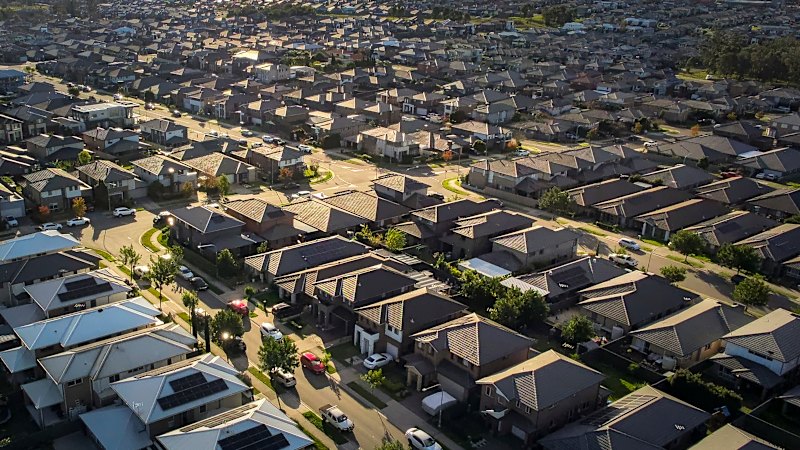
November 1, 2026 — 10:00amIn his first public commentary on housing after his election as NSW premier in 2023, Chris Minns made it clear that Sydney needed to go up, not out. His position was that Sydney could no longer push housing to the city’s fringes, where infrastructure had failed to keep up.He argued, rightly, that Sydney needed to embrace higher-density living if the city was going to meet the ambitious housing targets deemed necessary to accommodate a ballooning population.New housing should be delivered simultaneously with infrastructure.Sitthixay DitthavongThe Minns government has pursued a housing agenda with a focus on new homes being approved around train stations through its so-called transport-oriented development program. The Herald has supported this.While the need for more housing is well understood, it is also critical that the government clearly outlines its broader infrastructure plans to communities who will be home to this increased density.This includes its plans for dealing with added road congestion, capacity in schools and pressure on essential services such as water and power that come with more people moving into an area.The failure to prepare for increased populations has been acutely felt in many areas, most notably in Sydney’s north-west.Rapid housing development in growth corridors such as Box Hill, The Hills Shire, and surrounding fringes has, for example, vastly outpaced the delivery of public school infrastructure, leading to overcrowding, reliance on demountables and delayed school openings.NSW Productivity and Equality Commissioner Peter Achterstraat, who is leaving after eight years in the role, has long called out the need for infrastructure and housing to be delivered as one. Last year, he said that the “only time housing should come before infrastructure is in the dictionary”.In an interview with the Herald’s Max Maddison before he moves on from his role, Achterstraat has sounded a renewed warning about the “unintended consequences” of new housing.He acknowledges there are budgetary constraints on the state government but additional infrastructure costs that come with new homes must feature in all planning decisions. “It may not necessarily be built overnight,” Achterstraat said. “But it’s in everyone’s interests if the infrastructure is built simultaneously with the housing.”Achterstraat still believes homes are best built around transport hubs. But growing community opposition to the government’s low- and medium-rise housing reforms is fuelled by a sense that infrastructure is not keeping pace with developments.This is the main argument from Woollahra Council, which is opposed to the government’s plans to open the suburb’s ghost train station on the T4 line and build 9400 homes. Mayor Sarah Dixson argues the government’s plan lacks “the infrastructure needed to support basic liveability”.If the Minns government wants voters to embrace its housing policy, it needs to be upfront about how it will deliver new infrastructure as well as supporting the increased pressure on existing services. Transport is a crucial part of the puzzle, but not the only one.Communities need assurance that their basic liveability, as Dixson calls it, is not compromised as the government pursues its higher density agenda.Get a weekly wrap of views that will challenge, champion and inform your own. Sign up for our Opinion newsletter.From our partners
Housing must be delivered with, not before, key infrastructure
Full Article
Original Source
Read the full article at Smh →KhanList aggregates and links to publicly available news content. We do not host full articles from third-party sources. Always verify important information with original sources.