
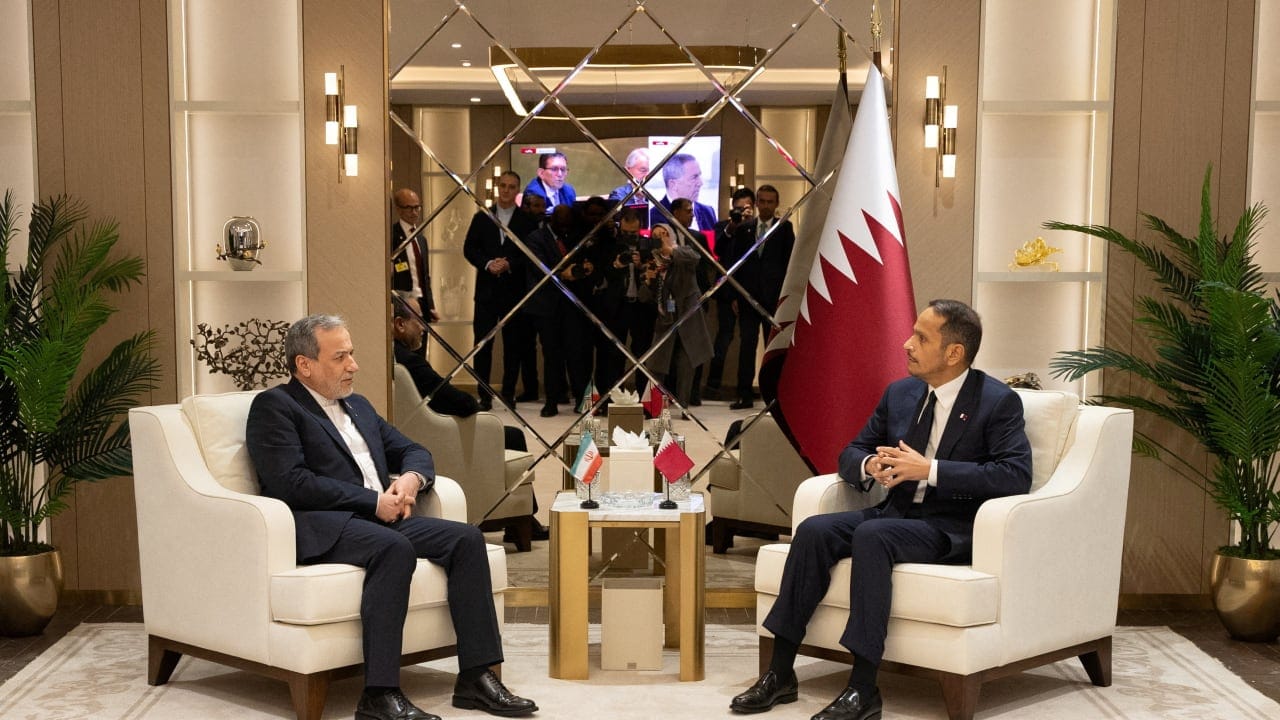
Iran's Foreign Minister Abbas Araghchi and US envoys Steve Witkoff and Jared Kushner communicated through mediators on the sidelines of the UN General Assembly in New York.Follow us on GoogleQatar's Prime Minister and Minister of Foreign Affairs Sheikh Mohammed bin Abdulrahman bin Jassim Al-Thani meets with Iranian Foreign Minister Abbas Araghchi on the sidelines of 81st United Nations General Assembly, in New York City, US, September 22, 2026. (photo credit: QATAR NEWS AGENCY/HANDOUT VIA REUTERS)SEPTEMBER 23, 2026 15:03The first shuttle talks between the United States and Iran in months raised hopes on Wednesday that the adversaries could make some progress towards ending the Middle East war, although neither side spelled out any change in their positions.Iran's Foreign Minister Abbas Araghchi and US envoys Steve Witkoff and Jared Kushner communicated through mediators on the sidelines of the UN General Assembly in New York, the first such contacts since an interim ceasefire agreement collapsed in July."Steve and Jared had a very productive meeting today with mediators of Iran, merely mediators. Let's see what happens with that," US President Donald Trump said. "They've been mediated for a while, but I think there's a lot of momentum for them to make a deal. It's what we're hearing from everybody."Earlier, Trump had told the UN General Assembly in a speech that he had to decide whether to make a deal with Iran or "annihilate" the country. Iran's President Masoud Pezeshkian was due to address the gathering on Wednesday.Iran's Foreign Ministry spokesperson Esmail Baghaei said Tehran had engaged with the United States through a Qatari mediator in New York and conveyed conditions, including an end to the war on all fronts and a halt to US "acts of aggression."US President Donald Trump participates in a bilateral meeting with Japan's Prime Minister Sanae Takaichi during the 81st United Nations General Assembly (UNGA) in New York City, US, September 22, 2026. (credit: Reuters/Kylie Cooper)Some Iranian state media had earlier reported that Araghchi and Witkoff had met, but Iranian officials clarified to Reuters that this was not face-to-face. Araghchi met the prime minister of Qatar, Sheik Mohammed bin Abdulrahman Al Thani, who has been one of the main mediators at previous talks.Oil prices hold at two-week low after Houthi attacksThe diplomatic opening helped keep oil prices near two-week lows, with Brent crude now holding just below the $100-a-barrel threshold it had shot through this month, after Houthi terrorists in Yemen launched a major offensive and fired into Saudi Arabia.Trump repeated previous assertions that the war could end around the time of November's US midterm elections, though he has not explained why.Since diplomacy broke off in July, the sides have repeatedly exchanged fire, although Trump has held back from a full-blown resumption of strikes after receiving advice from his military commanders that munitions were running low.An interim agreement reached in June and signed by Trump and Pezeshkian would have given Iran its main demands: lifting financial sanctions and unfreezing assets in return for talks on limiting its nuclear program.But that deal unraveled within weeks over shipping rules in the Strait of Hormuz, a conduit for a fifth of global oil and liquefied natural gas before the war. Iran wants to exert greater control of the strait and collect fees from ships that use it, which Washington rejects.Shipping through Strait of Hormuz gradually increasingDespite near-daily attacks on tankers, traffic through the strait has gradually increased in recent weeks. Oil producers have paid shipping companies fees worth as much as a quarter of a cargo's value to switch off transponders, navigate the route and transfer crude to other vessels beyond the strait.Exports from the United Arab Emirates have already recovered to pre-war levels, and Saudi Arabia has sold 60 million barrels of Gulf oil for both this month and next, to be delivered beyond the strait off the coast of Oman, a big increase from August.Even so, disruption continues to squeeze global energy markets. About a third of Gulf oil is estimated to be missing from global supplies. Shortages have particularly hit refined products such as diesel, causing inflation, pushing up interest rates and hurting Trump's Republicans ahead of the elections.The risk of further disruption has increased since the Iran-backed Houthis advanced in Yemen this month, threatening traffic through the Bab el-Mandeb Strait at the southern entrance to the Red Sea, an alternative export route used by Saudi Arabia.Washington, for its part, has imposed a blockade on Iranian ports, deepening Iran's economic crisis. Iranian officials say they are willing to endure the blockade to achieve their goals and will not reopen the Strait of Hormuz until it is lifted.Follow us on Google
Hope for progress after US, Iran hold first shuttle talks in months
Full Article
Original Source
Read the full article at Jpost →KhanList aggregates and links to publicly available news content. We do not host full articles from third-party sources. Always verify important information with original sources.