
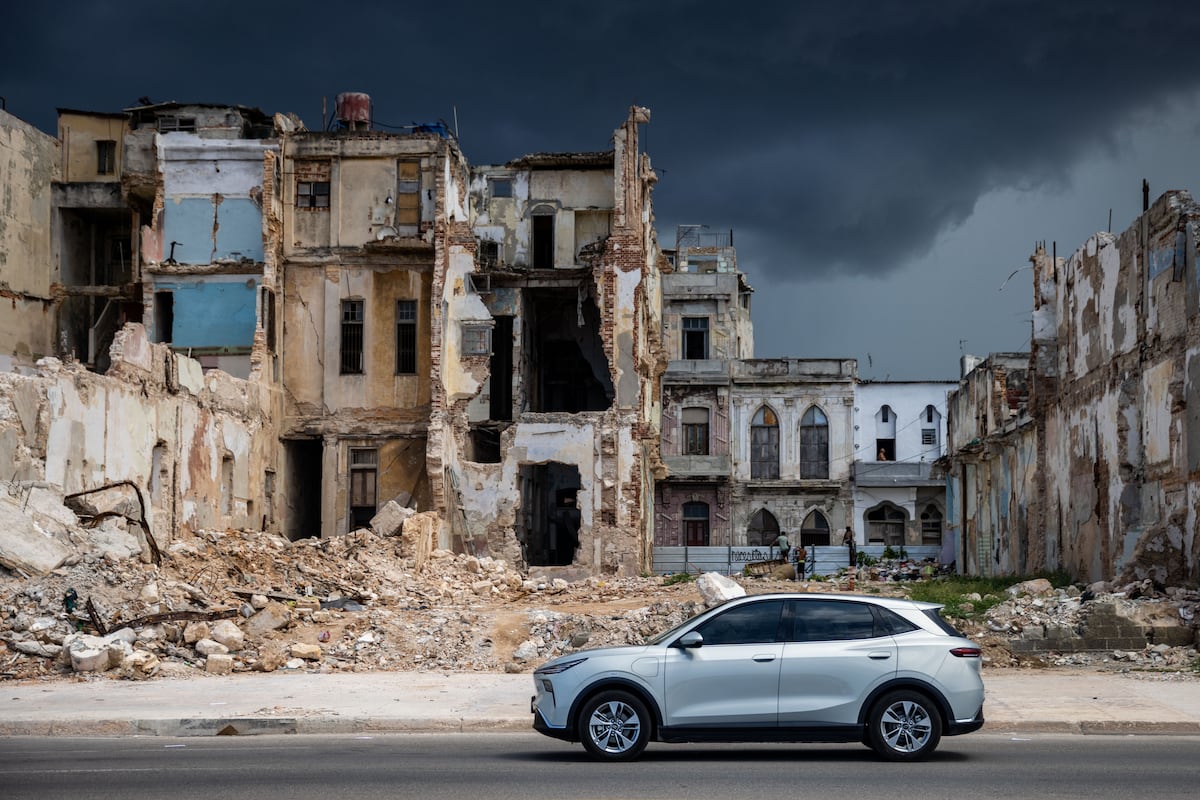
15 fotosThe island’s economic and energy crisis, worsened by the U.S. embargo, is widening the gap between those who can afford to import luxury cars and buy solar panels, and an impoverished majority that faces blackouts, food shortages, deteriorating housing and growing difficulty meeting their basic needsEight months have elapsed since the U.S. started its oil blockade against Cuba, and the island is racking up scenes that illustrate a deepening inequality. Those with the means to do so are avoiding the energy crisis with solar panels and using imported electric cars and motorcycles to get around, like the one seen in this photograph. Meanwhile, a large part of the population is dealing with prolonged blackouts and growing difficulties to cover their basic needs. These images, taken between July and August in Havana, are a portrait of the increasingly divergent realities in Cuba.ANTONIO CASCIOA hairdresser continues to work during a blackout, using the light from a cellphone. For many Cubans, carrying out daily tasks in the dark has become part of their routine. The tightening of the blockade has caused ever-longer power cuts, yet not working is not an option. By some estimates, the Cuban economy contracted over 15% between 2020 and 2025. These days, 63% of households have trouble acquiring the most essential goods, according to a report published this year by the Cuban Observatory for Human Rights (OCDH). ANTONIO CASCIOAn electric vehicle carries a solar panel along Havana's Malecón. Some residents sarcastically note that "we Cubans are divided into those who can afford a solar panel and those who cannot." The Electrical Union of Cuba (UNE), the state corporation in charge of managing energy generation and distribution, has this year launched a program to install 5,000 photovoltaic 2-kW systems donated by China. These have been distributed to all the municipalities in Cuba, with a particular focus on the more isolated areas. But most of the country plunges into darkness during the numerous collapses of the national grid system (SEN). ANTONIO CASCIOTourism remains in freefall: several airlines have cut down on flight frequencies or suspended routes to the island entirely. Between January and July, 419,863 international tourists visited Cuba, a 37.2% drop from the same period in 2025, according to data from the National Statistics and Information Office (ONEI). Although the lack of tourists has affected a majority of businesses in the capital, others, such as upscale bars and restaurants, have held on to their wealthy clientèle. Pictured above, a couple dines on sushi at a jazz club in Old Havana.ANTONIO CASCIODozens of Cubans line up at a bakery in central Havana. The scene has become commonplace in the last few months. Many people buy large amounts of bread, then sell it door to door for a higher price and get some income that way. As a result, many bakeries are left without any more bread to sell for the rest of the day. And it is increasingly hard to find the ingredients anyway: in June, the Minister for Food Health, Alberto López Díaz, reported that the U.S. blockade had prevented the arrival of five out of the six ships hired to bring flour to Cuba, which affected production. ANTONIO CASCIODuring one of the daily blackouts, a bar in the Malecón keeps its lights on thanks to solar panels installed on the rooftop. It is not a frequent scene in the capital. Many bars and restaurants cannot afford to buy solar panels due to the reduced revenue from the drop in tourism, which means they cannot turn on the lights, keep food refrigerated or make ice.ANTONIO CASCIOA high-end car in front of ruined buildings in the Malecón. While some residents still have the financial means to buy new, imported vehicles, others have seen their homes crumble. The economic crisis is making maintenance difficult, accelerating the deterioration and collapse of numerous buildings in central Havana. According to the OCDH, 47 % of homes require repair, 25% are in need of urgent intervention, and 7% are at risk of collapse. Only 18% are in good condition. ANTONIO CASCIOThe economic and humanitarian crisis has deepened in the last year. This is evident in the increase in people looking for recyclable material and even food in the piles of trash on every corner of Havana. According to the OCDH, eight out of 10 people skip a a meal each day, compared with seven out of 10 last year. ANTONIO CASCIOA woman on an electric scooter in Havana's Malecón, an image that would have been unthinkable a few years ago. On August 11, the Cuban government issued Decree 163, a new set of rules replacing 2024 regulations, which had already opened the door to importing vehicles. The latest resolution focuses on facilitating the import of electric vehicles through a reduction in taxes. The state has also expanded the number of companies authorized to sell vehicles in Cuba, from seven to 17. ANTONIO CASCIOAn old man begs for money on one of the main streets of Old Havana. Every day it is becoming more commonplace to see Cubans, old and young, begging on the streets. According to a study by the World Food Programme, released in April 2026, the tougher economic, trade and financial embargo measures imposed by the U.S. have intensified economic and financial exclusion in Cuba. The food shortage in state markets forces people to resort to private markets, where prices continue to rise. This situation affects especially low-income Cubans, including many women and elderly people living on their meager pension. ANTONIO CASCIOA man on an electric motorcycle in central Havana, in an image that has become common in the city. Transportation Minister Eduardo Rodríguez Dávila reported that in the first half of 2026, individuals imported 19,443 electric two-wheeled vehicles. ANTONIO CASCIOA man and some children take home water containers on a tricycle with no motor. The water shortage is another effect of the prolonged blackouts: without electric pumping systems, it is hard to refill the water tanks on buildings. ANTONIO CASCIOOne of the bars in the neighborhood of El Vedado has installed solar panels to keep its doors open to the public.ANTONIO CASCIOSome Havana residents have bought generators for their homes to make up for the blackouts. But they are costly to use: since January 2026, the price of gasoline has shot up from one dollar to six dollars per liter. ANTONIO CASCIOAn electric motorcycle tied up to an old car that's been parked for months on a street in central Havana. It is a symbolic image of the changes taking place in Cuba. ANTONIO CASCIO
Homes in the dark and electric cars: Snapshots of inequality in Cuba
Full Article
Original Source
Read the full article at English →KhanList aggregates and links to publicly available news content. We do not host full articles from third-party sources. Always verify important information with original sources.