
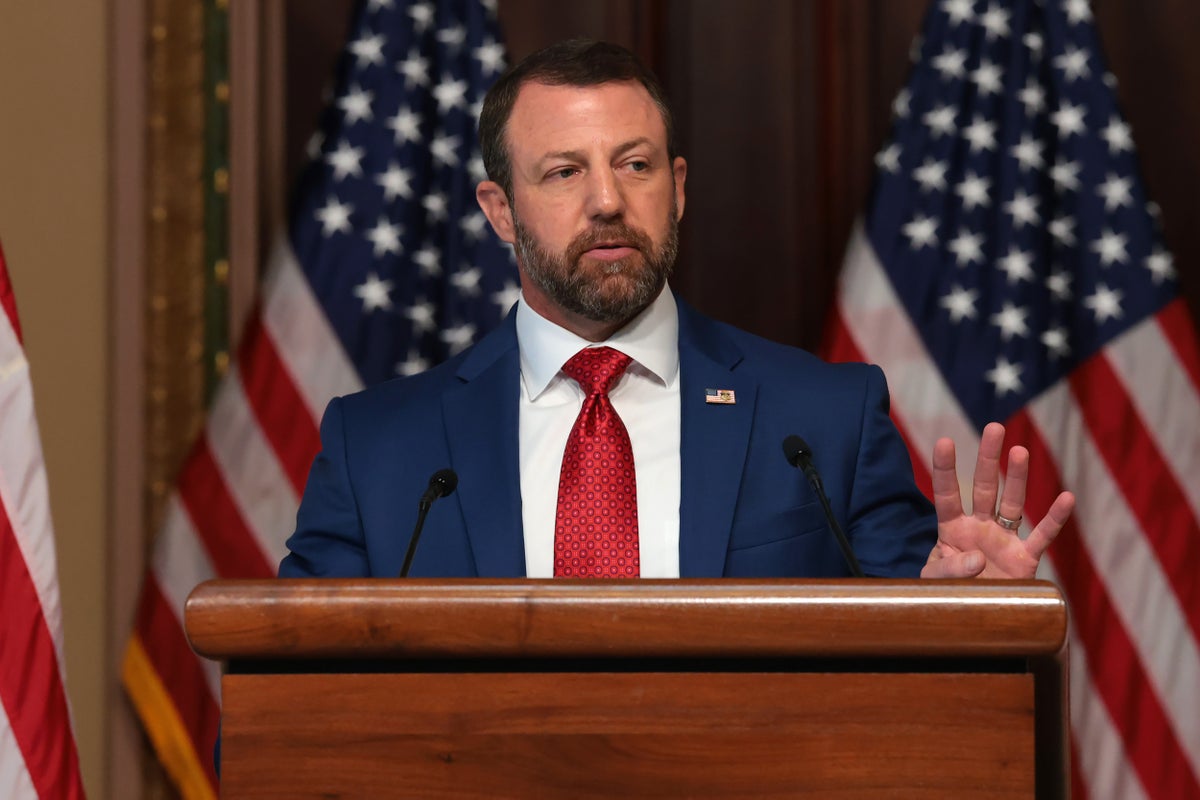
The Department of Homeland Security has allocated $20 million toward campaign-style advertisements praising President Donald Trump, drawing widespread backlash from both Republicans and Democrats who argue the move misuses taxpayer funds and likely violates anti-propaganda laws.In a letter sent Tuesday to Homeland Security Secretary Markwayne Mullin, two top Democratic senators stated that the money was drawn from Trump's "One Big Beautiful Bill" and was originally designated for U.S. Customs and Border Protection."We should not have to remind you that using government funding to create or air political ads like the ones that have been running over the last few days is illegal and a shockingly corrupt misuse of taxpayer dollars," wrote Sen. Patty Murray of Washington, the top Democrat on the Senate Appropriations Committee, and Sen. Chris Murphy of Connecticut, the ranking Democrat on the subcommittee overseeing Homeland Security funding.Writing to Mullin, the senators demanded responses within the next 48 hours detailing "how this president is literally stealing their tax dollars to air campaign ads celebrating himself."They asked the secretary whether the department plans to spend additional federal resources on airing these broadcasts or creating new ones, while requesting that contracting information be shared with Congress. The lawmakers also asked Mullin if he had spoken directly with Trump regarding the use of public funds for the advertisements.The White House has defended the spots, which explicitly disclose that they are financed by the U.S. government, classifying them as public service announcements (Getty Images)The political fallout surrounding the flattering spots, which began airing last week during high-profile college and National Football League telecasts, shows no sign of waning as critics across the spectrum voice concern over public spending so close to the midterm elections.The White House has defended the spots, which explicitly disclose that they are financed by the U.S. government, classifying them as public service announcements.Ad spend is up to $2.5m as criticism and legal scrutiny growThe unusual commercials, which echo the GOP's midterm election slogans, against imagery of Trump's tenure in office — one with a “Love me, Love me” song refrain in the background — appear to violate a law against congressionally appropriated funds being used for propaganda. Experts also have said the ads, which are airing on network and cable TV and streaming, differ from other administrations’ PSAs because they aren’t designed to help Americans access any specific program.Over the weekend, a new ad promoting the president resembles a black-and-white video from his own 2024 campaign that shows Trump walking down a hallway as his voice can be heard warning of a “final battle” against “globalists” and “warmongers.” It ends with Trump staring straight into the camera lens with the “Paid for by the U.S. Government” message printed.Sen. Thom Tillis, a Republican from North Carolina, compared Trump's ads to those used by authoritarian former leader Viktor Orban of Hungary. Senate Majority Leader John Thune, a Republican from South Dakota, said it “shouldn’t be paid for with taxpayer dollars.”Data from the outside firm AdImpact shows more than $2.5 million was spent on the three ads over the past seven days. The actual amount spent could be significantly more, depending on whether networks classified the ads as political.The senators said that DHS has committed $20 million to the campaign.A person who was unauthorized to discuss the situation and granted anonymity confirmed the findings, which were first reported by the Wall Street Journal.Trump's ads use taxpayer dollars, likely skirting the lawThe unusual ad campaign comes as Republicans face an increasingly volatile midterm election season with their control of the House and Senate — and Trump's future agenda — all at risk.Voters say they are struggling with high prices of gas and groceries, and are concerned about the lengthy U.S. war against Iran, now in its seventh month. Democrats are gearing up for vast oversight of Trump and his administration if they seize power, and impeachment is not off the table.House Democrats said Trump's director of the Office of Management and Budget, Russ Vought, moved the money from Homeland Security to the ad campaign on Sept. 19.The Homeland Security funds are part of a whopping $175 billion Congress gave the department in the “Big, Beautiful, Bill” as part of his immigration enforcement and deportation agenda. Democrats voted against that package, which Trump signed into law last summer, in part because of its steep cuts to Medicaid and the Supplemental Nutrition Assistance Program, known as SNAP.Rep. Rosa DeLauro of Connecticut, the top Democrat on the House Appropriations Committee, and Rep. Henry Cuellar of Texas, the ranking Democrat on the Homeland Security subcommittee, said that after gutting $1 trillion from Medicaid and social services and “more than quadrupling funding for mass deportations, it turns out the Trump administration used Republicans’ One Big Beautiful Bill to pay for President Trump’s political ads.”They said when Democrats regain control, they "will work to uncover and reverse misuses of taxpayer money like this and hold those who abused their power accountable.”What's also striking about the administration's use of taxpayer dollars for the ads is that Trump's own political campaign committee MAGA Inc. is sitting on hundreds of millions of dollars of funding that could be used during the midterm season. Groups aligned with MAGA Inc. have started shelling out funds for the House and Senate races.The administration has defended the use of the taxpayer dollars for the ads and shown no signs of changing course.
Homeland Security tapped $20 million in taxpayer funds for pro-Trump ads
Full Article
Original Source
Read the full article at Independent →KhanList aggregates and links to publicly available news content. We do not host full articles from third-party sources. Always verify important information with original sources.