
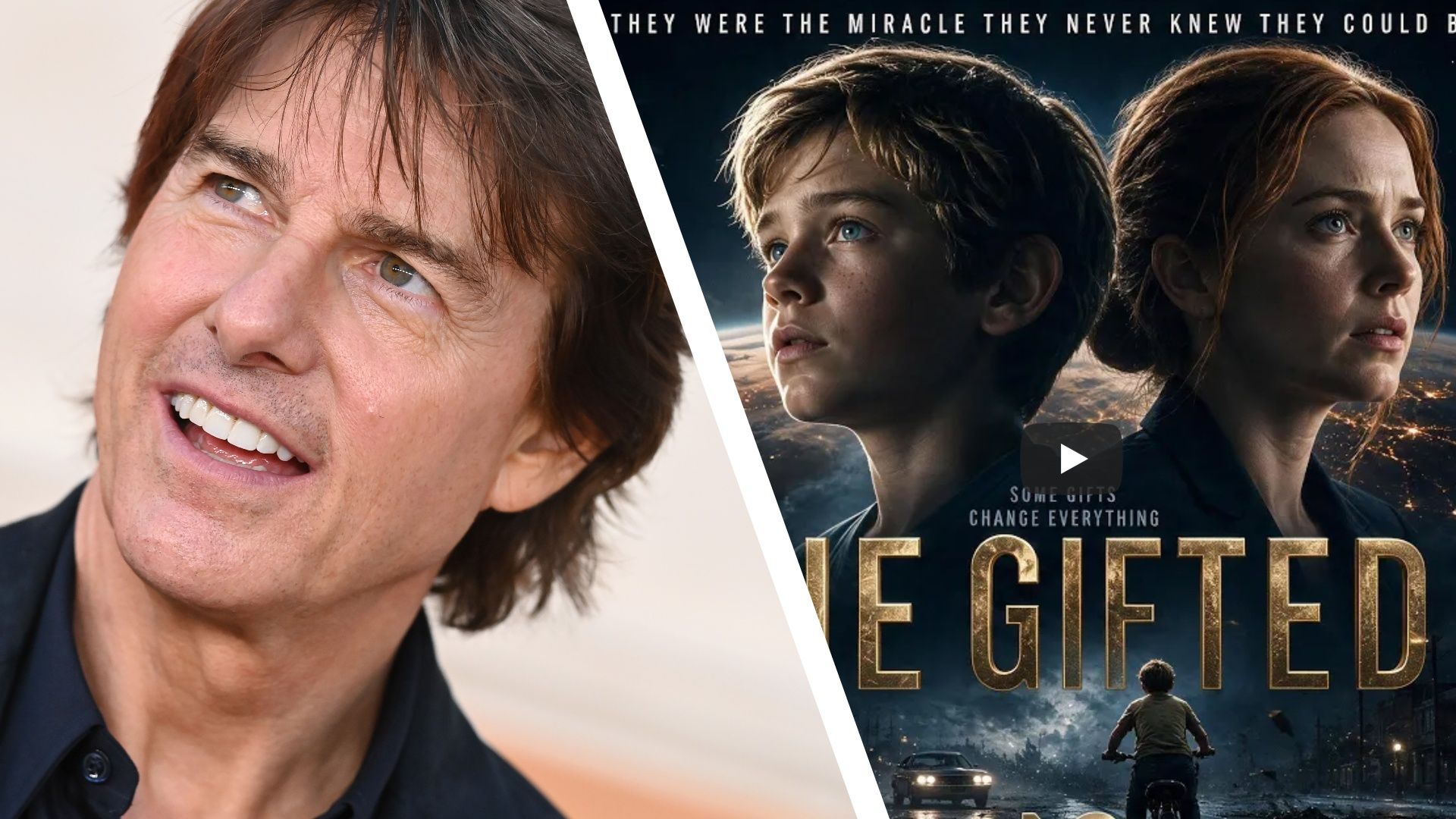
(Image credit: Getty Images / FilmMagic / The Gifted) If you ever need a sign that AI is coming for Hollywood then it must be that Jeffrey Katzenberg, the veteran Hollywood executive who co-founded Dreamworks, has just announced that he’s launching an AI-focused studio.Crucially, he told The Wrap that AI output was “slop” until very recently, but that in the last couple of months something has changed. Now he wants to make feature films and TV with AI, arguing that falling production costs will mean more films and new forms of storytelling.At the same time The Gifted, an AI-generated trailer, has just won a competition that puts $2.5m towards turning it into a proper feature film. Future Vision XPRIZE is one of the world's largest film competitions for hopeful and optimistic science fiction filmmaking that answers the question: what does a future worth building actually look like?You can watch the trailer for The Gifted here. The Gifted. #FutureVisionXPRIZE - YouTube Watch On Unfortunately, the industry focus on AI seems to be happening at exactly the same time that the audience is being turned off by it.Filmustage, a movie production planning platform, analyzed Google Trends data and found searches rising on both sides of the AI debate. It found that the phrase “movies with no AI” was up 345% in the past month, while “movies made with AI” was up 112% in the same period.Google Trends percentage increases can often be massive, so we shouldn't read too much into the numbers themselves, but the overall trend is upwards. The motivations behind those searches may be very different, but both suggest audiences increasingly want to know one thing before they watch: was AI involved?Sign up for breaking news, reviews, opinion, top tech deals, and more.I don't think it's hard to understand why. You only have to look at an AI film to understand why people have reservations.You can judge the trailer for The Gifted yourself, but while it may be a stunning technical achievement that AI has made this three-minute video, if I’m judging it as a movie trailer… then I don’t want to watch the movie.The flaws are obvious. AI is clearly very good at spectacle: lightning, explosions, collapsing buildings and impossible camera angles. Not to mention lead characters who look almost like famous actors you know, but not quite. (Is that Amy Adams in The Gifted's poster? No, it's not quite Amy Adams.)The harder test is whether it can sustain believable characters, performances and emotional continuity for two hours rather than three minutes. If it does, then it's going to need much better dialogue than what's presented here.I remember watching the pure-AI film Hell Grind in a theater recently, and that just about kept my attention for its 90-minute duration, but I was ready for it to be over by the end. It also played to AI’s strengths, by not trying to make its world look ‘real’. It's when AI pretends to be real life that I think it falls down the most.Pure AI films... still look like AI Tom Cruise thinks “people want to see real things”, even in the age of AI. (Image credit: Getty Images / FilmMagic)Actors, perhaps seeing a future in which their skills are not as widely appreciated, are famously against AI, but even they seem to have accepted the overall trend towards it now.As Deadline reports, Tom Cruise earned spontaneous applause for a six minute speech during a recent BAFTA “Life in Pictures” conversation in London. Cruise talked about how AI “is coming”, but “people want to see real things”.“There is nothing like human” said Cruise, citing a summer of blockbuster films as proof that “people want human experience.”From what I've seen of AI movies, I'd say Cruise is exactly right. AI still can't produce an experience that looks human and the connection to the audience that goes along with that. But with even Tom Cruise acknowledging that AI is coming, and executives like Katzenberg jumping on board, AI movies seem almost inevitable now, especially with the saving in production costs that they bring with them.But while AI might be economical, it definitely has its problems, and if people are already searching for “movies with no AI” then Hollywood has a branding problem before the AI movie era has even properly begun. The upcoming movie Cortés from Utopai Studios. Set in 1519, the historical epic follows Hernán Cortés during the Spanish conquest of the Aztec Empire. (Image credit: Utopai Studios)But perhaps before we assume that AI in films means the end to human actors and an influx of AI slop, let’s talk to one of the AI studios making waves at the moment, Utopai Studios, who creates original films and television series using their own proprietary PAI software.I talked to Kevin Chong, Chief Commercial Officer at Utopai Studios.“We don’t think of AI films as a separate genre”, explains Chong. “AI is another tool filmmakers can use to tell stories, just as visual effects, digital cinematography and virtual production became part of the filmmaking process. It can help filmmakers create worlds, achieve a level of scale that might otherwise be difficult or prohibitively expensive, and give creators more choices.”And what about the end of human actors? “At Utopai Studios, we don’t see AI as a replacement for human actors, and that isn’t the future we’re building toward”, Chong explains. “There may be stories where a completely synthetic character makes sense creatively, just as animation has always created characters that don’t physically exist. But that is very different from saying audiences are going to stop wanting human performances.“Performance is one of the most human parts of filmmaking”, Chong continues. “Actors bring interpretation, emotion, instinct and life experience to a character in ways that are fundamental to storytelling. AI can become another part of the filmmaking toolkit — including helping extend performances, create environments or enable things that would be difficult to achieve traditionally — but the creative decisions still need to come from people.”Tom Cruise is right: there is nothing quite like human, but perhaps there will be a way for humans and AI to coexist in the future of movies after all. Follow TechRadar on Google News and add us as a preferred source to get our expert news, reviews, and opinion in your feeds. Graham is the Senior Editor for AI at TechRadar. With over 25 years of experience in both online and print journalism, Graham has worked for various market-leading tech brands including Computeractive, PC Pro, iMore, MacFormat, Mac|Life, Maximum PC, and more. He specializes in reporting on everything to do with AI and has appeared on BBC TV shows like BBC One Breakfast and on Radio 4 commenting on the latest trends in tech. Graham has an honors degree in Computer Science and spends his spare time podcasting and blogging.
Hollywood is betting big on AI movies — just as audiences turn against them
Full Article
Original Source
Read the full article at Techradar →KhanList aggregates and links to publicly available news content. We do not host full articles from third-party sources. Always verify important information with original sources.