
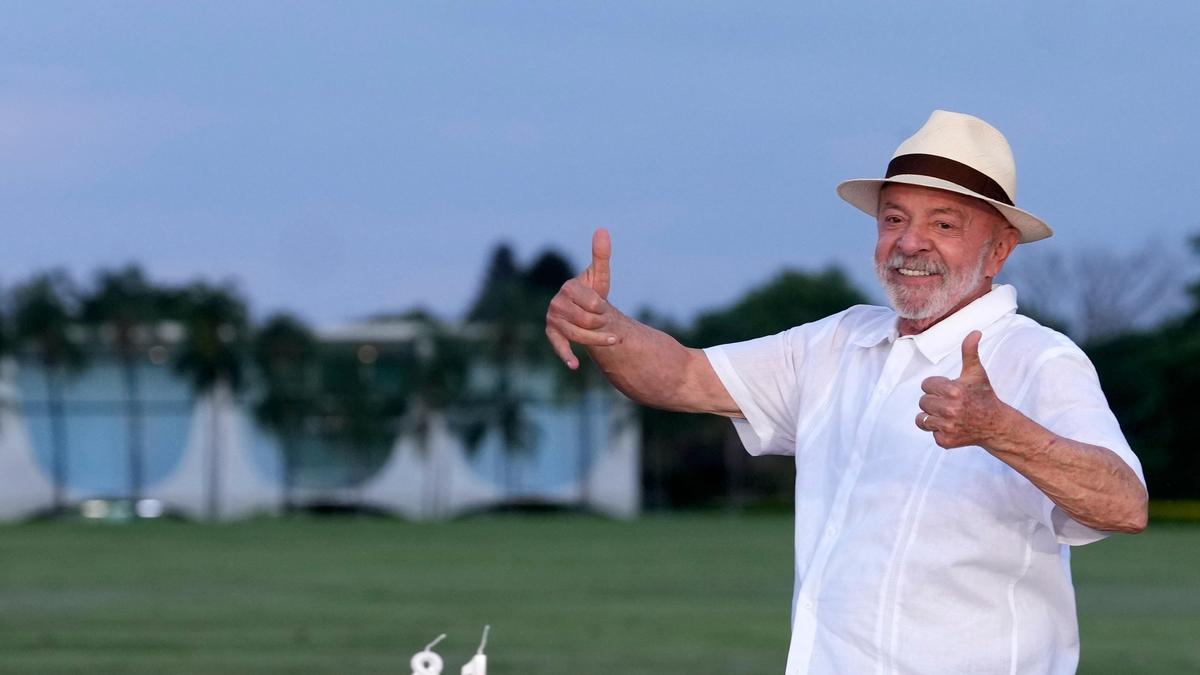
Brazilian President Luiz Inacio Lula da Silva gives two thumbs up to supporters during a celebration of his 81st birthday outside the official presidential residence at Alvorada Palace in Brasília, Brazil, Tuesday, Oct. 27, 2026. | Photo Credit: AP At the end of the first round of Brazil’s presidential elections, Luiz Inacio Lula da Silva looked like a leader on his way out after a record third term. He trailed Flavio Bolsonaro by 45.2% to 47%, hurt by an abstention rate of 21%, the highest since 1998, as many of his supporters stayed home.In the three weeks that followed, Mr. Lula managed a remarkable turnaround, helped by several factors. First, the day after the first round, thousands of students from the Fluminense Federal University marched through the streets of Niteroi to stand against Bolsonarism. Days later, thousands more young people occupied Candelaria Square in Rio de Janeiro. Similar student, youth and workers’ marches soon spread across urban Brazil. The protesters gathered without party banners, united less by support for Mr. Lula than by opposition to Bolsonarism, a far-right movement opposed to institutions, supportive of high-handed actions against crime and eager to curtail civil liberties. The newspaper O Globo described the marches as the Left’s return to the streets after more than a decade of absence. Published - November 01, 2026 10:41 pm IST
Historic win, humongous challenges
Full Article
Original Source
Read the full article at Thehindu →KhanList aggregates and links to publicly available news content. We do not host full articles from third-party sources. Always verify important information with original sources.