
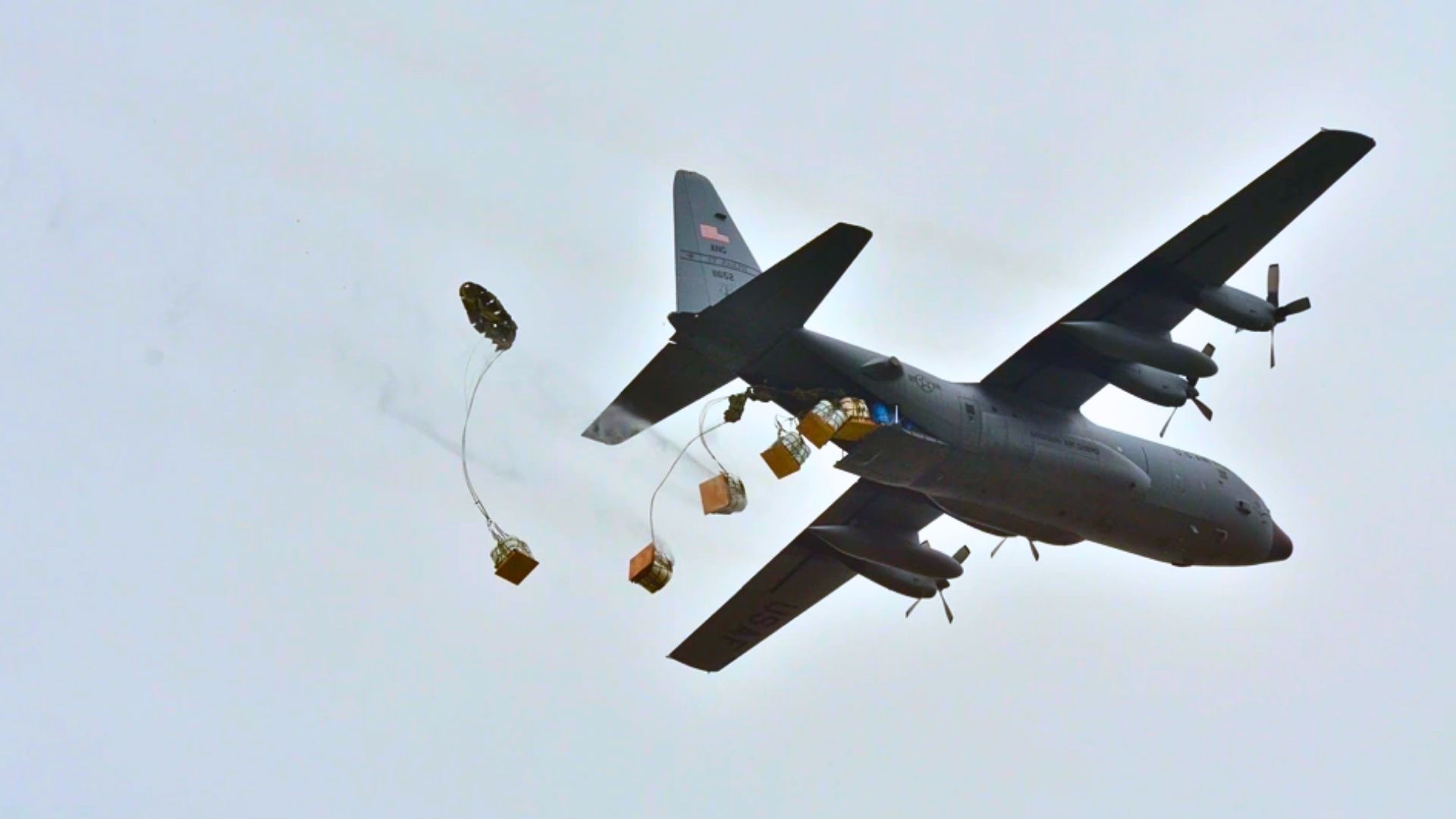
HII is researching new ways to deliver supplies and personnel to U.S. Army troops by air, including autonomous and precision-guided systems that could operate from both crewed and unmanned aircraft. The company’s Mission Technologies division received a five-year task order to advance cargo and personnel airdrop and combat-feeding technologies. The work will focus on improving reliability, safety, and interoperability while adding sensing, autonomous capabilities, and cybersecurity protections. HII announced the award September 15. Airdrop is becoming a smarter logistics system The Army already uses autonomous precision airdrop technology, but increasingly difficult operating environments are pushing the technology further. Its Joint Precision Airdrop System (JPADS), for example, uses an autonomous guidance unit to steer a parafoil toward a designated landing point. In a February 2026 demonstration at Joint Base Lewis-McChord, the Army described JPADS as a self-steering, GPS- and vision-guided system capable of landing within 100 meters of its target. The Army is separately developing newer JPADS configurations that can operate when GPS is unavailable or disrupted. Its 2026 budget documents describe work on JPADS V4 and a long-range version, including GPS-denied technologies and a planned increase in delivery range from roughly 15 miles to several hundred miles. HII’s new task order does not specifically identify JPADS. Instead, it covers broader research into cargo and personnel airdrop systems, including precision-guided and conventional delivery technologies. Why autonomous resupply matters The problem is straightforward. Troops operating far from established bases still need food, ammunition, medical supplies, and other equipment, even when roads are damaged or conventional supply routes become too dangerous. Airdrop can bypass some of those problems by delivering supplies directly from aircraft. But precision becomes increasingly important when aircraft cannot safely fly directly over a destination or when troops are operating from small, dispersed positions. Longer-range autonomous systems could allow an aircraft to release a payload well away from the intended landing area and let onboard guidance steer it toward its destination. The Army’s Long-Range JPADS program, for example, is pursuing a system that can deliver at least 700 pounds over 250 nautical miles. That creates another set of engineering challenges. A system must estimate its position, account for wind and other environmental conditions, control the parachute or parafoil, and reliably reach the intended landing zone. If satellite navigation is disrupted, alternative sensors and navigation methods become important. The Army has already been testing such concepts. During African Lion 26 in Morocco in April, U.S. and Moroccan forces conducted JPADS training focused on delivering supplies in austere environments. HII’s research will extend into areas beyond navigation. The company says it will examine how airdrop equipment can work across different aircraft and systems, while improving resilience against environmental and operational threats. The inclusion of cybersecurity also reflects the growing software content of modern logistics systems. As more functions become automated and connected, protecting the systems responsible for navigation, sensing and coordination becomes part of ensuring that supplies actually reach the troops they’re intended for. The Information Analysis Center awarded the task order through a Multiple Award Contract administered by the Defense Technical Information Center for the Army’s Combat Capabilities Development Command Soldier Center. HII says it already has nearly 60 active task orders under the program.For an Army increasingly preparing to sustain dispersed forces in environments where traditional logistics can be vulnerable, making airdrop systems more accurate, autonomous, and resilient could become an important part of keeping soldiers supplied.Get the latest in engineering, tech, space & science - delivered daily to your inbox.Kaif Shaikh is a journalist and writer passionate about turning complex information into clear, impactful stories. His writing covers technology, sustainability, geopolitics, and occasionally fiction. A graduate in Journalism and Mass Communication, his work has appeared in the Times of India and beyond. After a near-fatal experience, Kaif began seeing both stories and silences differently. Outside work, he juggles far too many projects and passions, but always makes time to read, reflect, and hold onto the thread of wonder.
HII to develop smarter airdrop systems for US Army troops in danger zones
Full Article
Original Source
Read the full article at Interestingengineering →KhanList aggregates and links to publicly available news content. We do not host full articles from third-party sources. Always verify important information with original sources.