
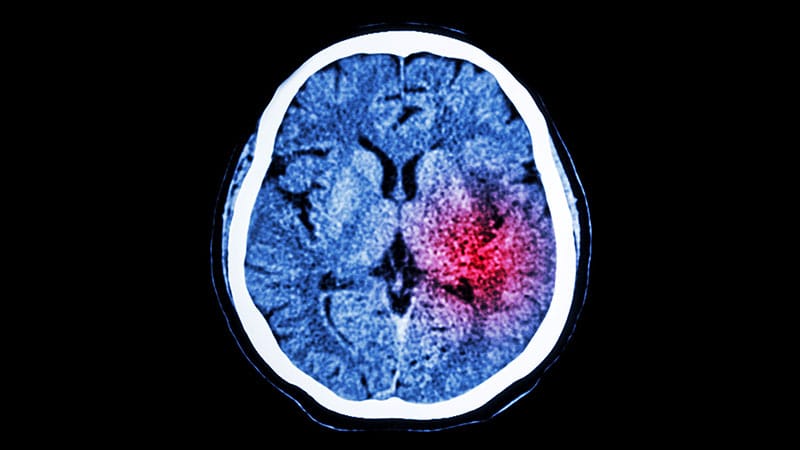
TOPLINEYoung adults (aged 18-49 years) who survived ischemic stroke and received antithrombotic therapy had a cumulative bleeding risk that exceeded the risk for recurrent vascular events over long-term follow-up, a cohort study showed.METHODOLOGYResearchers conducted a cohort study using data (2013-2021) from ODYSSEY, a prospective, multicenter cohort study conducted across 17 hospitals in Netherlands. They included 1226 adults aged 18-49 years who had a first-ever transient ischemic attack or ischemic stroke confirmed using neuroimaging (median age at index event, 44 years; 52% men) and who survived beyond 30 days of the event.At discharge, 91.9% received antiplatelet therapy (13.6% received dual antiplatelet therapy), 5.1% oral anticoagulants, and 2.4% other antithrombotic regimens.Researchers assessed the occurrence of any bleeding event that needed medical evaluation. Events were identified using annual questionnaires and confirmed through medical records or by contacting the general practitioner who treated the patient; they were then classified using the Bleeding Academic Research Consortium scale and categorized by mechanism and anatomic site (intracranial, intraocular, nasal, gastrointestinal, pulmonary, urogenital, gynecologic, or soft tissue).The risk for bleeding was compared with that for recurrent vascular events. The median follow-up duration was 4.2 years.TAKEAWAY129 patients had at least one bleeding event during follow-up, with an overall incidence rate of 2.5 events per 100 patient-years and an estimated 5-year cumulative risk of 10.7%. The overall bleeding rates were more than double in patients on oral anticoagulants vs antiplatelets (5.2 vs 2.3 events per 100 person-years).The cumulative bleeding risk surpassed the riskt for recurrent vascular events for antiplatelet users at 6 years (14.7% vs 12.9%) and for oral anticoagulant users at 5 years (24.0% vs 23.6%).Female sex was independently associated with an increased risk for bleeding (hazard ratio [HR], 3.39; P < .001), primarily driven by gynecologic bleeding (3.1 events per 100 person-years). Cardioembolic stroke cause was independently associated with a higher risk for bleeding (HR, 2.17; P = .02), even in the subgroup analysis involving patients on antiplatelet therapy (HR, 2.27; P = .01). Oral anticoagulant therapy was also independently associated with an increased risk for bleeding (HR, 3.07; P = .008).Only 6.2% of patients had a major bleed and the two reported deaths were attributable to recurrent vascular events, not bleeding. No patient discontinued antithrombotic therapy due to bleeding.IN PRACTICE"These findings indicate that young stroke survivors receiving antiplatelet or anticoagulant therapy face a substantial long-term risk of bleeding, which should be taken into consideration when evaluating the risks and benefits of long-term antithrombotic therapy," the investigators wrote.SOURCEThe study was led by Anne Rasing, MD, Radboud University Medical Centre, Nijmegen, Netherlands. It was published online on September 24 in JAMA Network Open.LIMITATIONSThe study was limited by potential underreporting of bleeding-related complications, leading to information and recall bias. Additionally, the study lacked data on the severity of recurrent vascular events, medication adherence, and functional recovery after recurrent stroke and bleeding events.DISCLOSURESThe study was funded by the Dutch Heart Foundation. Disclosure information for the study investigators is available in the original study publication.This article was created using several editorial tools, including AI, as part of the process. Human editors reviewed this content before publication.
High Bleeding Risk Among Stroke Survivors on Antithrombotics
Full Article
Original Source
Read the full article at Medscape →KhanList aggregates and links to publicly available news content. We do not host full articles from third-party sources. Always verify important information with original sources.