
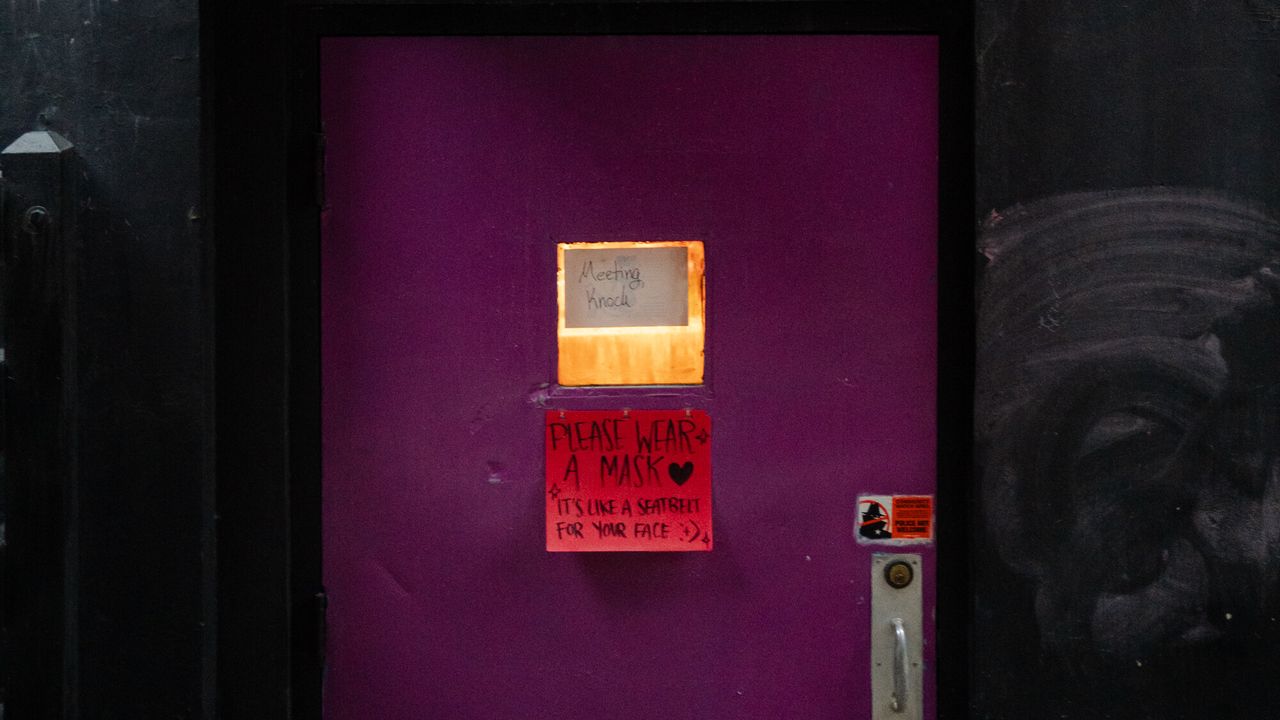
By September of this year, Jackie Matellian had spent months living in her truck while working several jobs to keep Last Ditch, a lesbian bar in Greenfield, Massachusetts, open. She was the last remaining original founder, and the bar was in deep financial trouble. According to reporting by The Boston Globe, workers had gone unpaid, Matellian was carrying a $50,000 startup loan, and the landlord wanted $3,900 in overdue rent.Last Ditch had been built to do things most bars don't even attempt. It welcomed lesbians, transsexuals, and other queer people who couldn't afford the cover, offered a free store with food, clothing and harm-reduction supplies, and required KN95 masks or better. For immunocompromised patrons, those precautions made it possible to have a night out without gambling with their health. The bar's radical inclusiveness was part of why people cared about it—and part of what its owners were struggling to finance it.Desperate for cash, the bar’s management announced a policy shift with a cheery Instagram post: Saturday nights would become mask-optional. The gamble backfired. By treating accessibility as negotiable, the bar alienated immunocompromised regulars without attracting enough new customers to pay the rent. Follow-up stumbles culminated in a marathon three-and-a-half-hour community meeting that collapsed without a resolution. Rather than saving the venue, the policy pivot left Last Ditch with the worst of both worlds: fractured community trust and an unresolved financial crisis.The drama became national entertainment, right up until October 26, when Last Ditch announced its soft closure.With great food and a gender-inclusive approach, these new businesses are challenging the notion that lesbian bars of the past closed because they were no longer wanted—or needed.The spectators moved on, but one issue remains: expecting one struggling lesbian bar to compensate for the failures of an entire social infrastructure is absurd. The irony is that Western Massachusetts built the blueprint for combating exactly this.Women in the area have been finding ways to share the costs of lesbian social life for decades. UMass Amherst documents more than 400 lesbian and feminist groups active in the region between 1968 and 1978. Northampton had the Common Womon Club, Lesbian Gardens, Womonfyre Books, and the Nutcracker's Suite self-defense dojo. These were places women built to make their social lives and organizing possible outside institutions that routinely excluded them.In 1976, the women behind Common Womon pooled money to buy property through Ceres Inc., the nonprofit they'd formed, then financed renovations with help from donations and a loan. The adjacent storefront provided rental income and housed the Nutcracker's Suite, then Womonfyre Books, so control of the property also gave the women a way to make room for other projects and help pay for the place they shared. Common Womon also collected sliding-scale membership dues, while the Valley Women's History Collaborative lists benefits for the Common Womon Club that helped keep it going.The womon-spelling and the names are fun to inherit; I also want us to inherit the ability to put actual premises under our control. For Last Ditch, that begins with finding out whether a new set of owners can remain in the building on terms the business can afford.Matellian had already told the Globe she planned to turn the bar into a cooperative. For that to relieve the pressure on her, new members would need to take responsibility for work she'd been doing and agree on how the existing debt would be handled. But calling it a cooperative wouldn't do much for Matellian if she was still the person everyone called whenever something went wrong. Sharing authority has to include sharing responsibility for the work, with limits on what any one person is expected to carry.Sharing ownership would give people more power over decisions and occasions to disagree about them. Common Womon closed in 1982, while Womonfyre lasted until 1989. Womonfyre faced harassment and threats from outside the lesbian community as well as conflicts over sexual politics and what the shop should sell. Its archive preserves those disputes alongside bank statements and instructions for running the store.A cooperative at Last Ditch would need procedures for making decisions in tandem with conflict resolution. Which is why I like that the Womonfyre archive makes room for instructions on running the shop alongside political disputes. A disagreement over how to run a bar doesn't become abuse because people are arguing. Treating every conflict as a verdict on someone's character makes it harder to agree on a change, because the argument can continue long after the conduct has stopped or the policy has been reversed.Making that possible at Last Ditch requires paid training and a written account of all this work. A cooperative whose members can debate the mission for four hours but can't cover a shift or pay its debt will end up crushing the same woman behind the bar.If Last Ditch is to survive, its next incarnation must trade endless character trials for operational infrastructure: shared labor, transparent books, and creative financing strategies.If one thing the Globe’s reporting revealed, it is that one commercial bar bearing the weight of an entire community's social safety crushes everyone under impossible expectations. Instead, we must look for ways to anchor the politics in practical economics, share the burden, and build a room strong enough to hold the argument without tearing down the house.Anyone asking the community to save Last Ditch needs to be prepared to share control of what survives.
Hidden in the Viral Last Ditch Debacle: How to Keep Lesbian Bars Alive
Full Article
Original Source
Read the full article at Bonappetit →KhanList aggregates and links to publicly available news content. We do not host full articles from third-party sources. Always verify important information with original sources.