
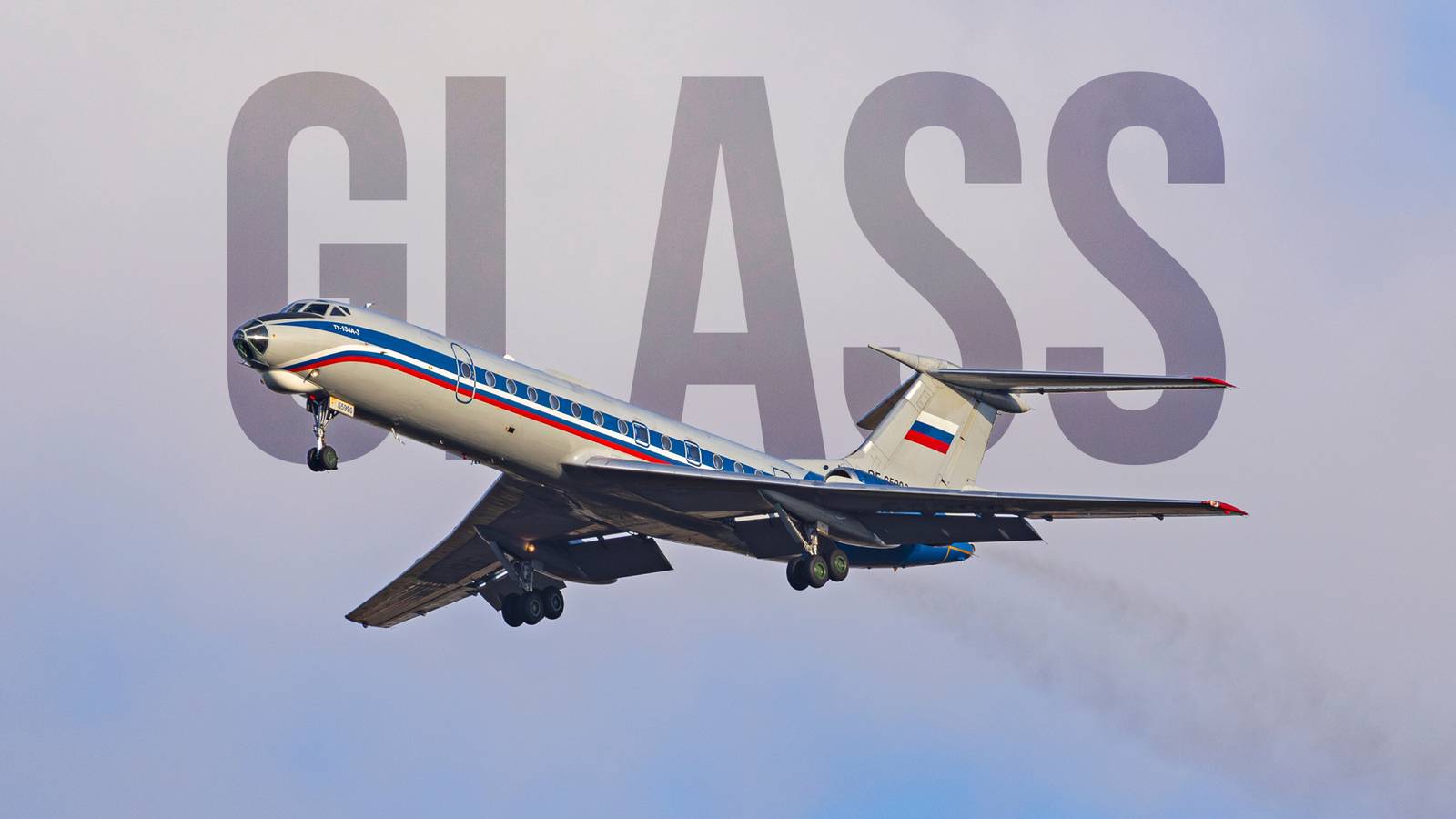
Published Oct 4, 2026, 5:15 AM EDT Aaron is an aviation enthusiast and world traveler with a deep interest in aerospace history and technology. He has traveled around the world numerous times, often incorporating visits to aviation museums and historic aircraft collections into his journeys. A native of New Zealand, he is an expert in aviation and maintains a broad interest in a variety of other subjects. The fierce competition of the Cold War saw the Soviet Union copy or develop analogues to many Western aircraft (Concorde vs Tu-144, B-29 vs Tu-4). However, the Soviets also came up with their own unique innovations and characteristics. For example, Soviet/Russian military aircraft are famous for their turquoise or blue-green cockpits. Look at some Soviet/Ukrainian/Russian aircraft (IL-76s, some Antonov series, and early Tu-134s), and one will notice glass noses. The reason is a combination of the Soviets being technologically weaker in navigation and avionics, operating in a vast, sparsely populated region, often with minimal infrastructure, and other reasons. Soviet aircraft are famously rugged compared with their Western counterparts, being designed for austere conditions. However, rugged is not the same as durable, and US fighter jets and other aircraft are typically considered to have longer service lives if maintained properly. Let's examine why Soviet aircraft often have glass noses. Anglo-American & German Second World War Bombers Had Glass Noses Credit: US Air Force During the Second World War, it was common for some British, American, and German bombers to have glazed or transparent forward sections (glass noses). This was typically for bombardiers and navigators. At that time, bombardiers had to aim bombs visually using bombsights like the Norden, and navigators had to use visual landmark navigation. Perhaps the best-known German example was the Heinkel He 111, whose greenhouse nose provided great forward and downward visibility for the bombardier and navigator. Other German aircraft also had them, such as the Junkers Ju 88 and the prototype Amerikabomber Messerschmitt Me 264. British Second World War bombers had them, like the Avro Lancaster and Handley Page Halifax. Some post-war British aircraft also continued to have glass panels in the nose, such as the Blackburn Beverley and Armstrong Whitworth Argosy. Likewise, it was common for heavy and medium US bombers to have glazed noses for the bombardier (B-17, B-24, B-25, B-29). This continued into the early Cold War with aircraft like the Boeing B-47 Stratojet and Douglas A-3 Skywarrior retaining a glazed navigator and bombardier section. However, by this time, they were on their way out, and the B-52 (designed in the late 1940s and early 1950s) did not come with a traditional glass nose, relying on radar for navigation and bombing. Why The Soviet Union Retained Glazed Noses Credit: Karolis Kavolelis | Shutterstock By the 1950s, Western aircraft had increasingly replaced older human visual observation with radar, enclosed avionics bays, and electro-optical systems. However, Soviet aircraft continued to be influenced by a different philosophical logic. It was rooted not only in the Soviet Union's relative backwardness in radars and avionics, but also in navigation philosophy, operational requirements. The fact that some transport and passenger aircraft were built with a secondary military role in mind also played a role. Old bombing and navigation doctrines lasted longer in the Soviet Union, as it took a different path in radar and sensor development, and had a slower adoption of highly integrated avionics. The Soviets chose to retain a separate glazed compartment for the bombardier, navigator, reconnaissance observer, and attack coordinator on some of its aircraft. The crew often needed to be able to visually acquire the target, see the stars for navigation, manually aim bombs, or even see if there was ice below. Western air forces soon relied on radar-guided bombing, terrain-following radar, computerized systems, and later GPS-guided weapons. The nose region became a valuable space for radar arrays, avionics, ECM systems, and other equipment. The Soviet Union Lagged Technologically Credit: Fasttailwind | Shutterstock Military aircraft are complicated machines, and technological advancement is a defining attribute. Through the Cold War, the Soviet Union lagged in many aspects of technological development. However, this is nuanced and uneven. The Soviets built many impressively aerodynamic aircraft, came up with novel designs, built excellent SAM systems, and excelled in some other areas. But the Soviets did lag significantly in miniaturized electronics, digital avionics, compact radars, and integrated sensor fusion. The gap remains today. Whereas the US and Lockheed will emphasize the stealth, situational awareness, 'god's eye view,' the sensor fusion, and networking of the F-35, the Russians will emphasize the aerodynamic performance of the Su-57. Select bombers with glass noses (per USAF Museum) United States B-17, B-24, B29 United Kingdom Avro Lancaster, Handley Page Halifax Germany Heinkel He 111, Messerschmitt Me 264 Soviet Union Tu-4, Tu-16, Tu-142, Tu-95, early Tu-22s, Il-76 (strategic airlifter) At the same time, this shouldn't be overstated, as Russia has worked to narrow some gaps (such as by adding AESA radars to Su-57s), while the F-22 was also designed for super maneuverability. The Soviet Union's lag in avionics was a major factor in forcing it to retain larger crews for longer, use more manual backup systems, and rely on human observation for navigation. Again, this lag can be seen in Russian jets today. In 2022, it was widely reported that Russian Su-34 fighter-bombers were filmed with commercial GPS gadgets duct-taped to their dashboards, per Business Insider. At least anecdotally, this could suggest the Russian pilots had less confidence in their sovereign GLONASS GNSS alternative to the US-run GPS. Soviet Bombers With Glazed Noses Credit: US Air Force There are three types of Soviet/Russian/Ukrainian aircraft with glazed noses: bombers, military transports, and early commercial airliners. Perhaps the most recognizable Soviet bomber with a glazed nose is the Tupolev Tu-95 'Bear' turboprop strategic bomber, although its glazing changed over time with upgraded variants. The Tu-95 can be understood as a turboprop counterpart to the United States B-52 bomber. The Tupolev Tu-142 also had a glazed nose. It wasn't the only Soviet bomber with a glazed nose: the even older Tupolev Tu-4 did, although that was a darkly comedic and painstakingly literal copy of the B-29 Stratofortress. The indigenous Soviet Tupolev Tu-16 'Badger' also had a glass nose. The Tu-16 is particularly significant as the Chinese Xi'an H-6 variant remains China's only type of strategic bomber. Around 1,500 Tu-16s were built between 1952 and 1962 (the exact years the B-52 was built) and have been retired from Russian use. The modern Chinese Xi'an H-6 aircraft are highly modernized derivatives and no longer have glass noses. The early Tupolev Tu-22 medium bomber also had some glass panels in its nose, but these are gone in the more modern Tu-22M variant used in the Russian Air Force today. One of the main reasons why Russia keeps glazed noses is for visibility in its remote Arctic and Siberian regions with austere conditions. With that being said, this should not be overemphasized, as US aircraft also had to operate in the Arctic and austere conditions in Alaska, Canada (to some degree), Iceland, Greenland, and Norway. Soviet Transport/Patrol Aircraft Credit: Karasev Viktor | Shutterstock The Soviets developed some patrol aircraft with glass panels in the nose for direct visual observation. Their Beriev Be-12 'Mail' maritime patrol flying boat was one example. One of the most iconic examples with glass nose panels is the Soviet/Russian Ilyushin Il-76 strategic airlifter. The Il-76 is the primary strategic airlifter of the Russian Air Force, while its Il-78 variant serves as its aerial tanker, and the A-50U is the main AWACS aircraft. Russia has relocated Il-76 production from Uzbekistan to Russia and has upgraded the aircraft to the Il-76MD-90A variant. These are in low-rate production and come with glass noses. Notably, modern Western strategic transports (C-17, C-5M, A440M) operate with two-pilot crews (plus loadmasters as needed), while the upgraded Il-76MD-90A remains crew-heavy with a five or six-person crew (two pilots + navigator + flight engineer + others). Other Soviet transport and transport-derived aircraft with glazed noses included the Antonov An-8, An-12, An-22, An-24 (some specialized derivatives), An-26, An-30, An-32, and An-74. Later variants of some of these aircraft removed the glazed noses. These designs were partially influenced by Soviet transports being built for a secondary bombing role. This was a role they were never particularly good at, but could do. Some export customers have used these transports in a bomber role, including Sudan in its ongoing civil war since 2023, as well as in prior Darfur region conflicts. Commercial Soviet Aircraft With Glazed Noses The Soviets also built passenger aircraft with glazed noses. These included the Tu-114/Tu-116 turboprop variants of the Tu-95 bomber and early variants of the Tu-124 and Tu-134. At the time, Soviet civilian aircraft were designed to also have military utility, be able to operate in comparatively austere conditions, and serve in the event of wartime mobilization. This influenced some airliner designs, as the massive state-run Aeroflot airline acted as a strategic reserve airlift pool. Consequently, early Tu-134 variants had a dedicated navigator, a glazed nose, and their navigation systems were reminiscent of bombers. The Tupolev Tu-134 "Crusty" was a twin-engined narrowbody airliner built for short and medium haul and was produced between 1966 and 1989. The final Russian passenger Tu-134 flight took place in 2019, although it remained in commercial service in North Korea's Air Koryo for longer. In 2026, Dallas Analytics reported that Russia is increasingly relying on ostensibly commercial aircraft for its military logistical requirements. This is partly influenced by the need to avoid sanctions when flying internationally, and because of the ongoing collapse in Russia's military transport lift capacity. While Russia has touted domestic Ilyushin replacement aircraft, there are no replacements for its An-series aircraft (An-12, An-26, An-72). Dallas Analytics says the Russian government operates around 368 An-series transports, which may soon be forced to retire as they are becoming infeasible to maintain. When these retire, the age of Russia operating aircraft with glazed noses will mostly contract to the remaining aging Tu-95s and Russia's Il-76 airlifters.
Here's Why Soviet Aircraft Have Glass Noses & Western Jets Don't
Full Article
Original Source
Read the full article at Simpleflying →KhanList aggregates and links to publicly available news content. We do not host full articles from third-party sources. Always verify important information with original sources.