
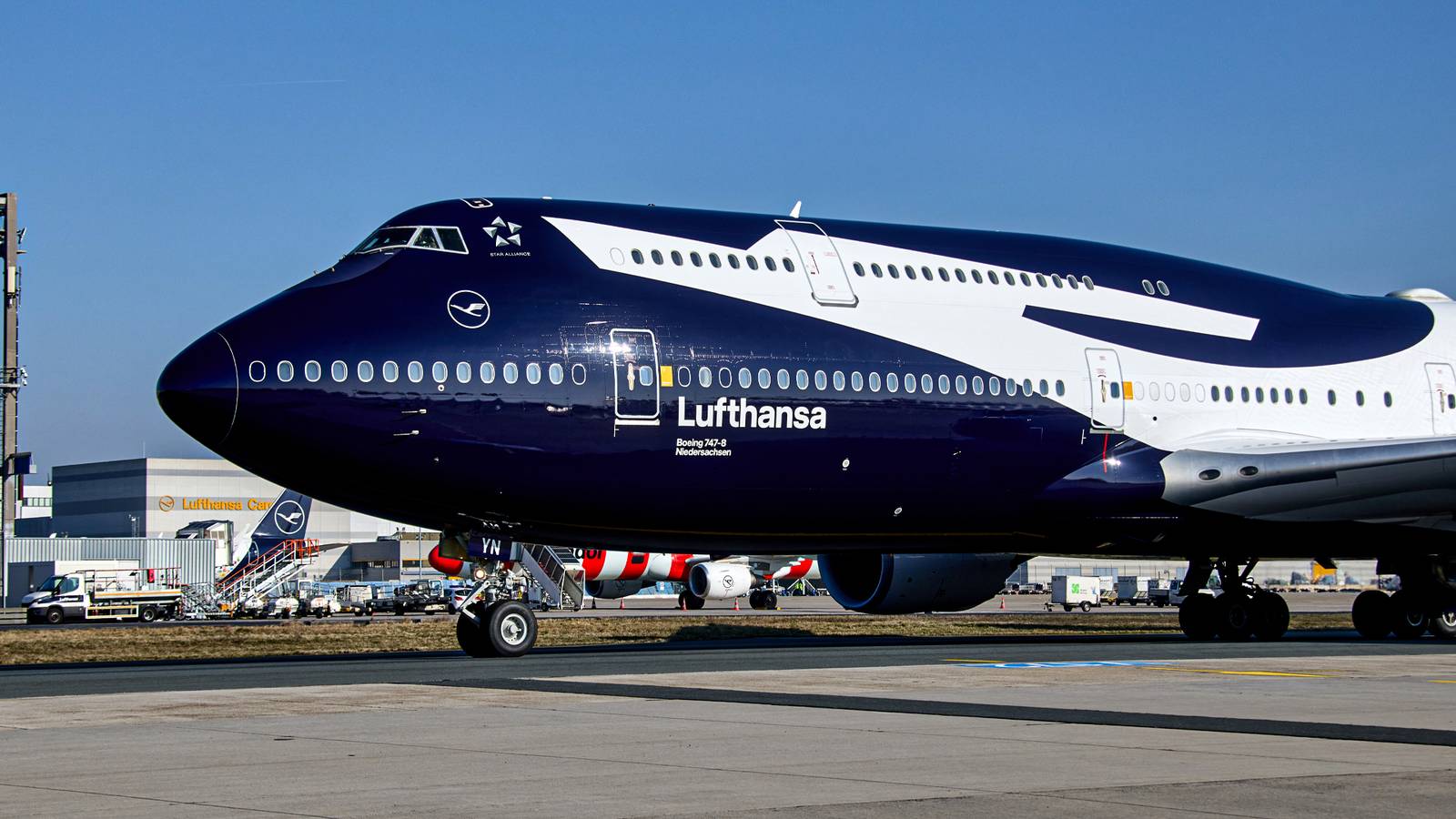
Published Sep 28, 2026, 8:00 PM EDT Based in the UK, Josh is a keen writer with a degree in Military History. Having worked previously as a financial journalist, he has covered the aviation industry extensively, reporting on airlines' results and monthly passenger statistics in the aftermath of the pandemic, alongside the likes of regulation around sustainable fuels, and the prospects for hydrogen-powered commercial flight. He joins Simple Flying with a lifelong love of all things aviation. As manufacturers Boeing and Airbus developed aircraft that could fly farther and farther for longer periods, special considerations had to be made. In particular, dedicated areas for crew members to rest became increasingly important. Naturally, no one could expect pilots or cabin crew to work continuously for hours on end without the prospect of a break, let alone in an area not fit for purpose. That meant cleverly building suitable compartments into aircraft designs where staff could step away to sleep or simply get some time away from the demanding environment of long-haul flights. Key to this was locating these compartments so access was discreet and away from passengers' watchful eyes. In the case of the 747-8, designers came up with an intriguing solution. The Boeing 787-8 & Final Queen Of The Skies Variant Credit: Lufthansa The final and most modern variant of the iconic Queen of the Skies, the 747-8 entered commercial passenger service in 2012 with Lufthansa. Like its predecessors, the model retained the hump at the front of its fuselage that had made the 747 one of the most easily distinguishable aircraft for decades. Beyond its appearance, the 747-8 represented a technological leap over its predecessors. Having officially launched the 747-8 program in late 2005 upon an initial order from Lufthansa for a passenger variant, Boeing set about creating a jet that was larger and more efficient than the 747-400 that had come before it, according to Ready For Take-Off Book. Notably, this included redesigned wings with a larger area and raked wingtips, improving aerodynamic efficiency compared with the 747-400's blended wingtip design. The 747-8 also adopted fly-by-wire technology to cut structural weight, and was equipped exclusively with engines derived from the 787 Dreamliner. These four General Electric GEnx-2B67 turbofans featured composite fan blades, a higher bypass ratio, and chevron nozzles to reduce the noise footprint. Boeing 747-8 Specifications Length 250 feet, 4 inches (76.30 meters) Wingspan 224 feet, 5 inches (68.40 meters) Height 63 feet, 8 inches (19.40 meters) Max Takeoff Weight (MTOW) 975,500 lb (442 tonnes) Max Cruising Speed 572 mph (920 km/h) Max Cruising Altitude 43,000 feet (13,100 meters) Range 8,140 miles (13,100 km) Engines 4 x General Electric GEnx-2B67 All told, Boeing noted that better aerodynamics, new engine technology, and reduced structural weight made the 747-8 about 16% more fuel-efficient per seat than the 747-400. It did not stop there, though. At over 250 feet (76.2 meters), the 747-8’s fuselage was 18.3 feet (5.6 meters) longer than the 747-400. That opened the door for airlines to fit 467 passengers onboard in a typical three-class configuration, compared with approximately 416 in the earlier model. It also placed the 747-8 as the longest operational commercial aircraft developed by Boeing — a title it retains to this day, but that will be taken by the 777-9 upon certification. In line with its higher capacity and slightly improved range, Boeing had to adjust crew space accordingly, dedicating more room for potentially more onboard staff. Boeing 747-8 Crew Requirements Credit: Lufthansa While the 747-8 typically flies with fewer passengers, the variant could in theory carry up to 605 travelers at a time. That is, 495 on the main deck and a further 110 in the upper deck in the hump, based on figures from the UK’s Civil Aviation Authority. Under UK regulations, this arrangement would require at least 10 cabin crew members to serve those on the main deck. At least three more would have to work the upper deck, alongside two to four pilots depending on route length. At a minimum, that means 13 to 15 staff members in the highest-density configuration. Obviously, that figure varies massively and could be higher for fewer passengers to provide better service and ensure safety more effectively. In reality, operators do in fact configure their 747-8s with fewer seats to allow room for premium seating. Lufthansa, for instance, runs its models with space for 364 customers across four classes. This includes eight in first class, 80 in business — with such seats spanning both the upper and lower decks — 32 in premium economy, and 244 in standard economy. That means crew requirements differ from airline to airline and configuration to configuration. Either way, the 747-8 boasts an impressive amount of room for staff in equally impressive, and importantly secluded, compartments away from passengers. Boeing 747-8’s Two Crew Rest Compartments Indeed, Boeing outfitted its 747s with multiple crew rest areas. Generally, that left space for the pilots near the cockpit and a separate area for cabin crew towards the back of the planes. The latest 747-8 differed in the size and specific location of these. For pilots, this cabin sits directly behind the cockpit on the upper deck, above the front passenger seats. Typically, it includes two bunks, so one pair of pilots can rest while the others sit behind the controls. In some cases, the area also includes seats in addition to the bunks. By moving this from the main deck on older models to the upper deck in their predecessors, Boeing freed up more space for passengers and cargo alike, according to Boeing-747.com. Cabin crew alternatively get a dedicated space at the back of the aircraft, above the rearmost passenger seats. After climbing several steep steps to reach the cabin, they often find several bunks, so staff can alternate between resting and working. In Lufthansa’s case, the area is divided into one section housing lockers, and another — albeit confined section — behind it featuring 10 beds with privacy curtains, for context. The tweaks were more complex than simply installing each area, mind, with Boeing having to navigate a string of regulations when designing these for its latest jumbo jet. Complexities In Getting Crew Rest Areas Up To Standard As the Federal Aviation Administration (FAA) noted in a 2011 document detailing special conditions for the 747-8, overhead flight attendant rest (OFAR) compartments were not new. Similar areas were already in existence on some 747 models, as well as the likes of 777-200s, it flagged. That said, the “novel or unusual” nature of the specific 747-8 compartment, which might house up to 12 cabin crew members at a time, required a string of requirements to ensure safety. These stated that the cabin must have multiple emergency exits, house a means of communication to the cockpit and other cabin crew stations, and, broadly speaking, be fitted with the same safety features as the rest of the aircraft, to name a few. In all, the regulator laid out 19 special conditions that Boeing had to meet to get the 747-8’s flight attendant rest space certified. The result was an upstairs cabin near Door 5 that could house up to ten members of a flight’s cabin crew in bunks at once, plus two more on a bench-style seat. Importantly, this would appear barely noticeable to paying customers, being accessed under normal circumstances through an inconspicuous staff-only door. At full occupancy, and combined with the pilot rest space, a total of 14 flight crew could, in theory, be off their feet at once thanks to the 747-8’s design. Again, though, the actual layout of such spaces varies between carriers, and only a handful still operate the variant today. Only A Handful Of Airlines Fly Passenger-Variant 747-8s Lufthansa, as mentioned, was the first operator to use the 747-8 for passenger flights. It is also the primary carrier operating the type today. Based on Planespotters.net data, the German flag carrier still flies 17 of these to this day, having retired two from a once 19-strong fleet. Those remaining average 12.8 years old. With an additional eight 747-400s in its fleet, Lufthansa is also the largest passenger operator of 747 family aircraft. In terms of the 747-8 specifically, Korean Air and Air China make up the remaining passenger operators. As of mid-September, the former had 11 of the aircraft – two of which were parked – averaging 11.7 years old. Air China’s fleet totaled seven, averaging 11.8 years in age. Four of these were said to be in active service, with the remaining three parked. In each case, not all of them are used for scheduled passenger service. Current Boeing 747-8 Passenger Operators Airline Number In fleet Average Age Lufthansa 17 12.8 years Korean Air 11 11.7 years Air China 7 11.8 years That makes the 747-8 relatively rare as a passenger jet for both those who work on it and those hoping to board a flight on the final Queen of the Skies variant as a traveler. That said, this is somewhat unsurprising, since only 155 747-8s were ever built, according to Aero Corner. Of these, only 48 were passenger versions, with eight of those alternatively ordered to operate VIP services. Crew Rest Areas Less Vital On Cargo Variants Naturally, that means the vast majority of 747-8s ever built have spent their entire lives as cargo aircraft. Lufthansa is well ahead of peers in passenger 747-8s, with 17 in its ranks, but UPS’ fleet of 30 trumps this by a stretch. In such a case, providing so much space for staff to rest is less necessary, not least due to a lack of cabin crew. Typically, cargo variants retain the same dedicated room for pilots on the upper deck immediately behind the cockpit. Therefore, the enlarged space housing cabin crew is even more of a rare feature of the few 747-8s that ever made it into active service for passenger flights.
Here's Where Boeing 747-8 Crew Members Hide From Passengers To Sleep During Flights
Full Article
Original Source
Read the full article at Simpleflying →KhanList aggregates and links to publicly available news content. We do not host full articles from third-party sources. Always verify important information with original sources.