
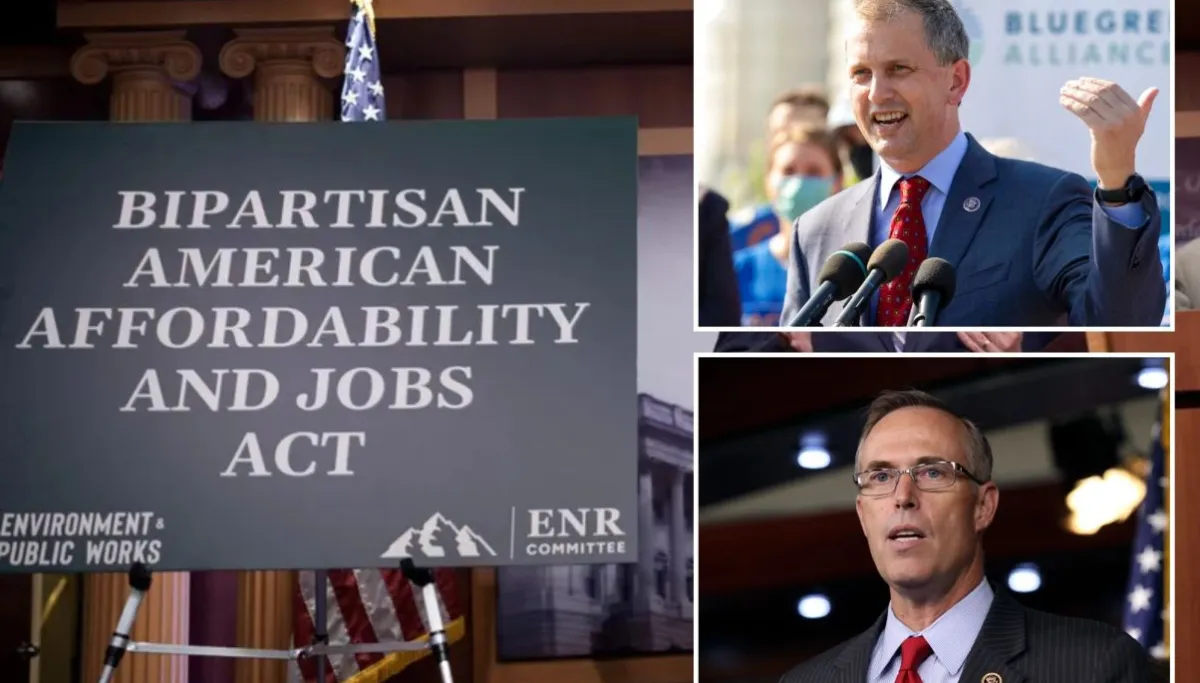
Many House Democrats are expected to vote against the bipartisan bill to overhaul the federal permitting system for energy and infrastructure projects, unless Republicans agree to make substantial changes to provisions regarding permit certainty, tribal sovereignty, data centers, and endangered species protections.The House is set to put the Bipartisan American Affordability and Jobs Act to a vote next week, the final test before the legislation could be sent to President Donald Trump’s desk and become one of the most significant bills passed during his second term in office.Better known as BAAJA, the bill has the backing of the White House, as well as clean energy trade groups, the manufacturing industry, some environmentalist nonprofit organizations, and both Democrats and Republicans in the Senate. But many House Democrats are siding with liberal environmentalists and opposing the bill, as they argue it goes too far in its overhaul of environmental laws, including the National Environmental Policy Act, the Clean Water Act, the Endangered Species Act, and the National Historic Preservation Act.The members have acknowledged a need for permitting reform, as overhauling the process for permitting would make it easier to build out transmission lines and thereby connect wind and solar power to the grid.But Democrats opposed to the legislation argue it would also make it easier to build out fossil fuel projects and data centers, and make it harder to shut down aging coal, oil, or gas facilities.At the same time, they argue the bill goes too far in limiting tribal sovereignty and weakening clean water and endangered species protections.Of those opposed, several Democrats in the House said they are interested in either amending the bill to get it to a stronger bipartisan compromise or pushing negotiations to the next Congress, when Democrats hold both chambers.Rep. Sean Casten (D-IL), a clean energy advocate and vice chairman of the House Sustainable Energy and Environment Coalition, told Politico on Tuesday that he was pushing House Speaker Mike Johnson (R-LA) to open an amendment process on the bill next week.This would allow members to propose specific changes, and, if successful, would send the bill back to the Senate for another vote. The upper chamber passed BAAJA last Thursday in a 62-33 vote.Rep. Jared Huffman (D-CA), who is poised to lead the House Natural Resources Committee next Congress, proposed several specific fixes to the bill this week, either to be made in the coming weeks or next year.Huffman has opposed BAAJA since the text was released, criticizing negotiators for not giving members more time to consider the legislation and insisting that Democrats can strike another deal when they hold the majority.Among the changes proposed, Huffman said there needs to be stronger protections for tribal rights, ensuring tribal nations and communities are consulted early on projects requiring federal approval. He also called for provisions that limit when tribes can challenge a project in court to be tweaked, as native groups have said shortened judicial review timelines are “unforgiving” for tribes.He also said members need to overhaul the bill’s permit certain provisions to ensuring people can challenge “illegally approved projects.”Permit certainty was a key Democratic priority going into negotiations in the Senate late last year, as the Trump administration has repeatedly attempted to rescind federal permits already issued for offshore wind projects. However, some liberals say the provisions, as written, would make it more difficult to shut down fossil fuel projects that might pollute more than previously thought.Huffman said the text creates a “forever permit” loophole that would allow the Trump administration to hand out permits to “destructive or illegal” projects that would be protected even under future administrations.Casten also called for fixes to the permit certainty provisions this week, saying the bill would “make it impossible for a future administration to undo the damage being done by the Trump Administration’s willful disregard of current environmental law and judicial precedent, and by adding provisions to create incentives for utilities to deploy lower-cost, cleaner energy sources.”The proposed changes also include softening the rollback of some Endangered Species Act provisions, such as refining the “best available science” standard. Under existing law, the ESA requires endangered species decisions to use the best scientific data available. BAAJA would tweak this definition to set clearer standards and accelerate decisions. Critics, however, say it would undermine the quality and independence of the science, and lead to more ESA decisions against wildlife protection.Huffman is also calling for the bill to include more protections for federally managed wilderness areas, including the Boundary Waters between northern Minnesota and Ontario, Canada, Chaco Canyon in New Mexico, and the Arctic. The Trump administration lifted a mining ban near Boundary Waters earlier this year, has moved to remove environmental protections around Chaco Canyon, and has advocated to increasing oil and gas drilling in northern Alaska.Additionally, Huffman is seeking language that would block data centers from being built on public lands.The California Democrat said he believed his proposed changes could get many Democrats to a “yes” on the bill as soon as next week.Similar concerns have been raised by clean energy advocate Rep. Mike Levin (D-CA), who also voiced his opposition to BAAJA this week.GREEN GROUPS PLOT LAST STAND AGAINST PERMITTING REFORM BILL IN THE HOUSELevin, who praised provisions that would support the U.S. grid, claimed the legislation would limit California’s ability to protect its water resources, weaken science behind endangered species decisions, and keep courts from being able to stop a project even if an agency skips a required review.“[In] the end, taking the current deal would mean giving up protections we may never win back in exchange for gains that aren’t guaranteed either,” he said.
Here’s what House Democratic holdouts want to change in the bipartisan permitting reform bill
Full Article
Original Source
Read the full article at Washingtonexaminer →KhanList aggregates and links to publicly available news content. We do not host full articles from third-party sources. Always verify important information with original sources.