
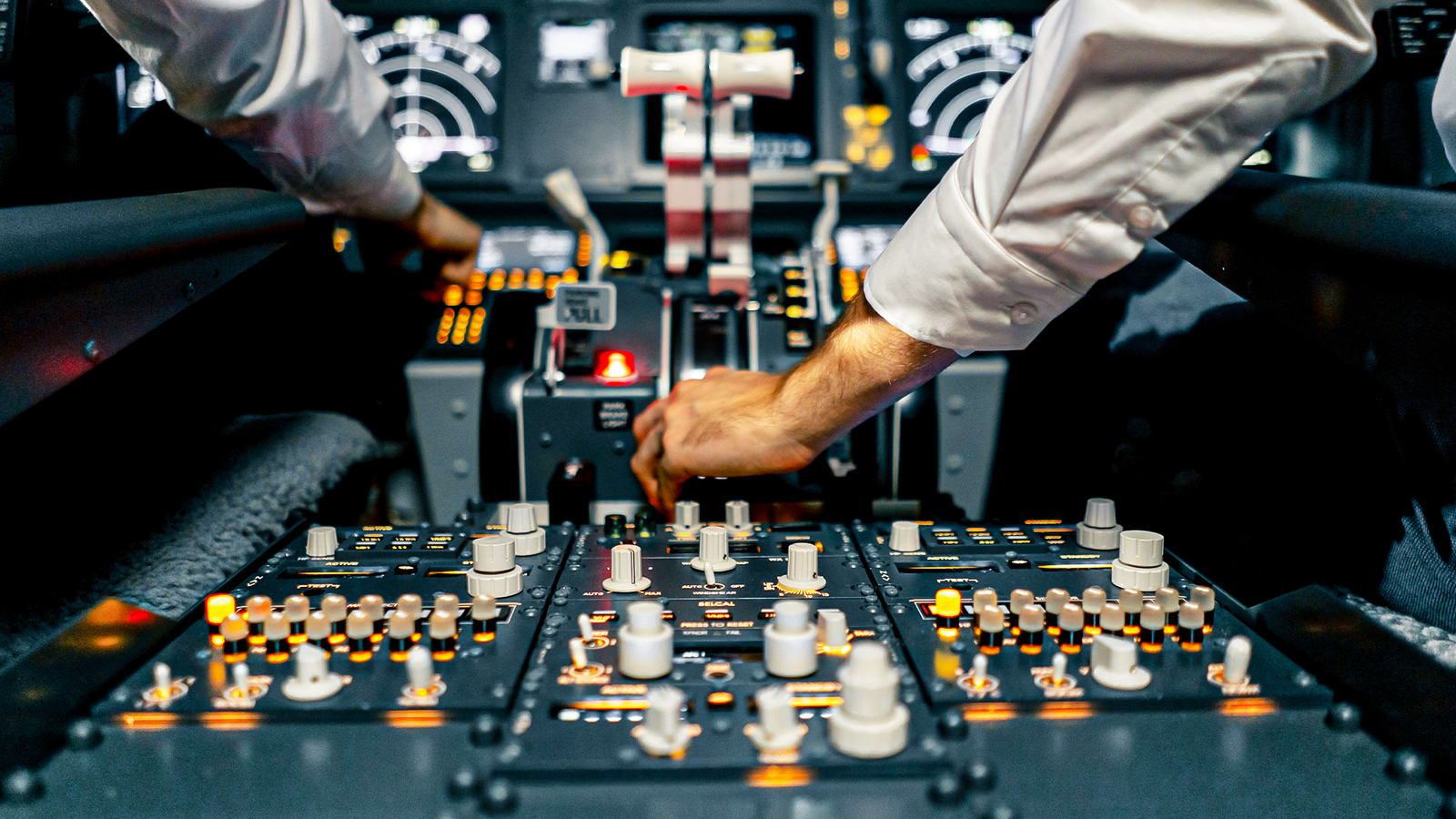
Published Nov 24, 2026, 1:00 PM EST Based in Maastricht, the Netherlands, Nick joined Simple Flying in October 2025 and has a strong passion for travel and tourism, and in particular, the aviation industry, for as long as he can remember. Nick's focus is on aviation economics, airline strategy, and digital innovation. Before joining Simple Flying, he gained industry experience in ground handling and in a leading European airline group. Academically, Nick holds a Bachelor's degree in Aviation Management and is currently pursuing a Master's degree in Strategy & Innovation. On a typical commercial flight, airline pilots only spend a small proportion of their time physically controlling the aircraft. Pilots normally hand-fly takeoff and part of the initial climb, while the autopilot handles most of the flight until approach. According to a 2026 report by the International Air Transport Association (IATA), commercial aircraft operate with automation engaged for approximately 90% of the time. On a long-haul flight, a pilot may spend just a few minutes controlling a Boeing 787 or Airbus A350, although operating procedures and weather conditions can influence this substantially. Moreover, a pilot not physically moving the controls does not mean the aircraft is operating without human supervision. The crew remains responsible for managing the flight path, monitoring the automated systems, and taking over whenever necessary. Pilots Usually Hand-Fly The Takeoff And Final Approach Credit: Ivan Berrocal | Shutterstock Airborne manual flying normally starts with takeoff, which remains a pilot-controlled maneuver on conventional commercial airplanes. Taxiing is generally manual as well, but is not included in the airborne flight time. The pilot maintains directional control, rotates, and establishes the initial climb. Although various systems can manage engine power, this should not be confused with the aircraft performing an automatic takeoff. The autopilot can only be engaged once the aircraft has reached its approved minimum engagement height. After departure, the crew can generally engage the autopilot relatively early, sometimes only a few hundred feet above the ground. According to IATA's 2020 Aircraft Handling and Manual Flying Skills Report, many surveyed pilots reported engaging it around 400 or 500 feet above ground level, while others preferred to continue flying manually through 5,000 or even 10,000 feet. The exact altitude depends on the aircraft and airline. Once engaged, the autopilot can handle most of the climb, cruise, and descent, following the route and altitude instructions managed by the crew. On arrival, the pilot may disconnect it early during a visual approach or keep it engaged until shortly before landing. The final flare and touchdown are normally performed manually, although suitably equipped aircraft can also carry out automatic landings under the appropriate conditions. The Actual Figure Can Be As Little As 80 Seconds Credit: Robert Buchel | Shutterstock Estimates of how much time airline pilots spend hand-flying differ substantially, partly because there is no universal operating procedure. Back in 2011, airline captain Rory Kay, co-chair of a Federal Aviation Administration (FAA) advisory committee on pilot training, said that pilots were using automation "for all but approximately three minutes of a flight". Another committee member, captain Bob Coffman, provided an even lower estimate for some regional airline operations. According to Coffman, pilots at commuter airlines might fly with the autopilot disengaged for approximately 80 seconds during a typical two-hour flight. Both estimates are historical rather than current industry averages. Other pilots take a somewhat different approach. In an interview published by Johnny Jet, airline pilot Spencer Marker explained that most airline pilots spend ten minutes or less manually controlling their aircraft. However, he personally preferred to hand-fly departures until reaching 10,000 feet and disconnect the autopilot approximately five miles from the runway when weather and operating conditions allowed. The length of the flight also makes a significant difference. Ten minutes represents almost 17% of a one-hour flight, but only 1.7% of a ten-hour service. On an ultra-long-haul operation, such as Qantas' nonstop Perth (PER) - London (LHR) route, the proportion can become even smaller. Autopilot Does Not Mean Pilots Stop Flying The Aircraft Credit: Stuart Bailey | British Airways Although the autopilot physically controls the aircraft for much of a flight, it is not an independent system that simply receives a destination and makes every decision. Modern airliners use several connected systems, including the flight management system, flight director, autopilot, and automatic thrust controls. These each perform different functions, and the crew must ensure that the appropriate modes are selected and that the aircraft is following its intended flight path. There is also an important difference between flying manually and flying without any assistance. A pilot can disconnect the autopilot while keeping the flight director engaged, which provides guidance on the primary flight display. Automatic thrust can also remain active while the pilot controls the aircraft's pitch and bank. Flying using basic instrument indications without flight director guidance, known as raw-data flying, demands additional proficiency. During cruise, the pilots continue monitoring navigation, weather, fuel consumption, aircraft systems, and instructions from air traffic control. Changes to the assigned route or altitude must be correctly entered and verified. Automation also helps distribute workload between the pilot flying and pilot monitoring, especially during departures and approaches where both pilots may be managing several tasks simultaneously. The time spent holding the controls therefore provides little indication of the crew's overall workload. Even with autopilot engaged, the pilots must decide whether the selected automation remains appropriate. Airline Policies Determine How Much Manual Flying Is Allowed Credit: Markus Mainka | Shutterstock Airlines can take remarkably different approaches to manual flying. Some encourage pilots to use the highest available level of automation throughout most of the flight, while others explicitly allow manual flying whenever weather, air traffic, and cockpit workload permit. Manual flying opportunities therefore depend heavily on each airline's standard operating procedures (SOP). IATA's 2020 survey, which received 5,650 responses overall, found that only 36% of the 5,241 pilots answering the relevant question said their airline allowed and supported manual flying without limitations. A separate question attracted 3,452 responses, of which approximately 37% admitted hesitating to disengage the autopilot and take manual control. Some respondents also feared criticism for hand-flying even where procedures permitted it. Complex departures, congested airspace, and reduced visibility can increase workload, making automation the safer option. Some approaches and airspace procedures also require automation for precise navigation. An airline therefore needs to balance manual flying opportunities against the operational conditions of each individual flight. IATA's survey also found differences during landing, with many pilots disconnecting the autopilot around 1,000 feet above the runway when conditions permitted. Others did so earlier or at the minimum altitude allowed by the relevant procedure. An approach flown with the autopilot engaged is not automatically an autoland; in most cases, pilots still take control before touchdown. Long-Haul Pilots Have Fewer Opportunities To Practice Credit: Airlinephoto | Shutterstock One particularly interesting difference concerns the type of flying performed by the crew. Short-haul pilots might operate several sectors on the same day, giving them multiple opportunities to practice takeoffs and landings. Long-haul pilots, on the other hand, can spend most of a working day on one flight, and augmented crews may share the workload during particularly long services. Consequently, each pilot may perform far fewer takeoffs and landings. A 2017 study surveyed more than 1,500 commercial pilots about manual flying and airline procedures. Only 35.5% of long-haul pilots agreed that they had sufficient opportunities to hand-fly, compared with 79.9% of pilots operating short- and medium-haul flights. Pilots flying aircraft such as the Boeing 777, Airbus A380, and Airbus A330/A340 were among those reporting the fewest opportunities. The same study also identified a clear difference between airline cultures. Among pilots working in supportive procedural environments, 68% felt they had sufficient opportunities to maintain their manual flying skills during normal operations. That figure fell to just 26% among pilots whose airlines imposed more restrictive procedures. The difference is also not simply explainable by aircraft age or technology. United Airlines continues operating its Boeing 767 fleet even as newer widebodies enter service, and both generations rely extensively on automation. Accumulating flying hours on long sectors does not necessarily mean practicing basic aircraft handling. Regulators Want Pilots To Maintain Their Manual Flying Skills Credit: AlfonsoSM | Shutterstock Concerns about reduced manual flying opportunities have been raised by aviation regulators for well over a decade. The Associated Press reported in 2011 that a draft FAA study had examined 46 accidents and major incidents, alongside hundreds of voluntary reports and observations from more than 9,000 flights. It found problems involving manual aircraft handling or automated flight controls in more than 60% of the accidents and 30% of the major incidents reviewed. These were findings from a selected sample, rather than percentages applying to all airline accidents. The FAA subsequently issued Safety Alert for Operators 13002 in 2013, encouraging airlines to provide suitable opportunities for manual flying. A further safety alert in 2017 called for manual flying proficiency to be reinforced through both training and normal line operations. It recommended manual instrument departures and arrivals, upset recovery, and training across different automation modes. The issue has not disappeared. In its 2026 flight path management report, IATA identified manual handling as an important safety concern and called for training and airline policies that develop both manual and automated flight path management skills. Full-flight simulators can reproduce unreliable airspeed, unusual attitudes, and other situations unsuitable for practice on commercial flights. However, simulators are not necessarily a complete substitute for line flying. Research found that nearly 80% of surveyed pilots disagreed that simulator training alone was sufficient to maintain their manual flying skills. The aim is not to minimize autopilot use, but to preserve safe opportunities for pilots to control their aircraft in normal operations.
Here's How Much Of A Flight Airline Pilots Actually Hand-Fly
Full Article
Original Source
Read the full article at Simpleflying →KhanList aggregates and links to publicly available news content. We do not host full articles from third-party sources. Always verify important information with original sources.