
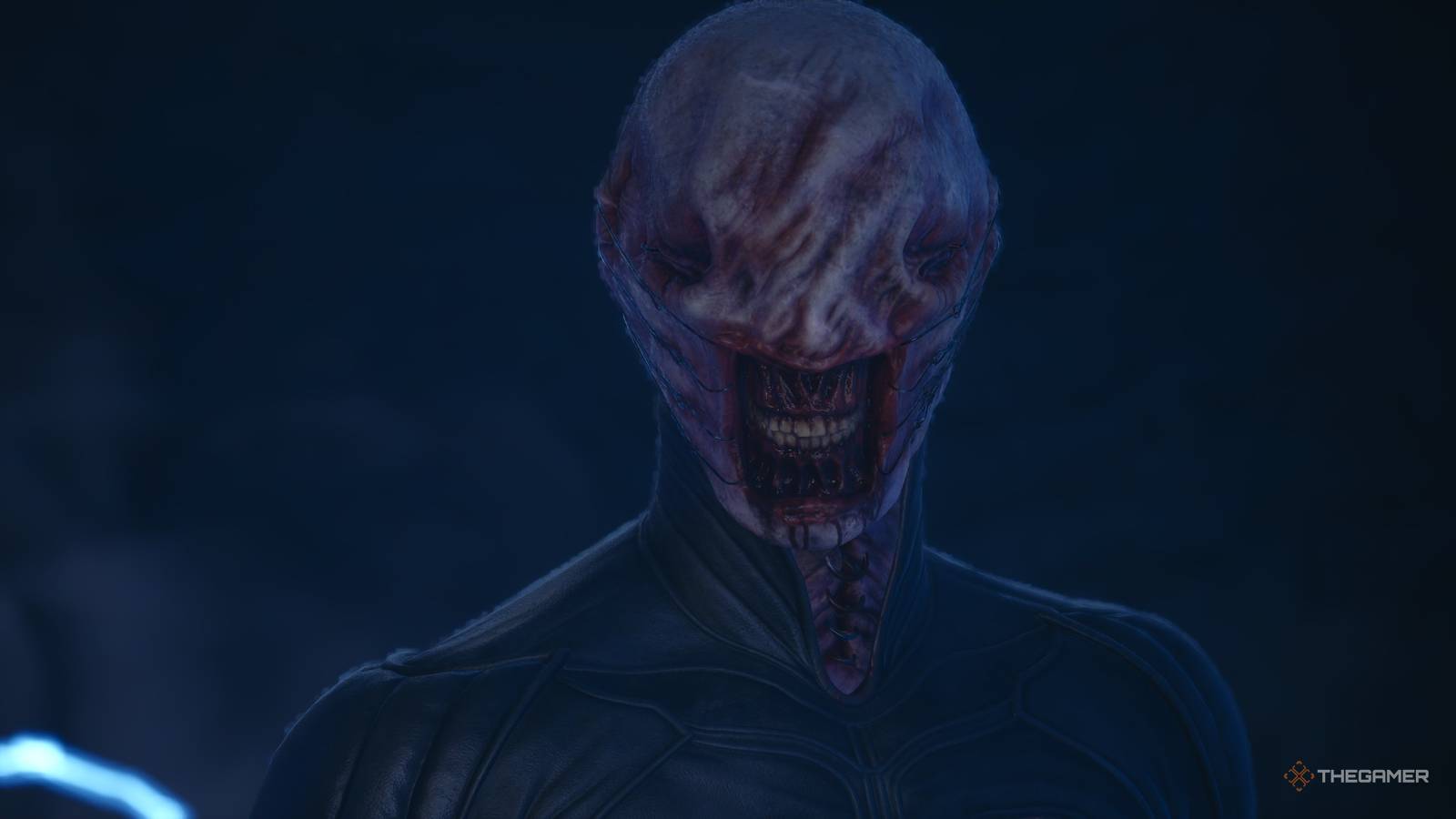
Published Oct 8, 2026, 8:13 AM EDT Nazmul Roosevelt is a journalist who has spent years covering the video games industry with a focus on clarity, accessibility, and genuine curiosity. He works to help players understand the people, craft, and decisions behind the entertainment they love. From game developers, to the technical artists, and communities shaping modern gaming; if you have a story worth sharing, he’s always open to hearing it... And if you happen to know anything about that secret Twin Peaks game in development, he’d especially like to talk. The Hellraiser franchise has always balanced on a razor’s edge between sensuality and suffering, between the allure of forbidden pleasure and the terror of what happens when trapped by desire. The first video game of the series’, Clive Barker’s Hellraiser: Revival, steps confidently upon the same line, but after finishing both endings, I found myself left unsatisfied. Unfortunately, there’s a myriad of design problems that were difficult to ignore. Mandatory stealth sequences made sure my progress took longer, wonky melee combat resulted in me having to redo combat scenarios with too little resources, and bugs at numerous points halted my progress without me completely turning off the game. So while Clive Barker’s Hellraiser: Revival reaches for the operatic cruelty of Hellraiser 1 and 2, yet lands closer to the loud, chaotic excess of Hellraiser 3 and 4. It has flashes of brilliance, especially in environmental design and surreal geometry, but the emotional core doesn’t manifest. What should have been an intimate descent into horror, is instead a tour through a world that is performative about the flesh than fails to be profound about its own spirit. Hellraiser: Revival Fails Hellraiser Fans With A Rotted Core Lead characters Sunny and Aiden are meant to anchor the narrative, their relationship positioned as a tragic spiral that draws the attention of the Cenobites. In theory, this should work. Hellraiser has always thrived on flawed people inflicting self-destruction. The problem is that the game never gives Sunny and Aiden enough substance to feel like a real couple. Their interactions are thin, their emotional beats rushed, and their shared history barely present beyond a few superficial flashbacks. When the story pivots into domestic abuse, it does so without weight or nuance. Instead of landing as a devastating rupture, it feels like a plot device meant to intensify the suffering of the Unworthy. Maybe the point is that their relationship was always hollow or doomed, but the narrative never gives you room to make that interpretation. Even if that were the intention, the game misses a chance to complicate the formula or challenge expectations. Hellraiser works best when human desire disrupts the Cenobites’ cold philosophy. Here, the characters simply follow the expected pattern. They open the box. They suffer physically through flaying. Their souls suffer more as they are manipulated to serve the Cenobites. There is no resistance, no emotional counterweight, no sense that either protagonist might push back against their captors or the logic of the labyrinth. Aiden endures torment akin to most other Hellraiser protagonist in franchise history, yet the suffering does get tired rather than terrifying. The game escalates his punishments while increasing the abilities of the game's unique configuration "Genesis," but without emotional grounding the torture becomes repetitive instead of upping the tension. The strongest moments arrive halfway through, when the game briefly hints at deeper ideas, more classic horror settings, and ambitious worldbuilding for a licensed title. For a bit, it seems like the developers are building toward something cosmically meaningful. That momentum gives way to highlighting the worst aspects of the game's design, and by the end I felt relieved to escape the experience than invested in its descent. Excess Replaces Atmosphere The game’s most controversial element is its setting. Much of the story unfolds in and around a sex club, a maroon‑drenched maze of plush furniture, plastic surfaces, and bodies in constant gyration. Hellraiser has always flirted with eroticism, but Revival pushes that aesthetic to the forefront. The problem is that the club is not interesting to look at. It is garish, the shock of sex and violence becomes repetitive, and the overall effect is visually exhausting. The extreme content warning is warranted at the start, but not because the imagery is impactful. It is because the environment is so saturated with lurid detail that it numbs you to what the storytellers intend. The longer you spend in these spaces, hearing the drone of "fuck the pain away," the more it all resembles a parody of what outsiders assume Hellraiser’s sensual horror looks like rather than a thoughtful extension of it. Ironically, the game shines whenever it leaves the club behind. The labyrinth sequences are genuinely impressive. I played in ultrawide, and the cinemascope presentation transforms the experience. The stretched frame emphasizes the scale of the architecture, the impossible geometry, and the oppressive verticality of the Cenobites’ domain. These areas feel alive in a way the club never does. The walls breathe with whispers and the effects of the wind envelop you in the soundscape. When the corridors become their boldest, they are touched up with gore and the lacquer of bloodletting. The lighting shifts in ways that make you feel watched, making the Labyrinth sections the closest the game comes to capturing the dread and beauty of the original films. Hellraiser: Revival Looks Incredible Character models also benefit from the wider aspect ratio and high visual fidelity. Every detail of the Cenobites is visible, from the texture of their skin to the intricate patterns carved into their bodies. The cutscenes are staged like ritual theater, with the Cenobites pontificating to great effect. These moments are the game’s strongest narrative beats, even if the writing does not always rise to the occasion. Unfortunately, the gameplay balance undermines much of that atmosphere. The difficulty modes feel poorly tuned, with Normal and Hard offering wildly inconsistent experiences. Some encounters are trivial, while others spike into frustration without warning. The game struggles to find a rhythm, and the combat rarely feels satisfying. The gunplay is a major issue in addition to the poorly implemented melee. The auto‑aim is far too sticky, snapping aggressively to enemy bodies and making headshots harder than they should be. It feels like the game is fighting you rather than helping you. Several encounters were completely frustrating because I could not reliably aim where I wanted. I also ran into a recurring bug where I could not stop running, which led to multiple deaths in situations where precision mattered. These problems compound the already uneven combat balance, turning encounters that should feel tense into moments of irritation. Repetition and Mandatory Stealth Segments Drain the Dread Mandatory scripted sequences further drain the tension. Many rely on hard fails that send you back to the start of the encounter, and the best strategy often becomes disengaging from the mechanics entirely. Running past encounters or bypassing set pieces is mandatory over engaging with systems that never came together in a way that seemed polished. The environmental art deserves attention, but the gameplay was so driven by me accidentally solving a problem through sloppy luck, that it constantly pushes you away from appreciating it. The checkpoint system is one of the game’s most exhausting flaws. Progress often requires replaying long stretches of content, including repetitive stealth segments that lose tension with every retry. The game forces you to reloot collectibles, retrace steps, and repeat sequences that were never engaging the first time. There is plenty of fan service, and the game reworks existing lore while introducing new concepts that could have been fascinating if they were explored with real commitment. The revelations behind how certain characters entirely exist, could’ve reshaped the entire narrative. Instead, it is introduced, acknowledged as a matter-of-fact, and then left to sit without meaningful exploration. New Blood, New Insight It made a lot more sense to me once I learned that the head writer had never seen Hellraiser before starting the project. In an IGN interview, he said, “The very first time I saw Hellraiser was when I began the project. I read the novella, basically read it twice, let it soak in and understand what Barker was intending with the source material.” Approaching the franchise from a fresh perspective can work, but after eight hours (12 if you include all the wasted time with checkpoints), the new ideas introduced are treated with the same surface‑level approach that has plagued the later sequels that expand the mythology without fully committing to the artistic integrity Barker presented with his novella and the first two films. Both endings are dramatically unsatisfying. If they had appeared halfway through the game, they might have carried more weight, but placed at the end of a repetitive experience, they lost any impact. The pain and suffering that increases the game past the five-hour mark is diluted by the constant retreading of familiar beats. Old Blood Still Runs Cold A major selling point of Hellraiser has always been the voice of the Dark Priest. Doug Bradley’s performance is as iconic as it is irreplaceable, and hearing him return for the game is a true highlight similar to his elevation of the worst movies in the franchise. His delivery maintains a commanding coldness, capable of turning a single line into a double-entendre of threat. He does everything he can with the material, but stiff motion capture and rigid facial animation across the cast limit his presence. The voice is right, but the physicality in the facial capture leaves much to be desired despite the stoicism that's knowingly ingrained when it comes to the perspective of the character. The Cenobites rarely evoke the dread or disgust that defines them in the movies. If you are expecting elaborate boss battles against them, the game technically delivers a few, but they lack the weight and theatrical menace that should accompany beings who embody pain as transcendence. By the end, Clive Barker's Hellraiser: Revival feels like it has had its teeth removed. The emotional stakes never land, the gameplay systems never mesh, and the narrative fails its main characters by not providing ample reason to really care about them. The ideas are there, with some ambitious gameplay to boot. But the execution leads to a hollow, repetitive, and strangely timid interactive experience for a franchise built on the consequences of desire. Hellraiser is not an easy franchise to adapt. Its themes are thorny, its tone specific, and its fanbase expects the thought behind narrative artistry, alongside the gore-filled intensity of the effects. The developers clearly cared about the aesthetic, and the environmental art is genuinely impressive. But the overall experience is one of a narrative that puts too much trust in its consumers to respect who or what’s being consumed, and the result is a beautiful-at-moments maze with sadly nothing at its center. Released October 8, 2026 ESRB Mature 17+ / Blood and Gore, Intense Violence, Nudity, Strong Language, Strong Sexual Content, Use of Drugs Developer(s) Saber Interactive Publisher(s) Saber Interactive Genre(s) Action, Horror, Psychological Horror, Survival Horror, Puzzle Pros & Cons Labyrinth sequences are stunning. Doug Bradley's voice performance. Narrative lacks believability, depth, nuance. Repetitive gameplay, exacerbated by unfair checkpoints. Poorly balanced difficulty modes. Garish, exhausting stealth sequences. Lacks dread.
Hellraiser Revival Review: Cosmic Ambition Undercut By B-Movie Horror
Full Article
Original Source
Read the full article at Thegamer →KhanList aggregates and links to publicly available news content. We do not host full articles from third-party sources. Always verify important information with original sources.