
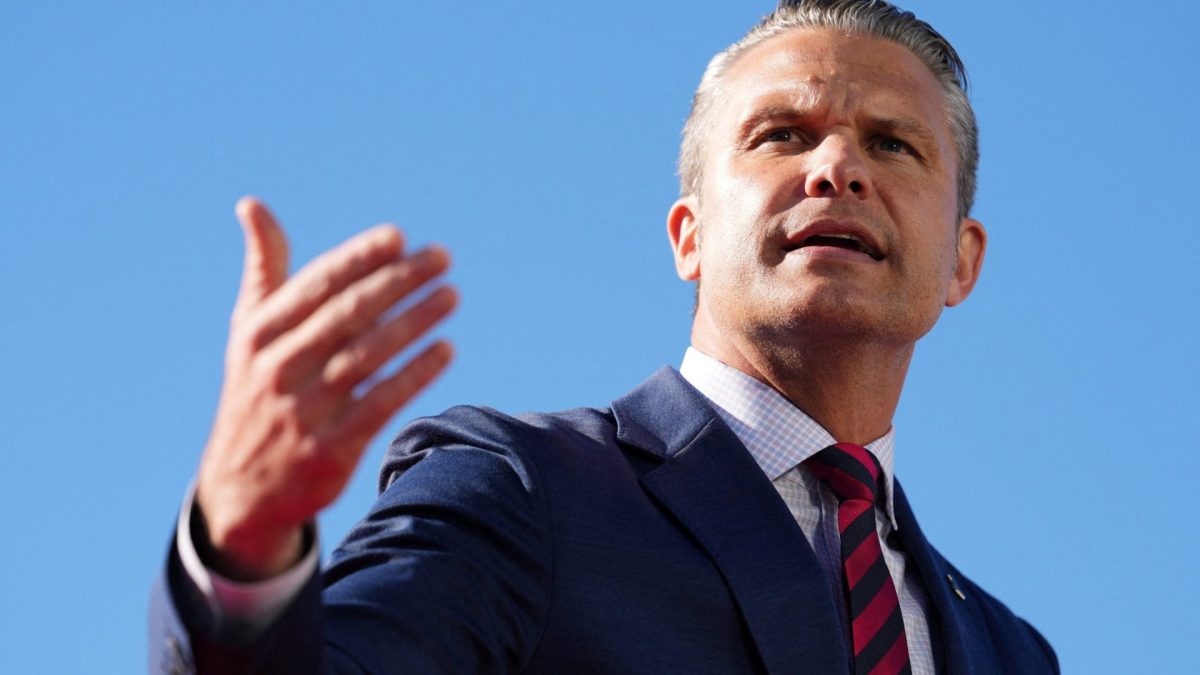
US Defense Secretary Pete Hegseth has promised a livestreamed execution, his country’s first publicly performed death sentence in 90 years, further stirring the debate over the US death penalty. One prominent critic has called the plan a “spectacle of cruelty” that ignores the dignity of human life. On Tuesday Donald Trump approved the execution of convicted murderer Nidal Hasan by US army firing squad. In 2013 Hasan was convicted and sentenced to death in a court martial for the murder of 13 people at Fort Hood in 2009, one of the deadliest mass shootings at an American military base, since called the worst act of terrorism on American soil since 9/11. There have only been a handful of firing squad executions in the US since capital punishment was reinstated in 1976 – and death penalties from court martials are even rarer. The country’s last public execution took place in 1936 in Kentucky. The execution of Hasan comes amid renewed controversy over the botched execution by lethal injection of Christa Pike. ‘No brainer’ On Thursday Hegseth told right-wing cable channel Real America’s Voice that he had ordered a public execution for Hasan. Interviewed on the deck of returned aircraft carrier USS Abraham Lincoln, he said choosing execution by firing squad was a “no brainer”, framing it as reciprocal justice that would mirror Hasan’s crimes. “Army major betrays his country, radical Islamist, kills a bunch of Americans at Fort Hood: of course, we’re going to do it at Fort Hood. going to do it on a Thursday, we’re going to do it at one o’clock, which is when he did it, and it’s going to be soldiers with rifles executing the firing squad,” Hegseth said.“It hadn’t been since World War II since we’ve done that. Well, I kind of like the mentality we had in World War II, which was … understand when the enemy attacks you, you need to stand your ground.” He claimed the US was “up against” a worldview that saw an Islamic terror attack as “workplace violence”, referring to a debate following the Fort Hood attack over whether to refer to it as terrorism. Hasan’s crimes were tried as murder rather than terrorism, partly as a legal tactic to simplify the prosecution. Nidal Hasan killed 13 people and wounded 31 in a November 2009 shooting spree at Fort Hood (Photo:REUTERS/Bell County Sheriff’s Office/Handout) “He’s going to get a firing squad of soldiers, as it should be,” Hegseth said. “And we’ll make sure that people are able to watch it, that it’s public, because people need to understand that there’s serious consequences for these types of things.” The Pentagon later clarified that the event will “be livestreamed” and that details of the execution, planned for December 3, will follow. Austin Sarat, a legal expert in the death penalty at Amherst College in the US, and author of Life After Death: Surviving Execution, told The i Paper there has been no military execution since 1961, and no use of the firing squad in the military since 1945. “Death by firing squad is always brutal,” he said. “Livestreaming it will turn that brutality into a spectacle of cruelty.” He rejected Hegseth’s claim that the public execution would serve as a deterrent. “Livestreaming will not educate. It will terrorise, and is beneath the dignity that we owe to anyone, even those who commit the kind of horrific [crime that] Nidal Hasan did.” Anti-death penalty group Death Penalty Action has accused the Trump administration of using it as a distraction, and a “ploy to stem his record low approval ratings”. “There is nothing Donald Trump loves more than the power to kill,” it said, promising to lead protests against planned military executions. A 90-year pause Modern US executions are performed in private, though some states require the presence of members of the public with no connection to the crime, to act as observers. The last public execution in the US was in 1936 when Rainey Bethea, a black man convicted of raping a white woman, was hanged on the Owensboro, Kentucky riverfront. It drew a crowd of tens of thousands, and made national news. In her book American Bloodlines, writer Sonya Lea called it a “brutal carnival” that owed more to vigilante lynching culture than legal precedent. A newspaper report at the time revealed people slept in cots overnight before the execution to ensure they got a good spot, and some hosted macabre “necktie parties”. Vendors sold popcorn and Coca-Cola to the crowd. Newspaper coverage of the celebratory atmosphere led to a national backlash and a campaign to end public hangings, and a law was passed to that effect two years later. But Lea says “lynch culture” still exists in American society, “almost everywhere that you look”. The last public hanging in England was the execution of Michael Barrett in 1868 outside Newgate Prison. The Times reported “a fringe of eager sightseers” who drank, danced and cheered. “Some laughed, some fought, some preached, some gave tracts, and some sang hymns; but what may be called the general good-humoured disorder of the crowd remained the same,” the paper reported. “None could look on the scene … without a thankful feeling that this was to be the last public execution in England.”
Hegseth’s plan to livestream firing squad execution a ‘spectacle of cruelty’
Full Article
Original Source
Read the full article at Inews →KhanList aggregates and links to publicly available news content. We do not host full articles from third-party sources. Always verify important information with original sources.