
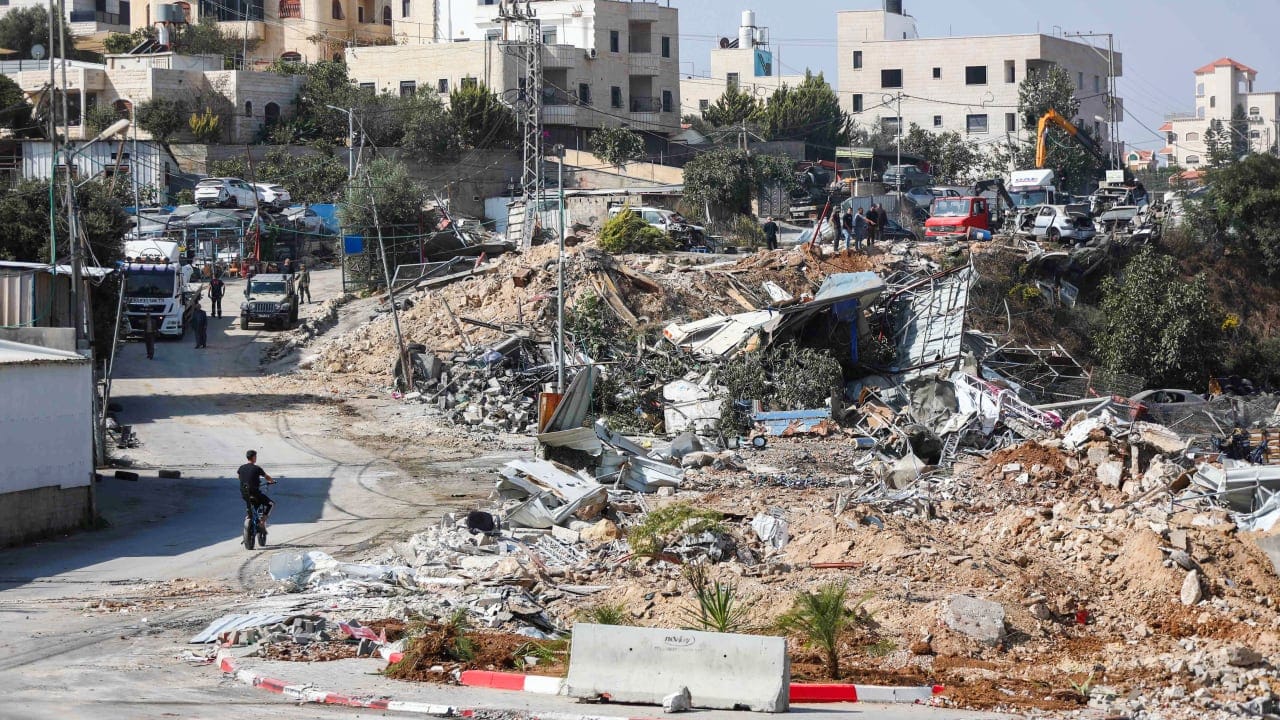
The IDF cited urgent security risks, as business owners denied involvement in the deadly attack, alleging collective punishment.Follow us on GoogleA view of the scene of a deadly shooting attack at the Yehuda Junction checkpoint near the West Bank city of Hebron, where two Israeli soldiers were murdered and three others wounded by Palestinian gunmen the previous day, October 24, 2026.(photo credit: WISAM HASHLAMOUN/FLASH90)OCTOBER 26, 2026 20:54Parts of two business premises near the site of Friday’s deadly terrorist shooting attack in Hebron were demolished without a prior hearing, the state acknowledged in a response to the High Court of Justice on Sunday, saying the military commander considered the work urgently necessary.The state also said a demolition notice had not been posted at the site because of an error. The business owners, who deny any involvement in the attack, petitioned the court to stop the demolitions, arguing they amounted to collective punishment.The petition concerns two commercial compounds near Hebron’s northern entrance. It is separate from the broader evacuation of Palestinian residents and restrictions imposed across the city following the October 23 attack, in which two IDF soldiers were killed.In her initial decision on Friday, Justice Gila Canfy-Steinitz directed the state to respond and said she expected it to refrain from changing the existing situation pending a further decision. The state later said the demolition work described in its response had begun before the petition and the court’s decision reached the authorities, and that it stopped immediately upon receipt.Mustafa and Sufian Qawasmeh and the Al-Quds ceramics and sanitaryware company filed the petition through attorney Muhammad Dahleh. The petition concerns about 17 dunams of commercial property containing offices, display areas, and merchandise.Palestinians sit near the closed entrance of Hebron, in the West Bank, October 24, 2026. (credit: REUTERS/MUSSA QAWASMA)IDF soldiers operated without written order, explanation, petition claimsAccording to the petition, soldiers instructed the owners to remove goods before demolition without a written order or any explanation of how they could challenge the decision.The petitioners said the business was closed on Friday apart from a guard, and that the gunmen had climbed over a locked gate. They denied assisting the attackers, knowing about the attack in advance or being related to them.The state’s response presented a different account of the grounds for demolition. It said the attackers had used a factory at one of the premises as cover and fired from behind a corrugated fence and equipment.According to the response, the military assessed that construction near the checkpoint posed an immediate security danger. The work included removing fencing at the premises the attackers used and demolishing a fence and an office container at the compound opposite it.The state also cited a demolition order issued in August 2012 for the fence and office at the second compound, but did not explain the intervening enforcement history.Those grounds differ from the punitive-demolition powers challenged in the petition. The owners’ allegation of collective punishment remains disputedIn the absence of a hearing, the state said military officials considered demolition urgently and immediately necessary. It said officials had orally explained the intended work to the owners and allowed them an opportunity to remove merchandise.The response added that no further demolition was immediately planned at either compound and that any subsequent enforcement against unlawful construction would follow the applicable procedures.The proceedings come amid a wider dispute over the military’s actions in Hebron following the attack.In a separate legal letter to the military, the Association for Civil Rights in Israel demanded that displaced residents be allowed to return, movement restrictions be lifted, and demolitions carried out as punishment be halted. It also requested the orders authorizing the measuresACRI: Approximately 1,500 Palestinians forced from their homesACRI said approximately 1,500 Palestinians had been forced from their homes, citing Palestinian authorities. It argued that public statements by ministers indicated a punitive purpose, including Finance Minister Bezalel Smotrich’s description of demolitions as serving deterrence and exacting a price for the attack.“No attack, however grave, gives the military license to punish an entire city,” ACRI executive director Noa Sattath said.The IDF, in information provided to reporters, described civilians’ departure differently, saying residents who wished to leave temporarily were permitted to do so through designated checkpoints.It estimated that approximately 2,000 people lived in the area and belonged to the Jaba’a clan, which it described as associated with Hamas and as the clan from which the attackers came.The military said forces had searched approximately 200 sites and arrested 10 suspects. It described demolition near the attack site as enforcement against unlawful construction and the removal of potential security risks.Beyond that briefing, The Jerusalem Post repeatedly requested clarification from relevant IDF officials about how a mass evacuation could be legal absent evidence that the vast majority of the evacuees had taken illegal action and were not ideologically pro-Hamas.Additionally, several media reports confirmed that IDF Chief of Staff Lt.-Gen. Eyal Zamir insisted on withdrawing troops from the area, but Prime Minister Benjamin Netanyahu insisted on their staying and maintaining the evacuation of the Palestinians, without specifically articulating a security necessity.Follow us on Google
Hebron business demolitions carried out without prior hearing, state tells High Court
Full Article
Original Source
Read the full article at Jpost →KhanList aggregates and links to publicly available news content. We do not host full articles from third-party sources. Always verify important information with original sources.