
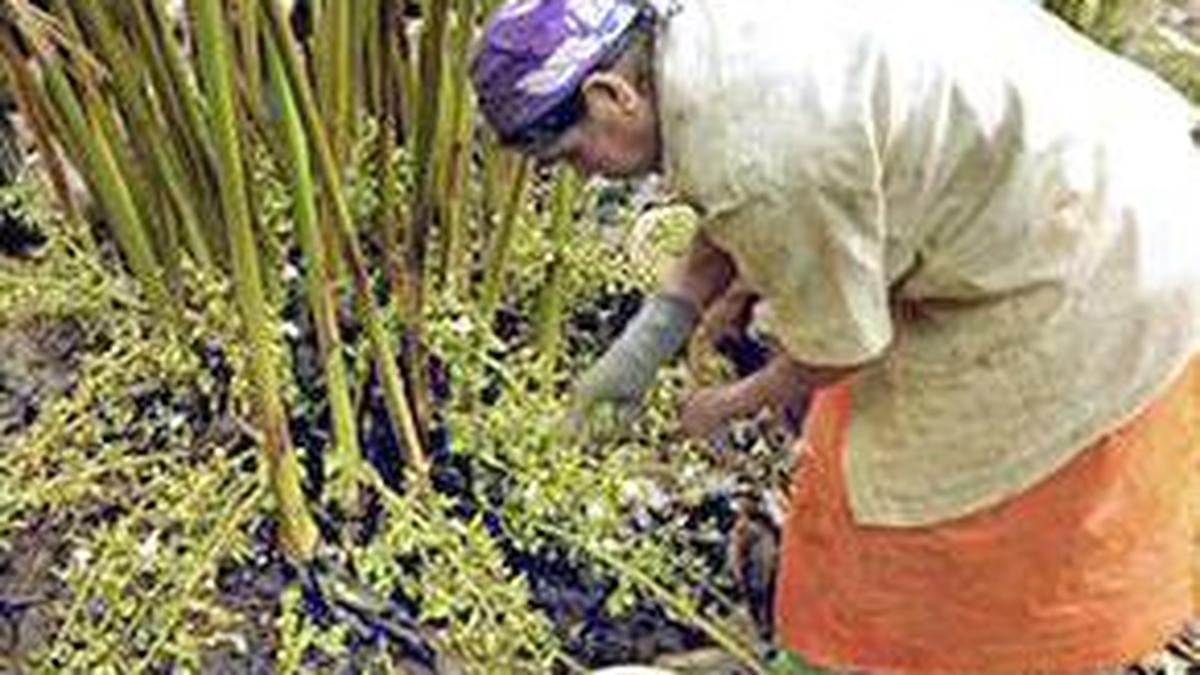
Cardamom harvest in Idukki.. | Photo Credit: Special Arrangement For cardamom growers in Keralam, protecting their high-value crop from constant pest attacks is a daily battle. However, soaring temperatures and unpredictable weather patterns are shifting the ecological baseline.Global warming now keeps cardamom plants flowering and fruiting nearly year-round, creating a continuous harvest cycle that simultaneously offers an uninterrupted feast for pests and diseases. Facing growing pressure from thrips, borers, root grubs, and soil pathogens, farmers are caught in an endless loop of pesticide use just to keep their yield safe.“Nearly two decades of field research and observations show a steady, marked increase in pesticide application across the region. Farmers are now applying up to 18 to 24 spray rounds annually, comprising 12 to 14 rounds of insecticides and fungicides, alongside multiple soil drenching treatments, growth regulators, and biostimulants. The local market portfolio has expanded dramatically to over 50 synthetic insecticides, 51 fungicides, and dozens of specialised products,” says Muthusamy Murugan, former head scientist, Cardamom Research Station, Pampadumpara. He also warns about the influx of cheap, unlabelled pesticides entering Keralam from neighbouring States. “Cardamom farmers are not aware of these poor quality illegal pesticides. Therefore, they have to be extra vigilant to avoid these uncertified chemicals, which can cause heavy flower damage,” he adds.Farmers say they are seeing pests present throughout the year because the plants never stop flowering. “Since even minor crop damage leads to huge financial losses, many of us feel compelled to mix up to five or six different products including insecticides, fungicides, micronutrients, and growth promoters into a single tank. It helps to save on labour costs and protect our yields,” says a farmer from Kumily.Meanwhile, experts warn that this ‘tank cocktails’ can actually weaken cardamom plants and increase their disease risk. “To save time, money, and labour, many growers mix multiple insecticides, fungicides, plant boosters, and fertilizers into a single spray, hoping for better results. However, mixing these products can lead to unpredictable reactions. Depending on the weather, crop stage, and chemical concentrations, these mixtures can sometimes weaken the chemicals’ effectiveness or even damage the plants. Chemical interactions are hard to predict, so what farmers hope will be a powerful combination can easily turn toxic to the crop under the wrong weather or dosage conditions,” says Geethu Jacob, consultant, Soil Science and Agricultural Chemistry .In the steep, rainy Indian Cardamom Hills, runoff frequently carries pesticides far beyond target fields. Also, long-term exposure to broad-spectrum sprays harms essential pollinators and natural predators that keep the cardamom ecosystem healthy. Experts recommend a major shift in farm management to secure both the livelihoods of local communities and the delicate balance of the Cardamom Hills ecosystem. “Rather than relying on broad-spectrum chemical mixes, growers must prioritise targeted, single-molecule treatments alongside a disciplined rotation of chemicals, proper plant nutrition, and weather-aware pest management strategies. Preserving the future of the regional cardamom industry is inseparable from maintaining the ecological stability of the Indian Cardamom Hills,” says Mr.. Murugan. Published - October 31, 2026 05:09 pm IST
Heavy pesticide use puts Keralam’s cardamom ecosystem under pressure
Full Article
Original Source
Read the full article at Thehindu →KhanList aggregates and links to publicly available news content. We do not host full articles from third-party sources. Always verify important information with original sources.